
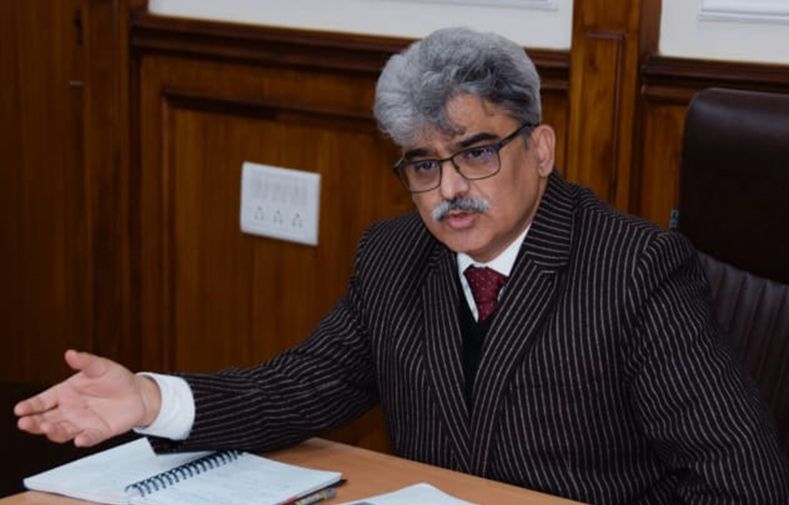
Dulloo directs mandatory pre-monsoon preparedness, distt-level readiness
Jammu: Chief Secretary, Atal Dulloo Wednesday while reviewing the measures undertaken by the Department of Disaster Management, Relief, Rehabilitation & Reconstruction (DMRR&R) to strengthen the Union Territory’s disaster preparedness, response and mitigation framework emphasises on anticipatory action, technology-enabled early warning systems, and seamless inter-agency coordination.
During the meeting Chief Secretary of Jammu and Kashmir was briefed on a comprehensive roadmap aimed at enhancing disaster management in the region. This roadmap incorporates lessons learned from recent extreme weather events, post-disaster evaluations, and consultations with national agencies like the National Disaster Management Authority (NDMA) and the India Meteorological Department (IMD). Key officials from various departments, including the Public Works Department and the Forest Department, attended the meeting, with Deputy Commissioners participating virtually. The Chief Secretary emphasized the urgent need for implementing the disaster mitigation framework, highlighting the importance of inter-departmental coordination for effective execution. He directed the Divisional and District Administrations to update their District Disaster Management Plans (DDMPs) regularly and to review preparedness and mitigation measures. He underscored the necessity of pre-monsoon preparedness, particularly for floods, during the April to September period, which is historically prone to such disasters. Additionally, the Chief Secretary called for the implementation of RFID-based management for pilgrimages, specifically the Machail Mata Yatra, and the establishment of necessary infrastructure along the pilgrimage route. He stressed the importance of conducting mock exercises at key shrines to ensure a coordinated response during emergencies. The need for vigilance regarding avalanche risks following recent snowfall was also highlighted, along with the prompt restoration of essential services in affected areas. The Principal Secretary of DMRR&R pointed out the critical need for improving the dissemination of weather warnings and enhancing public awareness through digital platforms like the SACHET App. The meeting marked a strategic shift towards anticipatory disaster management, focusing on improved early warning systems and preparedness planning. The roadmap includes operational insights from recent incidents, such as flash floods and cloudbursts, which have informed targeted improvements in planning and response. It proposes systematic pilgrim registration, regular coordination meetings, and mock drills to enhance safety during high-footfall events. Infrastructure measures include the construction of Yatri Niwas, mapping of helipads, and pre-positioning of medical resources. The review also emphasized localized weather forecasting, deployment of Automatic Weather Stations, and the use of drones for delivering essential supplies. Operational gaps identified during past flood events are being addressed, and key infrastructure projects are being expedited to reduce flood susceptibility. The roadmap delineates the roles of various agencies, including the UT Government, District Administrations, and armed forces, to strengthen inter-agency coordination. Major initiatives include annual state-level mock exercises, workshops for Himalayan states, and the finalization of Standard Operating Procedures for drone usage in disaster response. The Chief Secretary reiterated the importance of a people-centric, technology-enabled, and coordination-driven approach to disaster management, with a focus on preparedness as the foundation of the region’s disaster risk reduction strategy.