
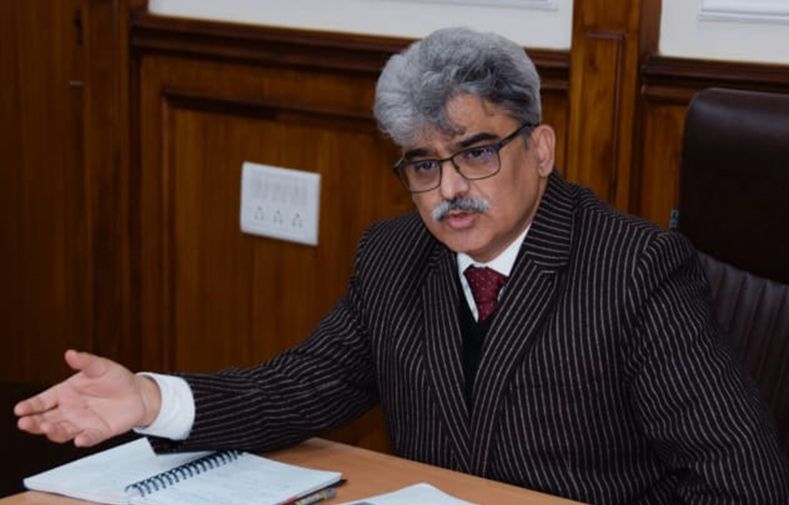
Jammu: Chief Secretary, Atal Dulloo Tuesday emphasised the need for robust technology-driven solutions, strengthened enforcement mechanisms and real-time coordination among regulators and law enforcement agencies to effectively curb cyber frauds and online financial sca
Chairing the 36th Union Territory Level Coordination Committee (UTLCC) meeting convened by the Reserve Bank of India (RBI) in Jammu the Chief Secretary emphasized the urgent need for technological interventions and legal measures to combat cyber-enabled financial frauds. The UTLCC, established by the Ministry of Finance, aims to enhance cooperation among regulators and enforcement agencies to address unauthorized financial activities and improve market intelligence sharing. During the meeting, the Chief Secretary highlighted the rising instances of cyber fraud in the Union Territory and mandated strict enforcement of the Banning of Unregulated Deposit Schemes (BUDS) Act. He called for the RBI and law enforcement to define clear cyber regulatory protocols and urged the Department of Information and Public Relations to launch public awareness campaigns about investing only in RBI-authorized entities. The Chief Secretary also stressed the importance of sharing information about unregistered entities with law enforcement to facilitate timely action against offenders and advocated for training police and defense personnel in handling financial frauds. Atal Dulloo, another key speaker, underscored the significance of the Unified Lending Interface (ULI) introduced by the RBI to enhance the safety and transparency of lending processes. He also recommended that J&K Bank adopt enhanced safety and cybersecurity measures to bolster the digital payments ecosystem. The Chief Secretary reiterated the necessity of taking decisive action against fraudulent mobile applications and unregulated entities. Chandrashekhar Azad, the Regional Director of RBI, presented various initiatives aimed at curbing cyber frauds, including the introduction of exclusive internet domains for banks and non-banking financial companies (NBFCs) to prevent deceptive websites. He mentioned the implementation of verified customer care numbers to reduce fraudulent communications and the development of a Digital Payments Intelligence Platform (DPIP) for real-time fraud intelligence sharing among stakeholders. Additionally, the meeting discussed the operationalization of a Digital Lending Apps (DLA) directory to list only legitimate apps and the introduction of revised Digital Lending Directions to enforce strict norms on recovery practices and data privacy. RBI’s financial awareness initiatives were also highlighted, showcasing the organization’s commitment to educating the public through various outreach programs and campaigns aimed at promoting safe financial practices.