Over 92,000 units established under this programme across J&K
JAMMU: For decades, agricultural interventions across the country largely followed a familiar pattern of rolling out schemes, extending subsidies and measuring success through beneficiary counts. While this approach ensured visibility, it often failed to deliver durable outcomes, particularly in regions marked by fragile ecologies, scattered landholdings and complex terrain. Jammu & Kashmir, despite its rich agro-climatic diversity and inherent strengths, remained constrained by weak value chains, low productivity and persistent dependence on external supplies.
It is against this backdrop that the Holistic Agriculture Development Programme (HADP), dedicated to the people of Jammu & Kashmir by the Prime Minister in 2024, represents a decisive shift in approach. Conceived not as a collection of schemes but as a comprehensive systems reform, HADP seeks to fundamentally re-engineer the agricultural economy of the Union Territory.
With a total outlay of ₹5,013 crore and 29 interlinked projects spanning agriculture, horticulture and livestock sectors, HADP is designed with a clear objective: to transition J&K’s agriculture from subsistence-driven practices to sustainable, resilient and income-generating livelihoods.
Why this systemic shift?
Agriculture and allied sectors are the backbone of Jammu & Kashmir’s rural economy, supporting over 13 lakh families and contributing nearly one-fifth of the region’s Gross State Value Added. However, structural bottlenecks—fragmented landholdings, low capital formation, limited mechanisation, inadequate access to quality inputs and underdeveloped post-harvest infrastructure—have historically suppressed productivity and farmer incomes.
These constraints reinforced a cycle of low investment and low returns. Even well-intentioned interventions often delivered limited impact as they addressed isolated components—boosting production without assured markets, providing assets without skills, or extending subsidies without enterprise orientation.
HADP was conceptualised precisely to break this cycle by redesigning the agricultural ecosystem as an integrated whole.
What distinguishes HADP
Unlike conventional programmes organised around departmental silos, HADP is structured along value chains. It simultaneously strengthens core systems such as quality seed and planting material, breeding and nurseries, feed and fodder, mechanisation and extension services, while also building downstream capacity in processing, storage, branding and marketing.
Climate resilience, diversification and technology-enabled advisory services are embedded within project design, rather than treated as peripheral components.
Equally significant is the programme’s governance framework. HADP was conceptualised through an apex committee of nationally recognised experts and is being implemented in mission mode with phased roll-out, continuous monitoring and mid-course correction.
A robust digital backbone underpins this delivery architecture. Farmer onboarding and applications are routed through the Kisan Sathi portal, capacity building and decision support are delivered through DakshKisan, while last-mile facilitation is enabled through over 2,000 KisanKhidmatGhars—entrepreneur-driven, IT-enabled single-window centres operating across a wide panchayat network. Field verification and outcome monitoring are conducted through the Output Tracking App, enabling real-time tracking of assets and results.
From intent to impact: the mid-term picture
As HADP advances into deeper stages of implementation, the transition from policy intent to on-ground delivery is clearly visible.
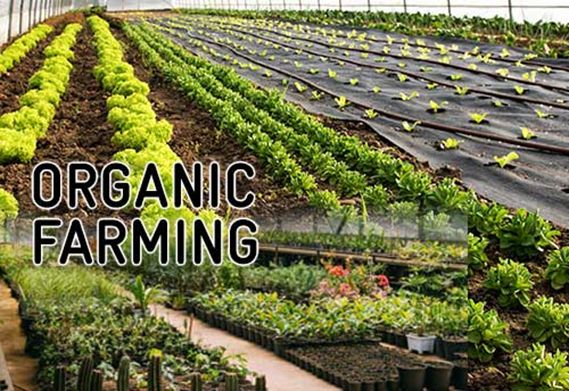
More than 3.7 lakh farmers have been registered under the programme, with around 171 activities opened for applications. Over 5.9 lakh applications have been received so far, of which nearly 4 lakh have been approved across districts. On the ground, more than 92,000 productive units covering farms, nurseries, livestock units, mushroom cultivation, poultry and value-addition enterprises have already been established, with over 86,000 units actively tracked through digital dashboards.
Capacity building has remained central to the programme. Through DakshKisan, over 3.5 lakh farmers have been onboarded for structured skilling and orientation, with nearly 3 lakh course completions recorded. This focus aims to strengthen on-farm decision-making related to crop selection, input optimisation, enterprise choice and risk management.
Monitoring under HADP extends beyond sanctions to measurable outcomes. Digitally tracked units have generated nearly ₹350 crore in revenue and over ₹125 crore in profit, along with more than 1.9 crore person-days of employment. In efficiency terms, this translates into over ₹2 of revenue and nearly ₹1 of profit for every rupee of subsidy deployed so far indicating that public investment is translating into tangible household-level economic activity.
Addressing a long-standing bottleneck, credit linkage has been integrated into the KisanSathi platform, enabling banks to access applications digitally. Thousands of cases have already been routed to financial institutions, marking a gradual shift from subsidy-centric support to enterprise-oriented financing.
One programme, one coherent logic
While the breadth of HADPs panning crops, livestock, horticulture, fisheries, mechanisation, marketing and digital agriculture—may appear complex, its underlying logic is cohesive.
Input systems are being strengthened to reduce cost and risk. Competitive advantages such as niche crops, temperate vegetables, livestock and fisheries are being organised into viable enterprises. Value chains are being built to ensure that production is linked with storage, processing, branding and strategic market access. Technology is deployed not as a slogan, but as an enabler of transparency, advisory services and real-time decision-making.
This coherence allows HADP to function as an integrated system rather than a set of fragmented interventions.
Beyond Jammu & Kashmir
Though tailored to the unique agro-ecological realities of Jammu & Kashmir, elements of HADP’s design are drawing attention beyond the Union Territory. Its emphasis on technology-enabled delivery, enterprise-linked support and outcome-based monitoring reflects a broader evolution in agricultural governance towards transparency, accountability and income-led interventions.
Officials note that the programme’s focus on execution quality and measurable outcomes has generated interest in how similar models could be adapted to other climatically diverse and hill regions, where scheme-driven approaches have produced uneven results.
The road ahead
With foundational systems now firmly in place, the focus under HADP has shifted towards scale and consolidation. Capacities created across seed systems, livestock development, protected cultivation, mechanisation and post-harvest infrastructure are expected to yield higher productivity and returns as utilisation deepens over the remaining programme period.
Going forward, emphasis will be placed on expanding coverage, strengthening market linkages and ensuring commercial viability of enterprises already established. As outcomes compound across sectors, HADP is increasingly being positioned not merely as a programme, but as a long-term framework for agricultural transformation in Jammu & Kashmir—aligning public investment with farmer incomes, enterprise growth and food security objectives.