“Jammu and Kashmir’s security approach must continue in mission mode, with strong intelligence-led operations, strict action against terror financing, and seamless coordination among security agencies. These efforts should be reinforced by effective governance, development initiatives, and community engagement to prevent radicalisation.”
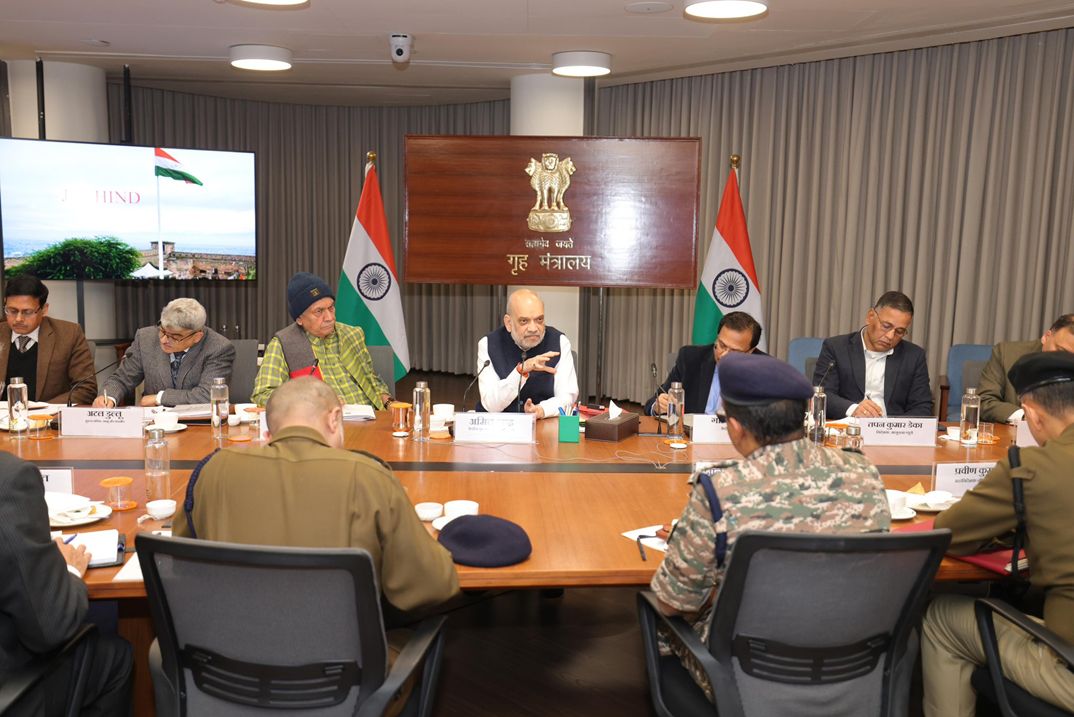
The first high-level security review of Jammu and Kashmir in 2026, chaired by Union Home Minister and Minister of Cooperation Amit Shah in New Delhi, has set the tone for what the Modi government believes could be a decisive year in the Union Territory’s long and complex battle against terrorism. The meeting, attended by top political, administrative, intelligence and security leadership, reflected both confidence in the gains achieved over the past few years and an unmistakable urgency to consolidate them through sustained, mission-mode counter-terror operations. At its core, the review underscored the Centre’s determination to translate relative stability into lasting peace by dismantling the residual terror ecosystem—comprising armed terrorists, overground workers (OGWs), cross-border facilitators, and financial networks—that continues to pose a threat to security in pockets of Jammu and Kashmir. The emphasis on “mission mode” operations, zero tolerance, and inter-agency synergy indicates a calibrated shift from reactive counter-terrorism to proactive, intelligence-led domination of the security space.
A Meeting Of Strategic Significance : The presence of Jammu and Kashmir Lieutenant Governor Manoj Sinha, Union Home Secretary, Director of the Intelligence Bureau, J&K Chief Secretary, Director General of Police, and heads of Central Armed Police Forces (CAPFs) lent the meeting both political authority and operational depth. This was not merely a routine review but a strategic stocktaking exercise, assessing where the security architecture stands after more than six years since the abrogation of Article 370 and the reorganisation of the erstwhile state into two Union Territories. Amit Shah’s remarks reflected continuity in the Centre’s Kashmir policy: firm on security, uncompromising on terrorism, and confident that coordinated governance and development can weaken the appeal of extremism. His assertion that the “terror ecosystem has been crippled” due to sustained efforts signals the government’s belief that terrorism in Jammu and Kashmir is no longer an entrenched mass phenomenon but a residual challenge that can be eliminated through focused action.
Post-Article 370|Security Gains, Structural Changes: Since August 2019, the security paradigm in Jammu and Kashmir has undergone a structural transformation. The abrogation of Article 370 removed the constitutional asymmetry that, according to the Centre, had impeded full integration and effective governance. This political move was followed by an overhaul of the security grid, legal framework, and administrative control. From a counter-terrorism perspective, several trends stand out. First, there has been a marked decline in large-scale terror incidents and mass civilian mobilisations orchestrated by separatist networks. Second, local recruitment into terrorist ranks has reduced compared to earlier peaks, although it has not been entirely eliminated. Third, security forces have improved their dominance in both urban and rural areas through technology-enabled surveillance, human intelligence, and coordinated operations. Amit Shah’s directive to ensure that gains achieved after the abrogation of Article 370 are “sustained” reflects an understanding that counter-terrorism successes are fragile if not backed by constant vigilance. Terror groups have historically adapted to pressure by changing tactics, exploiting terrain, or reactivating sleeper cells when security forces lower their guard.
Mission Mode Counter-Terror Operations: One of the central takeaways from the meeting was the insistence on continuing Counter-Terror (CT) operations in “mission mode.” This phrase, repeatedly used by the Home Minister, suggests an approach that is time-bound, target-oriented, and outcome-driven rather than open-ended. Officials briefed the Home Minister on recent operational successes, including the foiling of infiltration attempts along the Line of Control (LoC) and the International Border. These operations point to improved border management, better intelligence sharing, and effective use of surveillance technologies such as ground sensors, drones, and thermal imaging. Encounters in districts like Kishtwar, Doda, and Udhampur—areas that have seen renewed terrorist activity in recent years—were also discussed in detail. The spread of terrorism beyond traditional hotspots in north and south Kashmir into parts of the Jammu region has been a cause for concern for security planners. These areas are characterised by dense forests, mountainous terrain, and sparse habitation, making them conducive to terrorists, hideouts and movement. By directing agencies to eliminate terrorists hiding in “difficult and inaccessible areas,” Amit Shah acknowledged the operational challenges involved. Such operations require high levels of coordination between the Army, police, CAPFs, and intelligence agencies, as well as patience to avoid collateral damage and civilian alienation.
Targeting Terror Financing| The Invisible Front : Another key focus of the review was terror financing, often described as the invisible backbone of terrorism. Over the past few years, security agencies have intensified efforts to choke financial flows that sustain terrorist networks—ranging from cross-border hawala channels and drug trafficking to misuse of charities and digital platforms. The Home Minister’s emphasis on targeting terror financing alongside infrastructure reflects a holistic understanding of counter-terrorism. Eliminating armed terrorists without dismantling their financial and logistical support networks often leads to a cyclical resurgence. By contrast, sustained financial scrutiny weakens recruitment, procurement of weapons, and propaganda activities. Agencies have increasingly relied on data analytics, inter-agency financial intelligence, and legal tools to identify and freeze assets linked to terrorism. These measures, while less visible than encounters, are crucial in ensuring long-term security stability.
Inter-Agency Synergy, Resource Commitment: A recurring theme in Amit Shah’s interactions with security agencies has been the need for seamless coordination. Jammu and Kashmir’s security environment involves multiple stakeholders—the Army, J&K Police, CRPF, BSF, intelligence agencies, and civil administration. Any gaps in coordination can be exploited by terrorist elements. By directing all agencies to “remain alert, work in synergy,” the Home Minister reinforced the principle that counter-terrorism is a collective effort. The assurance that “all necessary resources will be made available” further signals political backing for security forces operating in challenging conditions. This commitment is particularly important at a time when security forces are also tasked with ensuring the safety of developmental projects, infrastructure expansion, and increasing tourist inflow—key pillars of the Centre’s broader Kashmir strategy.
Security Ahead Of Republic Day: The timing of the meeting—weeks ahead of the 76th Republic Day celebrations—adds another layer of significance. National events have historically been targeted by terrorist groups seeking symbolic impact and media attention. The emphasis on tight security coordination reflects lessons learned from past attempts to disrupt such occasions. Enhanced deployment, area domination, checking of infiltration routes, and monitoring of OGWs are expected to form part of the heightened security measures. The challenge lies in balancing robust security with normalcy, ensuring that public life is not unduly disrupted.
“The review chaired by HM Amit Shah reflects the Centre’s resolve to eliminate terrorism and ensure lasting peace in Jammu and Kashmir. Sustained vigilance, combined with inclusive development and public trust, will be key to securing and preserving the hard-earned gains on the ground.”
“2026 A Decisive Year”: Perhaps the most striking assertion emerging from the review was the view that 2026 should be a “decisive year” in the complete elimination of terrorism from Jammu and Kashmir. This sets a clear political and operational benchmark. However, achieving this objective will depend on several factors. Cross-border dynamics remain a critical variable, as infiltration and support from across the LoC have historically fuelled terrorism Regional geopolitical developments could also influence the security environment. Equally important is the internal dimension—winning public trust, addressing grievances through governance, and ensuring that development reaches the grassroots. While security operations can neutralise terrorists, long-term peace requires reducing the social and ideological space in which extremism thrives.
Beyond Security|The Larger Peace Narrative: Amit Shah’s reiteration of the Modi government’s commitment to “lasting peace” suggests that counter-terrorism is being pursued as part of a larger political vision rather than an end in itself. Over the past few years, the Centre has sought to project Jammu and Kashmir as a region transitioning from conflict to development, marked by improved infrastructure, tourism growth, and investment initiatives. For this narrative to hold, security gains must be durable. Any major terror incident has the potential to undermine confidence, both locally and nationally. This explains the Home Minister’s insistence on maintaining high alertness even as violence levels decline.
Kashmir Horizon View: The high-level security review chaired by Amit Shah signals continuity, confidence, and caution in equal measure. Confidence in the progress made against terrorism, caution against complacency, and continuity in the mission-mode approach that has defined the Centre’s Kashmir policy in recent years. As Jammu and Kashmir enters 2026, the security establishment faces a dual challenge: to decisively eliminate remaining terrorist elements while ensuring that normalcy deepens rather than remains superficial. The emphasis on coordination, intelligence-led operations, and financial disruption suggests a mature counter-terrorism strategy that goes beyond mere firefighting. Whether 2026 becomes the decisive year envisioned by policymakers will depend not only on operational success but also on sustaining political will, administrative efficiency, and public confidence. For now, the message from New Delhi is unequivocal: the fight against terrorism in Jammu and Kashmir will continue relentlessly, in mission mode, until the goal of a terror-free Union Territory is achieved. As Jammu and Kashmir moves into what the government has described as a decisive phase in its fight against terrorism, the way forward must rest on a balanced and multi-dimensional strategy that combines robust security measures with sustained governance and development initiatives. While counter-terror operations in mission mode remain essential, the focus must increasingly shift towards consolidation, prevention, and long-term stability. First, intelligence-led policing and operations need to be further strengthened. The evolving nature of terrorism—marked by small, agile modules, hybrid terrorists, and cross-border facilitation—requires real-time intelligence, advanced surveillance technologies, and deep human intelligence networks. Greater integration of data analytics, cyber monitoring, and financial intelligence will help security agencies anticipate threats rather than merely respond to them. Second, targeting terror financing must continue as a priority area. Choking financial lifelines disrupts recruitment, logistics, and propaganda, weakening terrorist organisations from within. Enhanced coordination between security agencies, financial institutions, and investigative bodies is vital to detect illicit flows, freeze assets, and prosecute offenders swiftly under the law. Third, the role of the Jammu and Kashmir Police as the primary internal security force must be further empowered. Capacity-building through training, modern equipment, and welfare measures will enhance their operational effectiveness and morale. Community-oriented policing can also play a crucial role in bridging trust deficits, encouraging public cooperation, and isolating extremist elements. Fourth, border management and counter-infiltration measures must remain uncompromising. Continuous technological upgrades, better infrastructure along the Line of Control and International Border, and seamless coordination between the Army, BSF, and intelligence agencies are essential to prevent cross-border terrorism from regaining momentum. Finally, security gains must be complemented by inclusive governance and development. Employment generation, education, infrastructure growth, and political engagement are critical in addressing the root causes of alienation. Ensuring that development reaches remote and vulnerable areas will help shrink the space for radicalisation and strengthen the legitimacy of the democratic process.
(“Team Kashmir Horizon” is committed to continuous improvement and invites feedback and suggestions from readers and its followers on social media sites. Reader insights are considered vital for enhancing content quality and empowering the community. The team encourages open communication and values the thoughts and ideas of its audience, believing that such input will enable them to serve the public more effectively. The initiative aims to ensure that readers have the best possible experience with “Kashmir Horizon”. Interested individuals can reach out to us via email at [email protected].)