“The relevance of Netaji Subhas Chandra Bose’s ideals, especially his belief in unity as the foundation of nation-building. Recalling the power of the “Jai Hind” slogan, described Jammu as a symbol of national unity and an unbroken cultural stream that has upheld the spirit of integration over generations.”
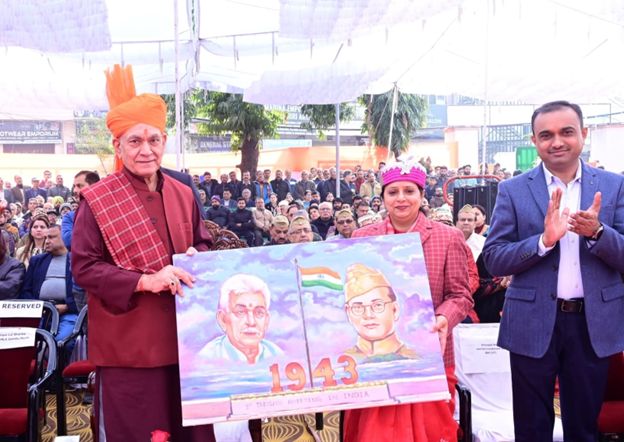
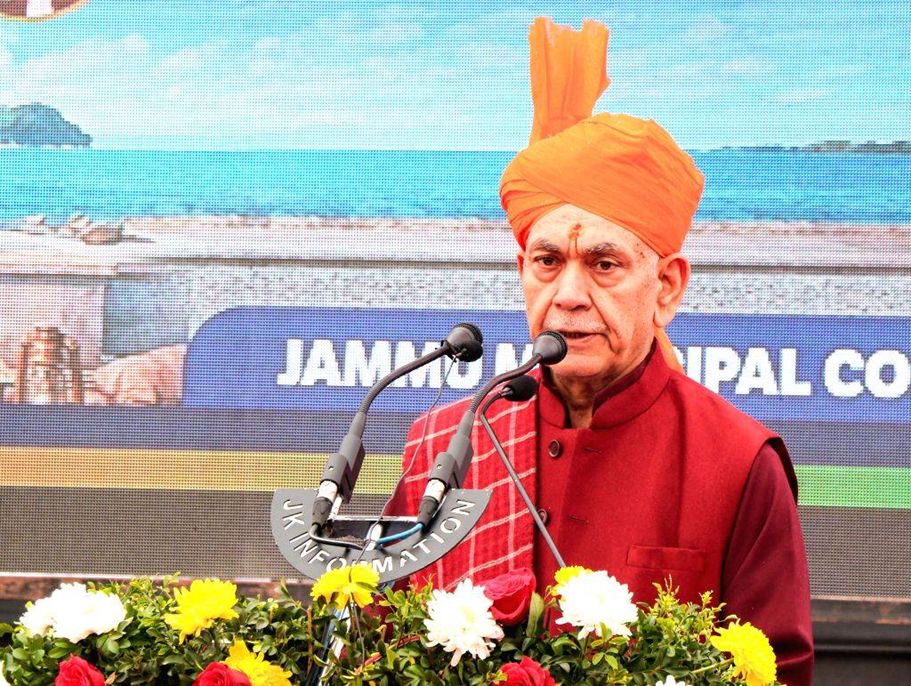
The hoisting of the Tricolour by Lieutenant Governor Manoj Sinha at the newly inaugurated Netaji Subhas Chandra Bose Flag Point at JDA Park, Ram Vihar, Jammu, to mark the 82nd anniversary of Netaji’s historic act in the Andaman and Nicobar Islands, was far more than a commemorative ceremony. In the context of Jammu and Kashmir, it carried layered political, historical and emotional significance—linking the legacy of one of India’s most uncompromising freedom fighters with a region that has long occupied a central place in the discourse on national unity, sovereignty and integration. On December 30, 1943, when Netaji Subhas Chandra Bose hoisted the Indian flag at Port Blair and declared the islands free from British rule, it was a bold assertion of Indian sovereignty at a time when independence still seemed distant. That moment gave millions of Indians a renewed resolve for freedom. Eighty-two years later, invoking that legacy in Jammu often described as the gateway and sentinel of India’s northern frontiers was a deliberate and meaningful act. It underscored the idea that the freedom struggle, and the values it enshrined, are not confined to history books but continue to shape contemporary governance and national consciousness.
Netaji’s Ideals, Their Contemporary Relevance: Paying tributes to Netaji Subhas Chandra Bose, the Lieutenant Governor highlighted that the slogan “Jai Hind,” coined by Netaji, remains a powerful symbol of national valour. Once a rallying cry that united the Azad Hind Fauj, it continues to inspire over 140 crore Indians today. In Jammu and Kashmir, where national identity has often been contested and politicised, such symbolism assumes special relevance. “Jai Hind” is not merely a slogan here; it is an assertion of belonging, unity and shared destiny. Netaji’s patriotism, as the Lieutenant Governor noted, was unparalleled. His belief that the future of India could only be built on unity speaks directly to the historical and contemporary challenges of Jammu and Kashmir. For decades, divisions—political, regional, ideological and sometimes violent—have shaped the region’s narrative. Netaji’s conviction that a fragmented society cannot build a lasting future resonates strongly in this context. It offers a reminder that unity is not a slogan imposed from above but a collective responsibility grounded in shared values and mutual respect.
Jammu | A Symbol Of National Unity: In his address, Manoj Sinha described Jammu as a symbol of India’s national unity and an unbroken cultural stream. This assertion carries historical weight. Jammu has long been seen as a cultural and political anchor in the former princely state, representing continuity amid change. The region’s people, the Lieutenant Governor said, have kept alive the flame of complete integration of Jammu and Kashmir through generations, often under challenging circumstances. This narrative aligns with the broader national discourse that frames Jammu not merely as a geographic region but as a custodian of India’s integrative ethos. By situating Netaji’s legacy within Jammu, the administration sought to draw parallels between the freedom struggle’s emphasis on sovereignty and the contemporary project of strengthening national integration in Jammu and Kashmir.
From Freedom Struggle To Governance Discourse: Netaji’s vision extended beyond political freedom. His advocacy for Swaraj was deeply intertwined with social and economic transformation. He emphasised the empowerment of youth and women, recognised the importance of industrialisation, and supported the promotion of small-scale industries as a means of achieving self-reliance. The Lieutenant Governor highlighted that these ideas laid the foundation for what India today calls “Atmanirbhar Bharat.” In Jammu and Kashmir, these ideas carry practical significance. The region has long grappled with economic challenges, unemployment and underutilisation of its human and natural resources. By invoking Netaji’s economic philosophy, the administration subtly linked historical ideals with contemporary development goals—skill development, industrial growth, entrepreneurship and inclusive economic participation.
The Politics Of Memory, Recognition : The Lieutenant Governor expressed gratitude to Prime Minister Narendra Modi for ensuring that Netaji’s legacy receives its rightful place in India’s national narrative. Over the past decade, there has been a conscious effort to re-evaluate and foreground figures who, despite their immense contributions, were marginalised in post-Independence historiography. In Jammu and Kashmir, where history and memory have often been contested terrains, such acts of recognition acquire added importance. Memorials, flag points and commemorative events are not just symbolic; they shape public memory and influence how future generations understand their relationship with the nation. The inauguration of the Netaji Subhas Chandra Bose Flag Point thus becomes part of a broader attempt to embed national icons into local landscapes, fostering a sense of shared heritage.
Tricolour| A Unifying Symbol In J&K: The act of hoisting the Tricolour in Jammu, particularly in a newly designated public space, carries a resonance that goes beyond ceremonial protocol. In Jammu and Kashmir, the national flag has historically been a potent symbol—sometimes embraced, sometimes contested. By anchoring the Tricolour to Netaji’s legacy, the administration sought to reinforce its meaning as a symbol of sacrifice, courage and collective aspiration rather than mere authority. The Lieutenant Governor’s call for preserving shared heritage and shared values speaks directly to the region’s complex social fabric. Jammu and Kashmir’s diversity—religious, linguistic and cultural—has often been cited both as a strength and a source of tension. Netaji’s insistence on unity as the foundation of nation-building offers a philosophical anchor for navigating this diversity.
Institutional Collaboration, Civic Participation: The event also highlighted the role of institutions in shaping public memory. The Lieutenant Governor appreciated the collaborative efforts of the Jammu Municipal Corporation, Jammu Development Authority, Housing and Urban Development Department, and the District Administration in honouring Netaji’s legacy. Such collaboration reflects a governance model that seeks to integrate civic bodies into larger national narratives. Importantly, the Lieutenant Governor called for holding regular commemorative events on December 30 every year. Institutionalising remembrance transforms one-time ceremonies into enduring traditions. In a region where public spaces and narratives have often been politicised, regular, inclusive commemorations can help normalise national symbols and foster civic pride.
Engaging With History| Gallery, Documentary: The visit to the photo gallery depicting Netaji’s life history and the screening of a documentary on his leadership further reinforced the educational dimension of the event. In Jammu and Kashmir, where young people form a significant portion of the population, engaging with history through visual and narrative mediums is particularly important. Such initiatives can bridge the gap between abstract historical figures and lived realities. By presenting Netaji not merely as a distant icon but as a leader with clear ideas on youth empowerment, discipline and national service, the administration aimed to make his legacy relatable to contemporary audiences in Jammu and Kashmir.
Presence Of Public Representatives, Civil Society: The presence of Members of Legislative Assembly, senior civil and police officials, Padma Shri awardees, prominent citizens and people from diverse walks of life underscored the inclusive nature of the event. In a region where political representation and public trust have been sensitive issues, such broad participation sends an important message of collective ownership. It reflects an attempt to position national commemorations not as state-imposed rituals but as shared civic experiences. This inclusivity is crucial for building legitimacy and resonance, particularly in Jammu and Kashmir’s evolving political landscape.
“Linking history with the present, the Lieutenant Governor said Netaji’s emphasis on youth and women empowerment, self-reliance and industrial growth remains relevant for Jammu and Kashmir’s development journey. He called for preserving shared heritage and turning remembrance into a living civic tradition rooted in unity and national purpose.”
J&K In The National Narrative: At a deeper level, the event highlights how Jammu and Kashmir is being increasingly integrated into the national narrative through symbols, commemorations and institutional practices. By aligning the region with Netaji’s legacy—a figure associated with uncompromising nationalism and sacrifice—the administration reinforced the idea that Jammu and Kashmir’s story is inseparable from India’s freedom struggle and nation-building journey. This is particularly significant given the region’s recent political transitions. In such a context, symbolic acts acquire heightened importance as markers of continuity, reassurance and inclusion.
Unity | A Living Example: The Lieutenant Governor’s repeated emphasis on unity reflects an understanding that integration is not merely constitutional or administrative but social and emotional. Netaji’s belief that unity is the bedrock of a nation finds renewed relevance in Jammu and Kashmir, where healing historical wounds and building trust remain ongoing processes. By invoking Netaji’s ideals, the administration sought to frame unity not as uniformity but as collective commitment to shared values—freedom, dignity, development and national pride.
Legacy, Landscape And The Future: The inauguration of the Netaji Subhas Chandra Bose Flag Point in Jammu was not just about commemorating a historical event from 1943. It was about situating Jammu and Kashmir firmly within the moral and emotional geography of the Indian nation. Through the symbolism of the Tricolour, the invocation of Netaji’s ideals, and the emphasis on unity and development, the event sought to connect past sacrifice with present responsibility and future aspiration. In a region where history often weighs heavily on the present, such moments matter. They offer opportunities to reframe narratives, reinforce shared identities and inspire collective progress. As Jammu and Kashmir continues its journey towards peace, stability and development, the enduring message of Netaji Subhas Chandra Bose—that unity is the foundation of freedom and the future—remains both relevant and necessary.
Kashmir Horizon View: Lieutenant Governor Manoj Sinha’s address at the National Flag Hoisting ceremony in Jammu carried a message that went beyond remembrance and ritual. By invoking the legacy of Netaji Subhas Chandra Bose, the Lieutenant Governor framed the occasion as a reaffirmation of India’s core values—unity, sacrifice and national purpose—while placing Jammu and Kashmir firmly within that larger national narrative. His emphasis on the enduring power of the “Jai Hind” slogan highlighted how symbols born during the freedom struggle continue to bind the nation emotionally and morally, including in regions that have faced prolonged challenges. LG’s reflections on Netaji’s belief in unity as the foundation of nation-building were particularly significant for Jammu and Kashmir. By stressing that a divided society cannot build a lasting future, he articulated a vision that directly addresses the region’s historical complexities. His portrayal of Jammu as a symbol of national unity and an unbroken cultural stream reinforced the idea that the people of the region have played a sustained role in preserving India’s integrative spirit across generations. Equally important was the forward-looking dimension of his address. By highlighting Netaji’s emphasis on youth and women empowerment, industrialisation and self-reliance, the Lieutenant Governor linked historical ideals with contemporary development goals in Jammu and Kashmir. His call for regular commemorations and institutional participation underscored the need to transform remembrance into a living civic tradition. Taken together, the Lieutenant Governor’s address positioned Netaji’s legacy not as a chapter of the past, but as a guiding principle for present governance and future aspirations. In doing so, it offered Jammu and Kashmir a narrative rooted in unity, dignity and shared national purpose.
(“Team Kashmir Horizon” is committed to continuous improvement and invites feedback and suggestions from readers and its followers on social media sites. Reader insights are considered vital for enhancing content quality and empowering the community. The team encourages open communication and values the thoughts and ideas of its audience, believing that such input will enable them to serve the public more effectively. The initiative aims to ensure that readers have the best possible experience with “Kashmir Horizon”. Interested individuals can reach out to us via email at [email protected].)