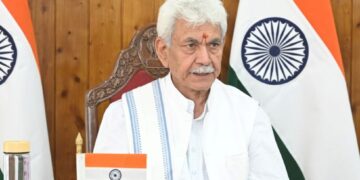
LG Sinha Drives Tech-Led Crackdown For Curbing J&K Terror Ecosystem
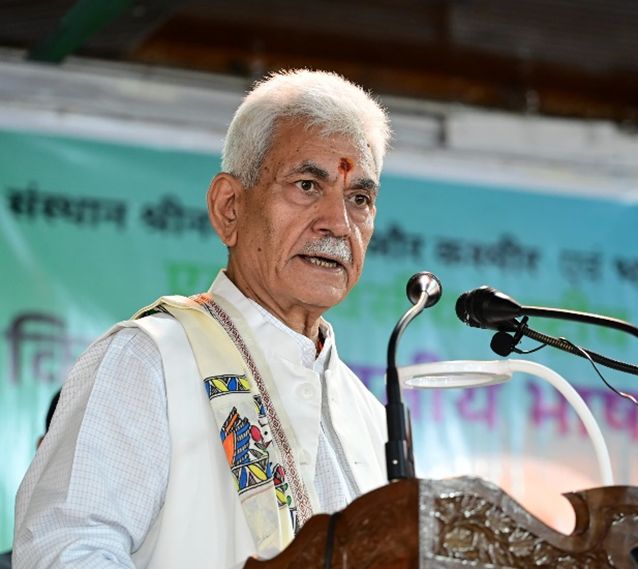
“The UT-level Security Conference chaired by Lieutenant Governor Manoj Sinha in Jammu reviewed the security situation in Jammu and Kashmir under the guidance of Prime Minister Narendra Modi and Union Home Minister Amit Shah. The Lieutenant Governor said the security gains achieved since 2019 must be defended, noting that better coordination among the J&K Police, Army, intelligence agencies and CAPFs has significantly reduced terrorist violence and recruitment.”
Mohammad Irfan
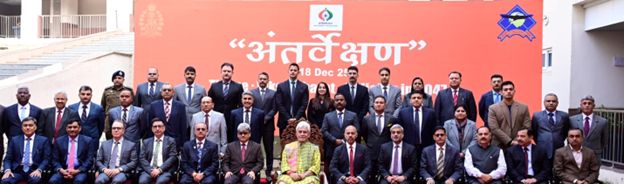
As India advances towards the vision of Viksit Bharat—a developed, resilient, and globally confident nation—the centrality of internal security has assumed renewed significance. This reality was at the heart of the UT-level Security Conference chaired by Lieutenant Governor Manoj Sinha in Jammu, held on the lines of the national DGPs/IGPs Conference. Conducted under the guidance of Prime Minister Narendra Modi and Union Home Minister Amit Shah, the conference served as a strategic forum to assess evolving threats, consolidate gains made since 2019, and chart a forward-looking roadmap to counter terrorism in all its manifestations. Drawing inspiration from the DGPs/IGPs Conference held earlier this year in Raipur, where extensive deliberations took place on the theme “Viksit Bharat: Security Dimensions,” the Jammu conference reflected the Government of India’s conviction that security institutions must continuously evolve to keep pace with changing realities. The discussions underscored that development, governance, and national security are deeply interconnected—and nowhere is this linkage more evident than in Jammu and Kashmir.
Security The Bedrock of Development: In his address, the Lieutenant Governor emphasised that security is not merely about neutralising threats, but about enabling a climate where governance functions smoothly, citizens feel protected, and economic activity flourishes. For Jammu and Kashmir, long affected by terrorism and instability, security has historically been the most decisive factor shaping social and economic outcomes. Since 2019, the Union Territory has witnessed a measurable improvement in the security environment. Incidents of terrorist violence have declined, recruitment into terror ranks has dropped, and the operational space available to militant groups has significantly shrunk. According to the Lieutenant Governor, these outcomes are the result of systematic strengthening of the security grid and unprecedented coordination among the J&K Police, Army, intelligence agencies, and Central Armed Police Forces (CAPFs). However, he cautioned that these gains must not be taken for granted. “The real security gains since 2019 must be defended,” he asserted, stressing that terrorism thrives on complacency and adapts rapidly to new circumstances.
From Eliminating Terrorists to Dismantling Terror Ecosystem: One of the most important strategic messages to emerge from the conference was the clear shift from targeting individual terrorists to dismantling the entire terror ecosystem. The Lieutenant Governor underlined the need for coordinated and relentless action against terrorists, their enablers, and their ideologues in order to eradicate safe havens across the Union Territory. Modern terrorism, the discussions noted, is sustained by a complex network of overground workers (OGWs), financiers, recruiters, propagandists, and intimidators. These elements often operate below the threshold of overt violence but are critical to sustaining militancy. “Armed terrorists and their supporters, OGWs, and those intimidating the common citizen should be treated equally,” the Lieutenant Governor said, sending a strong message that the state will no longer tolerate distinctions that allow terror networks to regenerate. This approach reflects a decisive break from earlier paradigms that focused disproportionately on armed militants while leaving support structures largely intact.
Zero Tolerance And Accountability: The insistence on holding all components of the terror ecosystem accountable is rooted in the understanding that terrorism is not just a security problem but also a challenge to the rule of law and democratic governance. By ensuring that every individual involved—whether directly or indirectly—pays a “very heavy price” for their actions, the administration aims to restore public confidence and deter future collaboration with extremist groups. This policy also addresses the long-standing issue of citizen intimidation, particularly in rural and remote areas. Fear has often prevented ordinary people from cooperating with authorities. The conference emphasised that protecting citizens from coercion is as important as neutralising armed threats.
Strengthening The Security Grid: Lessons From Past Six Years: The Lieutenant Governor highlighted that the past six years have been transformative for Jammu and Kashmir’s security architecture. Enhanced intelligence-sharing, better coordination between agencies, improved surveillance, and focused area domination have collectively reduced the operational freedom of terrorist groups. Joint operations involving the J&K Police and Army have become more intelligence-driven and precise, minimising collateral damage while maximising effectiveness. CAPFs have played a crucial role in maintaining law and order and securing critical infrastructure, allowing local police to focus on counter-terrorism and intelligence tasks. Yet, the conference also recognised that adversaries are constantly evolving, necessitating continuous innovation and adaptation.
Government Approach To Counter-Terrorism: One of the defining features of the current security doctrine is the adoption of a whole-of-government approach. The Lieutenant Governor stressed that security challenges cannot be addressed by security forces alone. Civil administration, financial regulators, border management agencies, and even social sector departments must work in close coordination. This integrated approach ensures that, terror financing networks are detected and dismantled, Radicalisation is countered through education and outreach, Administrative tools complement kinetic operations and development initiatives reduce the socio-economic vulnerabilities exploited by extremist groups. By aligning administrative and security priorities, the UT aims to deny terrorism both physical space and social legitimacy.
Evolving Threats In A Changing Security Landscape: The conference devoted significant attention to the changing nature of security threats. While traditional terrorism involving firearms and explosives remains a concern, newer challenges have emerged that require different tools and mindsets. “The landscape of security threats has undergone a profound change in recent years,” the Lieutenant Governor observed. He highlighted the growing role of cyber space, encrypted communications, online radicalisation, and narco-terrorism in sustaining extremist activities. These threats often transcend geographical boundaries, making them harder to detect and counter through conventional means.
From Reactive To Proactive Security Strategies: A key strategic objective outlined at the conference was the shift from reactive responses to proactive prevention. Instead of responding after incidents occur, security agencies are being encouraged to anticipate threats through predictive intelligence, data analytics, and continuous surveillance.
Proactive security Involves: Identifying early warning signals of radicalization. Disrupting terror financing before funds are deployed. Neutralising infiltration attempts at the planning stage. Pre-empting recruitment drives through community engagement This approach not only reduces violence but also limits the psychological impact of terrorism on society.
Leveraging Technology, Artificial Intelligence: Lieutenant Governor placed strong emphasis on the use of advanced technologies, particularly Artificial Intelligence (AI), as force multipliers in counter-terrorism efforts. AI-based tools can analyse vast amounts of data, identify patterns, and generate actionable intelligence far faster than traditional methods.
Applications Discussed Included: Tracking financial transactions linked to terror funding, Monitoring social media platforms for radical content, Facial recognition and movement analysis in sensitive areas, Predictive policing to identify potential hotspots. By integrating technology into the security framework, Jammu and Kashmir aims to build a next-generation security grid capable of addressing both current and future challenges.
Narco-Terrorism| Financing Violence, Destroying Society: Narco-terrorism emerged as a major area of concern during the deliberations. Drug trafficking has become a key source of funding for terrorist groups while simultaneously eroding the social fabric, particularly among youth.
“There is need to firm and coordinated action against the entire terror ecosystem, including armed terrorists, their supporters, OGWs and those intimidating civilians. Stressing the need to shift from reactive to proactive strategies, he advocated the use of advanced technologies like AI to counter evolving threats such as terror financing, radicalisation and narco-terrorism, ensuring lasting peace and security in the Union Territory.”
The Conference Highlighted The Need For: Stronger coordination between security and narcotics control agencies, Financial investigations to trace and seize illicit proceeds, Border vigilance to prevent cross-border smuggling, Awareness campaigns to reduce demand and social acceptance of drugs. Addressing narco-terrorism, the LG noted, is essential not only for security but also for safeguarding the future of the region’s younger generation.
Intelligence The Cornerstone Of Effective Security: Throughout the conference, intelligence was repeatedly identified as the most critical element of successful counter-terrorism. Enhancing intelligence capabilities—both human and technical—was described as the first line of defence. Field-level inputs, community-based intelligence, and seamless inter-agency information sharing are essential to maintaining operational superiority. The Lieutenant Governor stressed that intelligence failures often have far-reaching consequences, making capacity-building in this domain a top priority.
Restoring Public Trust, Normalcy : Beyond operational success, the conference recognised the importance of public trust in achieving long-term security. Terrorism thrives in environments where fear dominates and citizens feel abandoned. By ensuring that those who intimidate or coerce civilians are dealt with firmly, the administration aims to create an atmosphere where people can participate freely in civic life. This emphasis aligns security objectives with democratic values, reinforcing the idea that the ultimate goal of counter-terrorism is not control, but normalcy and empowerment.
Jammu & Kashmir A Model For Security Reform: The UT-level conference also highlighted how Jammu and Kashmir has become a testing ground for India’s evolving internal security strategies. The lessons learned here—about integration, technology, and ecosystem-based counter-terrorism—have relevance for other regions facing insurgency, extremism, or organised crime. By aligning local strategies with national security thinking, the Union Territory is contributing to a more coherent and adaptable internal security framework for the country as a whole.
Kashmir Horizon View: The UT-level Security Conference chaired by Lieutenant Governor Manoj Sinha marked a significant step in aligning Jammu and Kashmir’s security strategy with India’s broader developmental vision. Rooted in the theme of Viksit Bharat: Security Dimensions, the deliberations reinforced the understanding that sustainable development cannot exist without enduring peace and stability. By emphasising coordinated action, zero tolerance for terror and its enablers, proactive strategies, and the intelligent use of technology, the administration has laid down a clear roadmap for the future. The message emerging from Jammu was unequivocal: terrorism, in any form and at any level, will not be allowed to undermine the aspirations of the people or the unity of the nation. As India moves forward on its path of growth and transformation, the security framework being shaped in Jammu and Kashmir stands as both a safeguard and a symbol—demonstrating that with clarity of vision, institutional synergy, and unwavering resolve, even the most complex security challenges can be confronted and overcome.
(“Team Kashmir Horizon” is committed to continuous improvement and invites feedback and suggestions from readers and its followers on social media sites. Reader insights are considered vital for enhancing content quality and empowering the community. The team encourages open communication and values the thoughts and ideas of its audience, believing that such input will enable them to serve the public more effectively. The initiative aims to ensure that readers have the best possible experience with “Kashmir Horizon”. Interested individuals can reach out to us via email at [email protected].)