For more than a century, the Dars-i-Nizami system has served as the backbone of traditional Islamic education across South Asia, including the Kashmir Valley. Rooted in the scholastic reforms of the eighteenth-century scholar Mulla Nizamuddin of Farangi Mahal (Lucknow), the curriculum was later adopted, refined, and institutionalised by the Deoband seminary. In Kashmir, this system became deeply embedded in local religious culture, shaping clerical leadership, intellectual orientation, and community guidance. A closer examination reveals how Dars-i-Nizami historically evolved in the region, the intellectual disciplines it prioritises, the reasons for its durability, and the contemporary challenges and opportunities it now faces. The transplantation of Dars-i-Nizami into Kashmir occurred gradually between the late nineteenth and early twentieth centuries, a period marked by increasing interaction between Kashmiri scholars and the leading centres of learning in North India. As Deoband emerged as a major intellectual movement emphasising scriptural fidelity, spiritual discipline, and social reform, Kashmiri students travelled there in large numbers. Upon completing their studies, they returned to the Valley to establish madrasahs patterned after the Deobandi model, both in curricular content and pedagogical method. As a result, an indigenous network of seminaries developed, producing generations of imams, khatibs, muftis, teachers, and community leaders.
Historically, this system addressed a critical need. Kashmir’s literacy levels in the pre-modern era were low, and access to structured religious instruction limited. The emergence of madrasahs offered communities, particularly in rural areas, institutions that provided not only theological training but also basic literacy, ethical guidance, and social cohesion. Over time, these madrasahs helped standardise religious knowledge, reduce folk superstitions, and promote textual engagement with foundational Islamic sources. Thus, Dars-i-Nizami became much more than a curriculum; it formed a cultural and intellectual identity for Muslim Kashmir. The curriculum itself is built on a carefully layered structure intended to produce well-rounded scholars. Its foundation rests on Arabic grammar and linguistics, particularly Sarf (morphology) and Nahw (syntax), which form the essential tools for accessing Islamic texts. Students spend several years mastering works such as Nahw Mir, Kafiya, and Hidayatun Nahw, enabling them to read and analyse classical texts with precision. Complementing these is the study of Balagha (rhetoric) that sharpens literary understanding and enhances interpretive competence. Once linguistic proficiency is developed, students proceed to study the rational sciences—a hallmark of the Nizami tradition. This includes Mantiq (logic), Kalam (scholastic theology), Philosophy, and Uṣūl al-Fiqh (jurisprudential principles). Texts like Tahdhib al-Mantiq, Mirqat, Sharh Aqaid Nasafi, and Husami are central. While these works belong to pre-modern intellectual frameworks, they cultivate analytical thinking, structured argumentation, and conceptual clarity. In Kashmir, these subjects historically played a key role in producing scholars capable of engaging doctrinal debates, addressing sectarian controversies, and teaching through rigorous reasoning.
The heart of the curriculum is the study of Islamic jurisprudence (Fiqh), particularly the Hanafi school, which has been dominant in Kashmir for centuries. Students read advanced texts such as Hidayah, Kanz al-Daqa’iq, Nur al-Idah, and Sharh Wiqaya, learning not only legal rulings but the methodology and evidentiary reasoning that guide them. This legal training enabled madrasah graduates to serve as muftis and qadis in community disputes, marriage issues, inheritance matters, and ritual guidance. Alongside fiqh, there is an intensive engagement with Hadith studies. The capstone of the Dars-i-Nizami—rightly considered its pinnacle—is the Dawrah-i-Hadith year, during which students study Sahih al-Bukhari, Sahih Muslim, Jami‘ al-Tirmidhi, Sunan Abi Dawud, Sunan Nasai, Ibn Majah, and the Muwatta. Commentary traditions such as Fath al-Bari, Mirqat al-Mafatih, and Nayl al-Awtar help students grasp hadith interpretation, grading, and reconciliation of apparent contradictions. This emphasis on hadith has historically anchored Kashmiri scholarship in prophetic teachings and provided religious leaders with textual authority. Equally central is the study of the Qur’an, both memorisation and exegesis. Commentaries like Jalalayn, Tafsir al-Baidhawi, and Tafsir al-Mazhari form part of the curriculum, and in many Kashmiri madrasahs, students also study Ruh al-Ma‘ani and selected works of Shah Waliullah. This training ensures that graduates have mastery over linguistic nuance, jurisprudential implications of verses, and the spiritual dimensions of Qur’anic discourse.
The Dars-i-Nizami madrasahs in Kashmir are a rich, century-old intellectual heritage that has shaped Muslim identity and produced influential religious scholars through a curriculum centered on the Qur’an, Hadith, Islamic jurisprudence, and logic. Despite current challenges in adapting to modern needs, the system is an invaluable cultural asset. With thoughtful reform, enhanced engagement, and stronger academic standards, Dars-i-Nizami can harmonize tradition and modernity to meet the evolving needs of Kashmiri society.
Another important element, often overlooked, is the inclusion of Tasawwuf (spiritual ethics). Kashmir’s long tradition of Sufi learning resonated with Deobandi teachings emphasizing purification of the heart, humility, and service. Works like Masnawi Mawlana Rumi, Kashf al-Mahjub, and selections from Ihya’ Ulum al-Din instill moral refinement and spiritual consciousness in students. This has contributed significantly to the moral leadership roles madrasah graduates continue to play. However, the Dars-i-Nizami is not merely a bundle of subjects. It follows a distinct pedagogical philosophy. Its teaching method encourages memorisation, close reading of commentaries, and oral explanation (dars), fostering a culture of deep internalisation of knowledge. The teacher-student relationship is central: learning is not transactional but moral, affective, and character-building. Students are shaped not only by what they study but by how teachers embody piety, humility, discipline, and intellectual responsibility. This dynamic has ensured continuity of scholarly tradition in Kashmir.
The madrasahs also play vital social roles. They serve as accessible educational institutions for children from economically weaker backgrounds, offering free or subsidised tuition, boarding, and meals. Many rural communities rely on these institutions for religious guidance, leadership in rituals, mediation of disputes, and the preservation of Islamic cultural life. In an age of rapid secularisation and digital distraction, these institutions help maintain moral discipline and communal identity. In spite of these strengths, Dars-i-Nizami in Kashmir faces pressing challenges. One major concern is the disconnect between traditional training and contemporary professional demands. While the curriculum excels in classical studies, it often sidelines modern subjects such as English, social sciences, comparative religion, digital literacy, psychology, economics, and contemporary legal systems. This creates limitations for graduates seeking to contribute beyond mosque and madrasah roles.
Another challenge is methodological rigidity. Although the Dars-i-Nizami once represented reform and innovation in the eighteenth century, it has not undergone significant structural revision for more than a hundred years. Modern issues—bioethics, finance, AI, gender questions, human rights discourses, interfaith dynamics—require new intellectual tools that the current curriculum only partially offers. Without curricular expansion, the interpretive authority of scholars may weaken in rapidly changing contexts. The system also faces public misconceptions. Many view madrasahs as isolated, old-fashioned, or disengaged from wider society. The enormous social contribution they provide—literacy, ethical training, community cohesion—is often overlooked. To counter such narratives, madrasahs must adopt greater transparency, community engagement, and academic partnerships. Despite these concerns, the Dars-i-Nizami possesses enormous potential for renewal. Many Kashmiri scholars, both senior and emerging, advocate for a balanced reform approach—retaining traditional strengths while incorporating selected modern disciplines. Internationally, several madrasahs have successfully integrated subjects like English language, computer literacy, economics, and contemporary fiqh issues without compromising religious identity. Similar initiatives in Kashmir could empower graduates to engage academic debates, produce research, and assume broader leadership roles.
Encouragingly, several Kashmiri madrasahs have begun modest reforms: equipping libraries, promoting writing skills, offering optional modern subjects, and participating in inter-institutional academic discussions. The goal is not to replace tradition but to revitalise it. A balanced, context-conscious reform could produce a new generation of scholars firmly rooted in classical knowledge yet capable of navigating the intellectual, ethical, and socio-economic complexities of the modern world. In conclusion, the Dars-i-Nizami madrasahs of Kashmir represent a rich intellectual heritage that has shaped Muslim identity, scholarship, and community life for more than a century. Their curriculum, anchored in the Qur’an, Hadith, jurisprudence, theology, logic, and spiritual ethics, has produced generations of religious scholars whose influence extends across mosques, public life, and social institutions. While the system faces challenges in adapting to contemporary needs, it remains an invaluable cultural and educational asset. With thoughtful reform, enhanced engagement, and strengthened academic standards, Dars-i-Nizami can continue to thrive and serve the evolving needs of Kashmiri society, ensuring that tradition and modernity meet in a harmonious, forward-looking synthesis.
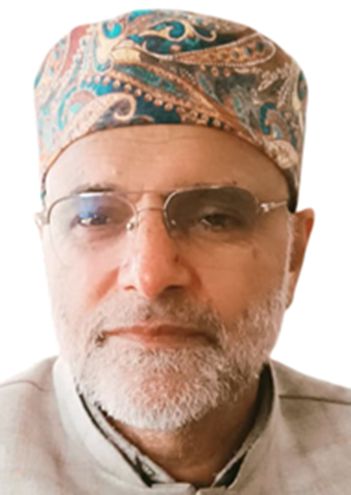
(The author a veteran academician is a former Professor and Head Department of Islamic Studies, Kashmir University. The views, opinions and conclusions expressed in this article are those of the author and aren’t necessarily in accord with the views of “Kashmir Horizon”)
[email protected]
Prof. Hamid Naseem Rafiabadi