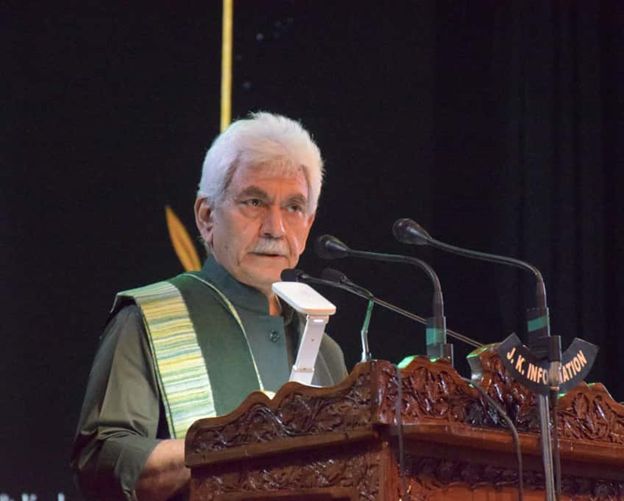
“Jammu and Kashmir is undergoing one of its most profound transformations in decades, with youth leading the way as classrooms, universities, startups and cultural spaces flourish after years of turbulence. The young professionals are now realising their dreams, terrorism had long robbed earlier generations of opportunity”
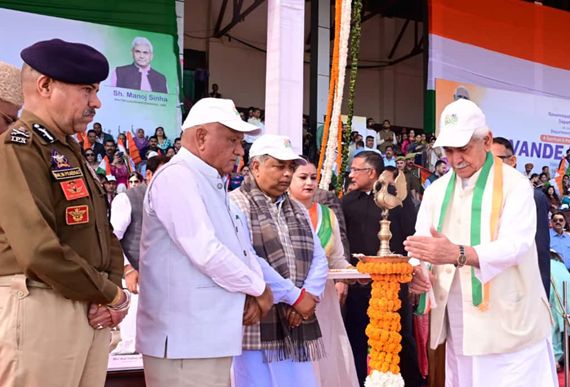
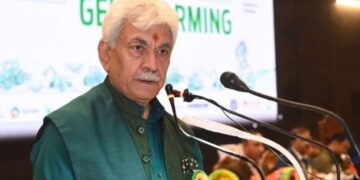
For more than thirty years, Jammu and Kashmir lived through a prolonged phase of terrorism that reshaped its social fabric and derailed the trajectory of thousands of young people. The 1990s and 2000s were defined by uncertainty—school closures, targeted killings, frequent strikes, stalled development and pervasive insecurity. A generation that should have been planning careers and innovating in classrooms instead grew up negotiating survival, curfews and conflict. This painful history was sharply captured in Lieutenant Governor Manoj Sinha’s recent address at the Islamic University of Science and Technology (IUST) where he declared, “Terrorism was the biggest enemy of the youth of Jammu and Kashmir, destroying their dreams and aspirations.” His words resonated deeply because they encapsulated a reality that nearly every family in the region has experienced directly or indirectly. Today, however, Jammu and Kashmir stands at a dramatically different juncture. Universities are teeming with students, startups are taking root, cinemas and cultural festivals have returned after decades, mobility has improved, and developmental projects from highways to hospitals—have brought new confidence. Yet, the threat of terrorism continues to lurk, evolving in new forms, testing the progress that the region has painstakingly achieved. Sinha’s IUST address was therefore more than ceremonial. It was a reminder that the story of New Kashmir is not just about development—it is also about defending that development.
Region in Transformation, A Threat That Keeps Adapting : The Lieutenant Governor’s remarks arrived at a time when the national conversation around security was intensifying. The high-intensity blast near Delhi’s Red Fort earlier in the week rekindled anxieties about the persistence of terror networks and the unpredictability of their operations. The tragic loss of lives in the capital brought grim reminders of how terror ecosystems exploit technology, encrypted communications, and dispersed networks across multiple states. Sinha expressed deep sorrow, describing the deaths as “extremely painful,” and extended condolences to families while urging unity against forces that target civilians. Events in Delhi and the recent accidental blast in Nowgam—though unrelated—both highlighted the same underlying challenge: terrorism lives in an ecosystem. It feeds on logistical channels, digital communication, local sympathisers, and occasionally on the gaps within systems. Even as Jammu and Kashmir experiences one of its most stable periods in decades, these incidents serve as reminders that the larger national landscape remains vulnerable. Sinha’s message reflected this awareness: development and security in Jammu and Kashmir must advance together, each reinforcing the other. This duality—rapid progress on one hand, persistent threats on the other—sets the context for Sinha’s assertive calls to youth, academia, civil society and law enforcement. His speeches collectively point to a new formula for sustaining peace: vigilance, community participation, and informed public engagement.
Youth as Architects of a New Narrative : One of the most compelling aspects of Sinha’s speech was his focus on youth. For decades, young people in the region were both victims of terror and unwilling participants in its ripple effects. Schools shut for months at a time, movement restrictions became routine, job opportunities were scarce, and thousands of young men and women struggled to compete with peers elsewhere in India. The situation has undergone a dramatic shift since 2019. University enrolment has risen sharply. Students now pursue modern degrees in engineering, management, biotechnology, design, artificial intelligence and allied sciences. Government programmes have pushed entrepreneurship, sports, skill development and innovation hubs into the mainstream. A new generation of Kashmiri youth is travelling, competing in national examinations, participating in film festivals, starting companies and taking leadership roles in local governance. Sinha described this transformation as the creation of “a new destiny and a new identity.” And he stressed that this progress is fragile—something that can be threatened if complacency sets in. According to him, terrorism today often attempts to infiltrate through new mediums: misinformation campaigns, digital radicalisation, manipulated narratives and social media networks designed to create disillusionment. This shift marks a new phase in the fight against terrorism. The battleground is no longer confined to borders or remote forests; it now includes classrooms, smartphones, online platforms and community spaces. For Sinha, protecting the aspirations of youth means protecting these spaces from negative influence. In this framework, every teacher, parent, student leader and community figure becomes a stakeholder in sustaining peace.
A Call to Society| Recognise, Reject, Report: The Lieutenant Governor expanded this message at the International Film Festival of Srinagar (IFFSK). Addressing filmmakers—a group traditionally associated with creativity rather than security—he made an unusual but impactful appeal: use art to narrate the pain of terror victims, document lived experiences and expose the structures that enable violence. It was a reminder that terrorism is not only a physical act but also an ecosystem built on silence, fear and misinformation. “Terrorism thrives in shadows,” Sinha said, urging society to help “expose the enemies of peace.” He emphasised that the terror ecosystem often hides behind legitimate social structures. Sometimes individuals involved in financing, harbouring or enabling terror are embedded indoors within ordinary businesses or local networks. Breaking this web requires community cooperation, as residents are often the first to observe suspicious movements or new individuals. In this context, informing the police or security agencies becomes not merely a civic duty but a protective act for the community itself. This community-centered approach mirrors successful counter-terror strategies across the world. From Europe to Southeast Asia, governments have increasingly relied on citizen vigilance, early-warning mechanisms and trust-building with law enforcement. Sinha’s emphasis on society’s role indicates that Jammu and Kashmir is adopting similar best practices—anchoring peace in public participation.
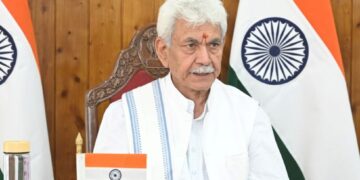
Security Forces And Journey Towards A “Fear-Free Environment”: Sinha has repeatedly acknowledged the sacrifices of security forces who have ensured that students, traders and ordinary residents can live without the constant fear that once defined everyday life. The last few years have seen a significant decline in terror-related incidents, fewer encounters in civilian areas, a steep drop in recruitment, and a noticeable weakening of logistical networks that previously supported terror groups. Surveillance upgrades and improved coordination among agencies have reduced infiltration. These achievements, however, came at a cost. The J&K Police, Army, CRPF and intelligence units have lost many brave personnel in the fight against terrorism. Their sacrifices form the unseen infrastructure of peace that allows young people to pursue their dreams today. Sinha described the combined effort of security forces as “tireless, dedicated work,” and stressed that every remaining “element of terror” must be neutralised. His directives during the recent Raj Bhawan security review meeting underscored the need for continuous vigilance, seamless inter-agency coordination, and proactive measures to prevent attempts at revival. He warned against emerging challenges: cyber recruiters, overground workers, hybrid terrorists, and “white-collar enablers” who operate without overt involvement but facilitate terror through finances, logistics, or online propaganda. These actors represent a new-age battlefield—one that requires intelligence-driven, technology-supported approaches.
“The new environment of peace is the result of years of sacrifice and coordinated efforts by the police, Army and security agencies, who have dismantled major networks and created a fear-free atmosphere that allows youth to thrive. But LG Sinha cautioned that maintaining this progress requires active public participation: communities must expose suspicious activities, families must guide youth away from harmful narratives, and society must remain united in protecting its future.”
The Red Fort Blast| A National Shock With Local Lessons: The shockwave from the Red Fort blast reached Kashmir as well, not because of any direct link, but because it illustrated the evolving nature of terrorism in India. Investigations indicated that the networks behind the attack spanned multiple states, used encrypted platforms, and involved individuals who were not necessarily on the radar of security agencies. Sinha’s remarks following the tragedy reflected both sorrow and caution. For Kashmir, the lesson was clear: even if local recruitment has declined, terrorism elsewhere can create new risks. The landscape today is not localised but interconnected. A facilitator in one state may be linked to handlers in another. Someone radicalised online may act far from home. This interwoven network means that Kashmir’s security improvements cannot exist in isolation—they are part of a larger, national ecosystem. The blast also reinforced the need for community awareness and early detection mechanisms in Jammu and Kashmir. Sinha’s appeals to the public must be viewed against this backdrop—modern terrorism thrives on invisibility, and therefore every citizen becomes a potential defender of peace.
The Post-2019 Shift|A New Confidence Across Kashmir: Since 2019, Jammu and Kashmir has undergone profound changes. Political interpretations aside, the administrative outcomes are visible and measurable. The region has attracted record investment proposals, witnessed unprecedented tourist footfall, and unlocked long-delayed infrastructure projects such as tunnels, expressways, transit corridors and rural roads. The education sector has expanded with new colleges, upgraded facilities, and reforms in school governance. Hospitals, medical colleges, and district health centres have improved access to care. Cinemas have reopened after three decades. Film festivals and cultural events are drawing national and international participants. Women’s participation in entrepreneurship, self-employment and governance has increased significantly. Digital governance has reduced delays and improved transparency. Most importantly, the perception of stability has grown. Youth who once hesitated to make multi-year plans—fearing shutdowns or unrest—now express confidence in long-term goals. This change in mindset may be one of the most powerful markers of New Kashmir. Sinha often describes this shift as a “new identity” for Jammu and Kashmir. But he cautions that such gains can erode quickly if society lets its guard down. In his view, the biggest threat to progress is not the magnitude of attacks but the illusion that peace is permanent. The call for vigilance is therefore not alarmist but realistic.
The New Social Compact|Peace Through Participation: Across his recent speeches, Sinha has articulated a new social compact—one based on the idea that peace cannot be sustained by the government alone. Teachers must detect early signs of radicalisation. Parents must guide children through misleading online content. Community leaders must speak up against extremist narratives. Youth groups must promote digital literacy and positive engagement. Civil society must collaborate with security forces, not remain distant from them. This approach treats peace not as a passive condition but as an active, daily practice. It acknowledges that terrorism today operates through ideas, misinformation, online networks and narratives—not only through weapons. Therefore, society’s voice becomes as important as the State’s. The administration’s strategy is built on four pillars:
Empowered youth who choose opportunity over radicalisation.
Vigilant communities that recognise and report threats.
Resilient institutions that sustain development.
Strong security forces that eliminate active threats.
This multi-layered approach reflects a mature, long-term vision for stability.
Kashmir Horizon View: From the classrooms of IUST to the discussions at IFFSK, from condolence messages after the Red Fort tragedy to high-level security reviews, Lieutenant Governor Manoj Sinha has been sending a consistent message: Jammu and Kashmir is writing a new story, but every chapter must be protected. Terrorism has weakened but not disappeared. It is mutating—shifting to digital platforms, disguised networks, and opportunistic strike patterns. The region’s development has become both its greatest strength and its biggest target. Protecting this progress demands intelligence, unity, vigilance and community participation. “We have created a new destiny for Jammu and Kashmir,” Sinha said. “Now we must protect it — at all costs.”
(“Team Kashmir Horizon” is committed to continuous improvement and invites feedback and suggestions from readers and its followers on social media sites. Reader insights are considered vital for enhancing content quality and empowering the community. The team encourages open communication and values the thoughts and ideas of its audience, believing that such input will enable them to serve the public more effectively. The initiative aims to ensure that readers have the best possible experience with “Kashmir Horizon”. Interested individuals can reach out to us via email at [email protected].)