“The Red Fort blast probe has been handed over to the NIA as investigators confirm that Pulwama doctor Umar Nabi was driving the explosive-laden car that detonated near the monument, killing 12 people. Linked to a “white-collar” terror module with Jaish-e-Mohammed and Ansar Ghazwat-ul-Hind, Umar had waited for hours near the site while tracking news of his associates’ arrests and the seizure of nearly 3,000 kg of explosives across multiple states.”
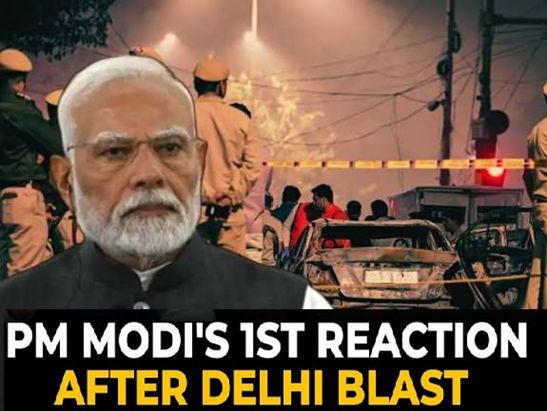
A blast that shocked the nation has spiralled into one of the most complex terror investigations in recent years, exposing an interstate “white-collar” radical network and placing security agencies on the highest alert. As the wreckage near Delhi’s Red Fort still smouldered, the probe quickly zeroed in on Pulwama doctor Umar Nabi—identified as the driver of the explosive-laden car triggering a sweeping multi-agency crackdown across Kashmir, Haryana and Uttar Pradesh. With 12 lives lost and hundreds of families shaken, the investigation has now been handed to the NIA, while the Centre vows that every conspirator behind the attack will be hunted down. The powerful blast that ripped through a Hyundai i20 near Delhi’s Red Fort this week has now grown into one of India’s most complex and far-reaching terror investigations in more than a decade. What began as a mysterious car explosion at a slow-moving traffic signal has, within 48 hours, escalated into a multi-state security operation involving the National Investigation Agency (NIA), Delhi Police, the Forensic Science Laboratory, central intelligence agencies, and the Jammu & Kashmir Police—each piecing together threads of a wider conspiracy that appears to stretch from Delhi’s historic heart to the rural interiors of Uttar Pradesh and the hyper-sensitive districts of South Kashmir. The Centre formally transferred the probe to the NIA, marking a decisive shift in the investigation. The agency, officials said, was brought in not simply because the blast occurred in the capital’s most fortified zone, but because early leads quickly revealed ties to an interstate “white-collar” terror module associated with Jaish-e-Mohammed (JeM) and Ansar Ghazwat-ul-Hind (AGuH). What has emerged so far suggests that the car used in the blast was driven by Dr. Umar Nabi, a young physician from Lethpora in Pulwama, who is believed to be among the 12 killed in the explosion.
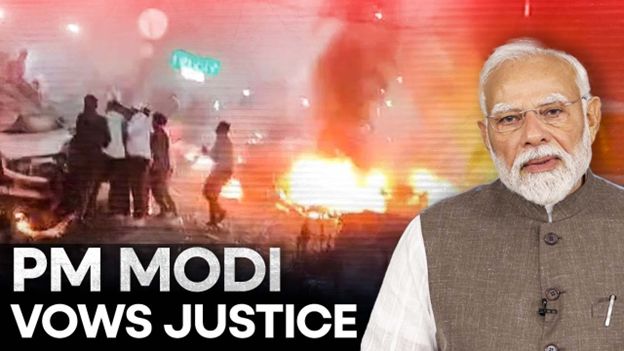
PM Modi Speaks From Abroad: The magnitude of the event became clear when, from Thimphu, Prime Minister Narendra Modi publicly addressed the blast, calling it a “conspiracy” that would be exposed in full. His remarks came during a major public event celebrating the 70th birth anniversary of Bhutan’s former king Jigme Singye Wangchuck, and his tone was somber. “With a heavy heart, I wish to express that the Red Fort blast has deeply shaken us,” Modi said before thousands gathered at the Changlimithang Stadium. “Our agencies will get to the bottom of this conspiracy. The perpetrators behind it will not be spared.” Multiple officials later confirmed that the Prime Minister had been in continuous contact with security agencies throughout the night, receiving real-time updates as the death toll rose and investigators fanned out across Delhi and neighbouring states. The blast, the deadliest attack in the capital since 2011, has jolted Delhi’s security apparatus and revived long-standing debates on urban counter-terror readiness, surveillance gaps, and the evolving character of extremist networks that no longer match older stereotypes of armed terrorists but increasingly resemble educated professionals embedded within civilian institutions.
A Doctor, A Car, An Eleven-Hour Trail : The story of Dr. Umar Nabi has become central to the investigation. According to officials, Nabi, an MBBS graduate from Kashmir, had been on the radar of intelligence agencies after his alleged association with the Faridabad-based module—which itself had been exposed just hours before the blast, leading to eight arrests, including three doctors. On Monday, Delhi Police managed to reconstruct nearly eleven hours of Umar’s movement in the white i20. CCTV footage, digital footprints, and mobile data indicate that he spent almost three hours in the Sunehri Masjid parking lot near Red Fort, frantically searching online for updates about the Faridabad arrests. This was the same location from where the car eventually rolled out into traffic before exploding. Though early speculations suggested multiple occupants in the vehicle, investigators now believe Umar may have been the lone passenger. Police sources say there is a strong possibility that the explosion was triggered accidentally—either due to mishandling of the volatile material or panic after learning that his associates had been detained. The DNA sample collected from his mother in Pulwama is now being matched with biological remains recovered from inside the mangled vehicle. The results, officials said, are expected to provide the final confirmation.
A White-Collar Terror Network: The most unsettling aspect of the unfolding story is the profile of the module allegedly linked to Umar. The Faridabad module exposed by Haryana Police and central agencies consisted not of hardened terrorists or trained operatives, but of doctors, academic staff, and educated professionals working in mainstream institutions. Among those arrested were Dr. Muzammil Ganaie and Dr. Shaheen Sayeed, both affiliated with Al-Falah University in Faridabad. Investigators say that Sayeed was the head of JeM’s women’s recruitment wing in India, through a front organisation known as Jamaat-ul-Mominat. Raids on the university campus and nearby warehouses uncovered nearly 360 kg of ammonium nitrate—part of the 2,900 kg of explosive-grade material recovered in the wider crackdown spanning Kashmir, Haryana, and Uttar Pradesh. Officials believe Umar may have been carrying a large amount of ammonium nitrate mixed with fuel oil and detonators—the classic ANFO configuration widely used in improvised explosive devices. The i20 car, police say, was provided to Umar by Tariq, also from Pulwama, who is now under arrest. The question that haunts investigators is whether the module intended a major attack at a symbolic location or whether the blast was a premature detonation triggered before the plan could be executed.
“Families across Uttar Pradesh and Delhi are mourning victims who were ordinary workers caught in the blast. At LNJP Hospital, relatives waited anxiously as DNA testing helped identify bodies, including Umar himself. With arrests, detentions and nationwide raids underway, the NIA is probing whether the Red Fort explosion was accidental or part of a larger plot, as agencies reconstruct Umar’s movements and examine the terror module’s wider network.”
A Multi-State Investigation Unfolds: Delhi, Uttar Pradesh, and Jammu & Kashmir have become the three primary axes of the investigation. Teams from NIA, Delhi Police Special Cell, and central intelligence agencies have conducted raids at multiple locations in Delhi’s old city, the NCR, and in South Kashmir’s Pulwama region. Four people have been detained in Kashmir; two of them have been shifted to Delhi for joint interrogation. In Delhi, security has been tightened across airports, railway stations, metro hubs, the India Gate–Kartavya Path zone, and major government establishments. Surveillance teams have begun scanning hundreds of hours of CCTV footage along the route Umar is believed to have taken. A senior official described the situation as “a race against time”—the priority being identifying whether any parallel cell connected to the module is still active. At LNJP Hospital, scenes remained tense and emotional. Families of the victims waited through the night, some identifying bodies, others clinging to hope as officials called out names of the deceased or missing. Staff at the hospital described the atmosphere as “devastatingly chaotic,” with multiple ambulances arriving in quick succession, the mortuary under heavy security, and relatives pleading for information. A mortuary worker who had completed an early-morning shift described the bodies as “unrecognisable and burnt,” a reflection of the intensity of the blast.
The Human Cost| Stories From Ground: One of the most heartbreaking elements of the tragedy has been the profile of the innocent victims—ordinary workers, drivers, daily-wage earners, and small traders from Uttar Pradesh who had come to Delhi to support their families. Among them was 32-year-old Dinesh Mishra of Shravasti district, who worked at a printing press in Chawri Bazar. His father, Bhure Mishra, recalled that Dinesh had come home for Diwali just days earlier. “He wanted to give his children a good education. We still cannot believe he is gone,” he said, surrounded by neighbours offering condolences. Similar stories emerged from Meerut, Shamli, Amroha, and Deoria—places where families were just beginning to receive the news of the explosion. Many had rushed overnight to Delhi, only to be confronted with the grim reality of identifying loved ones through fragments and forensic reports. The blast, investigators noted, did not simply shake Delhi—it tore through the fabric of families hundreds of kilometres away, delivering devastating losses that will echo long after the investigation is complete.
A First In 13 Years — The Political, Security Ramifications: Home Minister Amit Shah has held two high-level security reviews, directing agencies to “hunt down each and every culprit” and invoking the “full wrath” of national security institutions. His message on X made clear that the government views this blast not as an isolated incident but as a serious challenge to national security. This is the first major terror attack in Delhi since the 2011 High Court blast, a gap that many credit to strong intelligence coordination. But the Red Fort explosion has reopened concerns about soft targets, vehicle-based IEDs, and new forms of radicalisation among educated professionals. The opposition has called for complete transparency in the investigation, urging the government to reveal whether intelligence inputs were available earlier and whether the Faridabad module was already under surveillance.
A New Phase Of The Investigation: NIA officials have now established a core team to examine digital data, financial trails, phone records, encrypted messaging patterns, and travel histories of all suspects. Multiple intelligence-sharing meetings have been scheduled between agencies across states. Forensic teams are analysing explosive traces from the scene, studying blast patterns, and reconstructing the car’s internal layout to determine the trigger mechanism. Whether the device was time-based, remote-controlled, or pressure-triggered remains to be conclusively established.
Kashmir Horizon View: The Red Fort blast is no longer just a crime scene—it is an event reshaping national security discourse. It has exposed an unsettling evolution in terror networks, where ideological indoctrination meets professional expertise, where recruitment happens in classrooms instead of forests, and where operational logistics exploit urban anonymity rather than remote hideouts. With the NIA now at the helm, investigators say the next few weeks will be crucial. The coming updates will determine whether India is confronting a resurrected extremist network, a new generation of ideologically driven professionals, or a hybrid model forged in the grey zones of digital radicalisation. What is clear is that the blast has shaken the nation—and its reverberations will be felt for months, possibly years, as the investigation unfolds.
(“Team Kashmir Horizon” is committed to continuous improvement and invites feedback and suggestions from readers and its followers on social media sites. Reader insights are considered vital for enhancing content quality and empowering the community. The team encourages open communication and values the thoughts and ideas of its audience, believing that such input will enable them to serve the public more effectively. The initiative aims to ensure that readers have the best possible experience with “Kashmir Horizon”. Interested individuals can reach out to us via email at [email protected].)