- Efficiency Mandate: Omar’s New Rule for Public Purse
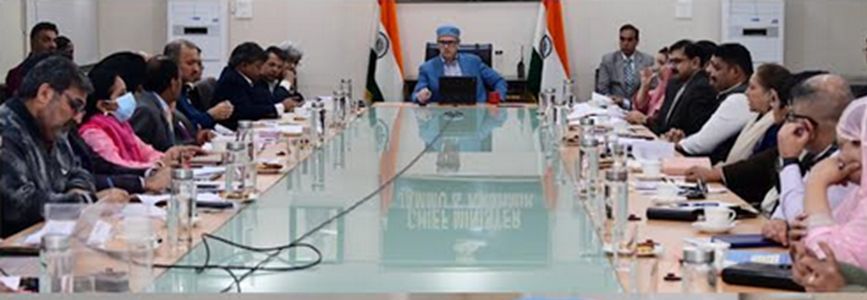
“Chief Minister Omar Abdullah Stressed on accelerated execution, effective utilization of funds, and strict fiscal discipline, the Chief Minister directed all departments to ensure 100 percent project completion within set timelines and maintain transparency in expenditure.
He said the government’s focus remains on maximizing public benefit from every rupee spent, strengthening accountability mechanisms, and translating budgetary allocations into tangible improvements on the ground across Jammu and Kashmir.”
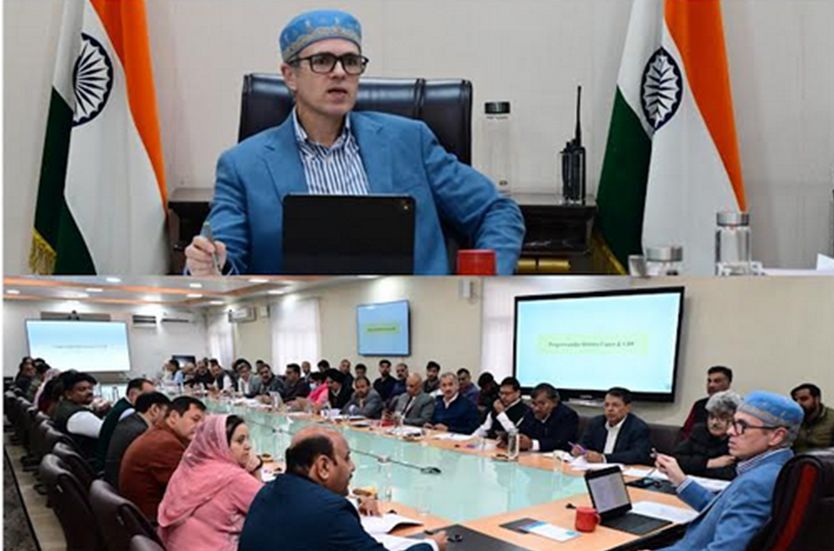
Chief Minister Omar Abdullah this week chaired a high-level meeting in Srinagar to review the progress of developmental works under the CAPEX budget and Constituency Development Fund (CDF) for the financial year 2025–26, directing departments to accelerate execution, ensure timely utilization of funds, and maintain fiscal discipline. The Chief Minister emphasized that effective expenditure management, strict monitoring, and coordinated execution of projects across departments were essential to sustain developmental momentum and ensure that government spending translated into visible outcomes on the ground.
High-Level Meeting Reviews Financial, Physical Progress: The review meeting was attended by Deputy Chief Minister Surinder Kumar Choudhary, Ministers Sakina Itoo, Javed Ahmed Rana, Javid Ahmed Dar, and Satish Sharma. Also present were Chief Secretary Atal Dulloo, Additional Chief Secretaries of Higher Education, Jal Shakti, Tourism, and Agriculture Production, ACS to the Chief Minister, all Administrative Secretaries, Director Generals of Budget, Expenditure, Accounts & Treasuries, and Codes/Resources, besides other senior officials. Officers from various districts joined the meeting through virtual mode, allowing for a detailed, district-wise review of project implementation and fund utilization. The Chief Minister examined the physical and financial progress achieved under both the Union Territory (UT) and District CAPEX budgets. He directed all departments to ensure that projects were executed within approved timelines and that 100 percent of works are uploaded on the BEAMS portal, with due completion of administrative approvals and tendering processes, particularly in the Kashmir division, where the working season is limited due to climatic constraints.
Focus On Timely Execution, Coordination: Chief Minister Omar Abdullah called for strict adherence to fiscal discipline and efficient use of public funds, reiterating that every rupee allocated must yield measurable impact. He directed the Finance Department to prepare constituency-wise data of projects prioritized by MLAs under the current budget, ensuring that works identified through the CDF are uploaded promptly on BEAMS for administrative approval and early execution. The Chief Minister underlined the importance of close coordination between government departments and public representatives. “There has to be synergy between the administration and the elected representatives,” he said. “We must ensure that every work sanctioned under the CDF is not only initiated on time but also completed within the financial year to create visible change on the ground.” He also directed District Development Commissioners to personally monitor the execution of CDF and CAPEX works, ensure transparency in tendering and procurement, and resolve bottlenecks related to approvals or site availability.
Revenue Mobilization, Expenditure Rationalization: In his remarks, Omar Abdullah stressed the dual importance of enhancing revenue generation and curtailing avoidable expenditure, observing that financial discipline was vital for sustainable governance. “Wherever possible, we have to boost our revenues, and we have to cut down on unnecessary expenditure. At the same time, the money that has been allocated must be spent efficiently on productive schemes,” the Chief Minister said. He urged all departments to identify non-essential expenditures that can be rationalized or re-allocated to priority sectors such as rural infrastructure, road development, health, and education. The Chief Minister further directed concerned Ministers to conduct fortnightly departmental reviews to track expenditure, improve utilization of funds, and address delays in project completion. “Frequent review at the ministerial level ensures accountability and helps departments maintain focus on results,” he said.
Finance Deptt Presentation On Developmental Progress: Earlier, Principal Secretary, Finance, Santosh D. Vaidya, delivered a detailed presentation on the overall financial and developmental status of Jammu and Kashmir as of October 7, 2025. He presented data on sectoral allocations, expenditure progress, revenue trends, and fiscal challenges being faced at both the UT and district levels. The presentation included a comprehensive review of performance under Centrally Sponsored Schemes (CSS), as well as the Special Assistance for Capital Investment (SASCI) programme, which provides financial incentives to states and union territories for achieving specific reform milestones. The Finance Department also highlighted the utilization status of the Single Nodal Account (SNA)–Sparsh financial management system, which aims to bring greater transparency and efficiency in the release and tracking of public funds.
Chief Minister’s Directives For Accelerated Progress: The Chief Minister gave specific directions to ensure that the mandatory percentage of expenditure under the SASCI scheme was met by December 2025 and March 2026 deadlines to avoid loss of central funding benefits. He instructed Ministers and senior officials to review the progress of SASCI projects every two weeks, emphasizing that proactive monitoring was crucial to prevent delays and ensure timely submission of utilization certificates. “Every department must take ownership of its targets,” Omar Abdullah said. “We cannot afford to lose out on central incentives simply because of administrative delays. The focus must be on speed, efficiency, and measurable results.” During the review, the Chief Minister assessed district-wise progress and observed that while several districts had achieved substantial progress in fund utilization, others needed to improve in the early execution of ground-level works. He directed officers to resolve bottlenecks related to land acquisition, contractor mobilization, and inter-departmental clearances to avoid delays.
Priority To Infrastructure,Public Works: The Chief Minister called for visible impact on the ground, particularly in sectors that have a direct bearing on public welfare. He instructed departments to complete the macadamization and black-topping of roads planned for the current financial year, ensuring that all pending works were completed before the onset of winter. He also directed the Public Works Department and Roads & Buildings divisions to fill up vacant engineering posts on priority so that the pace of project execution is not hampered. “No project should suffer due to staff shortage,” he said. Omar Abdullah stressed that visible public infrastructure—roads, schools, hospitals, and water supply systems—should reflect the government’s commitment to development. “People must see the change. It is not just about figures on paper, but about the roads they travel on, the schools their children attend, and the services they receive,” he noted.
Reform Measures,Revenue Initiatives: The Chief Minister underlined the importance of structural reforms that have long-term financial and administrative benefits for Jammu and Kashmir. He directed departments to finalize critical reforms such as:
- Revision of mining royalties to ensure fair revenue realization.
- Establishment of vehicle scrapping facilities to promote environmental sustainability and generate employment.
- Operationalization of electronic enforcement devices for improved road safety and traffic management.
- Modernization and digitization of land records to enhance transparency and reduce disputes.
- Integration of farmer registries with land records and digital crop surveys to improve agricultural planning and access to government schemes.
- Urban land reforms to promote organized development and optimal land use.
- Fiscal reforms aimed at improving credit ratings and optimizing borrowing limits.
“These reforms are not merely procedural—they are transformative. They will unlock greater financial assistance from the Centre and strengthen our own resource base,” Omar Abdullah said. He directed the concerned departments to work in mission mode to achieve reform milestones, enabling the UT government to qualify for additional allocations under central incentive-linked schemes.
Strict Monitoring , Accountability Framework: Concluding the meeting, the Chief Minister reiterated that strict monitoring and accountability were indispensable for effective governance. He called for real-time performance tracking through the BEAMS portal and periodic audits by the Finance and Planning Departments to ensure accuracy in reporting. He directed that all departments utilize funds available in Single Nodal Accounts (SNA) well before the deadline, avoiding last-minute expenditure rush. “We must move from a culture of year-end spending to planned, quarterly performance,” he said. The Chief Minister also called for improved inter-departmental coordination to prevent duplication of works and overlapping of projects. “Departments must talk to each other. Coordination is not optional—it is a responsibility,” he remarked.
Call For Tangible Results On The Ground: Chief Minister Omar Abdullah emphasized that people’s trust in governance is built when announcements translate into action. He said every department must focus on outcomes rather than outputs, ensuring that developmental projects make a tangible difference in the daily lives of citizens. “Our goal is not just to spend money but to create lasting impact. Development must be visible, measurable, and meaningful,” he said, urging officers to visit sites, interact with beneficiaries, and personally verify progress. He further directed the District Development Councils (DDCs) and Block Development Officers (BDOs) to maintain public dashboards reflecting project status, completion timelines, and expenditure details to promote transparency.
“CM Omar reaffirmed that timely execution, fiscal prudence, and accountable governance form the foundation of his administration’s development strategy. He said the government’s mission is to ensure that development is not confined to figures on paper but reflected in visible outcomes that improve people’s lives. Calling for a renewed sense of responsibility and speed across the administration, he said, “Our aim is to create a model of transparent, result-oriented governance that delivers progress at the grassroots. The people of Jammu and Kashmir deserve visible change—and that is what we must deliver,” he added.”
Emphasis On Fiscal Prudence, Developmental Efficiency: The Chief Minister reaffirmed that timely execution, fiscal prudence, and reform implementation form the cornerstone of his government’s development strategy. He said the administration’s priority is to deliver results on the ground, maintain financial discipline, and ensure that every rupee spent contributes to improving the quality of life in Jammu and Kashmir. “Accountability, transparency, and coordination are the pillars of our governance model,” Omar Abdullah said. “We must work together to build a Jammu and Kashmir that is not only financially stable but also developmentally vibrant.” As departments move into the crucial second half of the financial year, the Chief Minister urged all officials to redouble their efforts to meet targets and deliver on the government’s promise of inclusive growth and efficient public service delivery.
Kashmir Horizon View: Chief Minister Omar Abdullah underscored that Jammu and Kashmir’s development trajectory must be rooted in fiscal prudence, efficiency, and accountability. He said that the purpose of government expenditure is not mere financial compliance but tangible transformation of the social and economic landscape. Every rupee spent, he emphasized, must bring visible change — in infrastructure, services, and livelihoods. “Our goal is not just to meet budgetary targets but to improve the quality of life for our citizens. The impact of development must be felt on the streets, in schools, hospitals, and in every home across the Union Territory,” he said. Omar Abdullah called upon all departments to adopt a results-driven governance model, where expenditure and outcomes are closely monitored and linked. He said that regular evaluation, transparency in execution, and public accountability must become central to administration. Stressing on the importance of data-based decision-making, he directed the Finance and Planning Departments to ensure that all information related to funds, progress, and outputs is updated on real-time monitoring platforms such as BEAMS and SNA-Sparsh. The Chief Minister reiterated that development without discipline leads to inefficiency, and inefficiency weakens public confidence. He said it is therefore imperative that departments follow strict financial procedures, avoid delays in tendering and approvals, and ensure that projects are completed within stipulated timelines. “Delays not only cost money but also erode the people’s trust in governance. We have to deliver on our commitments within the promised timeframes,” he remarked.
(“Team Kashmir Horizon” is committed to continuous improvement and invites feedback and suggestions from readers and its followers on social media sites. Reader insights are considered vital for enhancing content quality and empowering the community. The team encourages open communication and values the thoughts and ideas of its audience, believing that such input will enable them to serve the public more effectively. The initiative aims to ensure that readers have the best possible experience with “Kashmir Horizon”. Interested individuals can reach out to us via email at [email protected].)