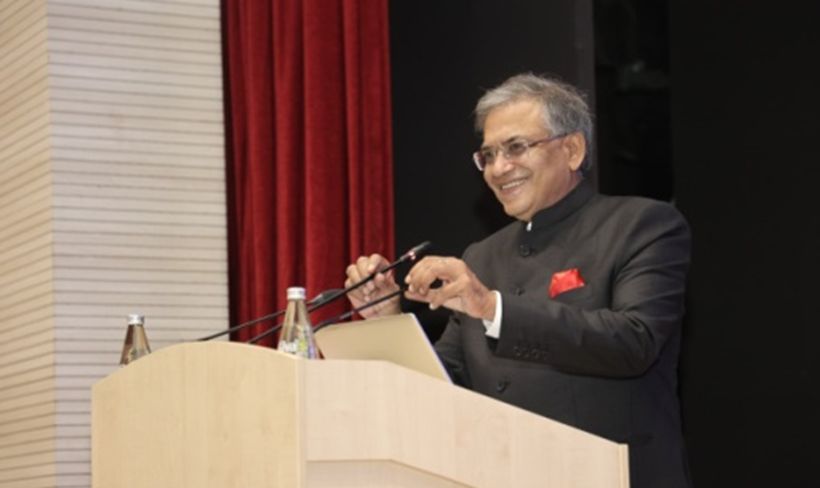
New Delhi: Chief Election Commissioner Gyanesh Kumar on Monday said that elections to Bihar Assembly will be conducted in two phases, covering all 243 constituencies in the State. The first phase of polling will take place on November 6 for 121 constituencies, while the second phase on November 11 will cover the remaining 122 constituencies, Kumar added.
The Chief Election Commissioner also said that bypolls to Budgam and Nagrota constituencies in Jammu and Kashmir; Anta in Rajasthan; Ghatsila (Scheduled Tribe) in Jharkhand; Jubilee Hills in Telangana; Tarn Taran in Punjab; Dampa (Scheduled Tribe) in Mizoram; and Nuapada in Odisha will be held on November 11. The votes will be counted on November 14.
There are 203 general constituencies, two reserved for Scheduled Tribes, and 38 for Scheduled Castes in Bihar. The State has 7.43 crore eligible voters, including close to 3.92 crore men, 3.50 crore women, and 1,725 transgender persons. About 14.01 lakh are first-time voters (18-19 age group); 1.63 crore are in the 20-29 age group; 4.04 lakh are very senior citizens (above 85); and about 14,000 are centenarians, besides 1.63 lakh service electors and 7.2 lakh voters with disabilities. The gazette notification for the first phase of polling will be issued on October 10, and the last date to file nominations is October 17. For the second phase, the gazette notification will be issued on October 13, and the last date to file nominations is October 20.
The CEC Gyanesh Kumar said the final electoral roll has been shared with all the political parties. In case voters notice errors in the list, they can file an appeal with the District Magistrate. If any eligible person has been left out, they can have their names added until 10 days before the last date for filing nominations.
Mr. Kumar said that of the total 90,712 polling stations across the State, 13,911 will cover urban areas and 76,801 will be set up in rural areas. While 292 of these stations will be managed by persons with disabilities, 1,044 will be managed by women, and 38 by youth. The average number of eligible voters per polling station is 818. “Webcasting will be done at all the polling stations for the first time,” he said. “Police patrolling on horseback will be done across “diara” regions covering 250 polling stations, and patrolling parties will use boats at 197 polling stations,” said the CEC.
He said there will be one General Observer (senior bureaucrats from outside the State) per constituency, apart from 38 Police and 67 Expenditure Observers in Bihar. A total of 8.5 lakh officials, including 4.53 lakh polling and 2.5 lakh police personnel, 90,712 anganwadi sevikas (who may also assist in verifying identities of ‘burqa-clad’ women voters if required), 17,800 micro observers for polling and 4,800 for counting, 28,300 counting officials, and 9,600 sector officers, will be deployed