

By Advocate Sajad Paul
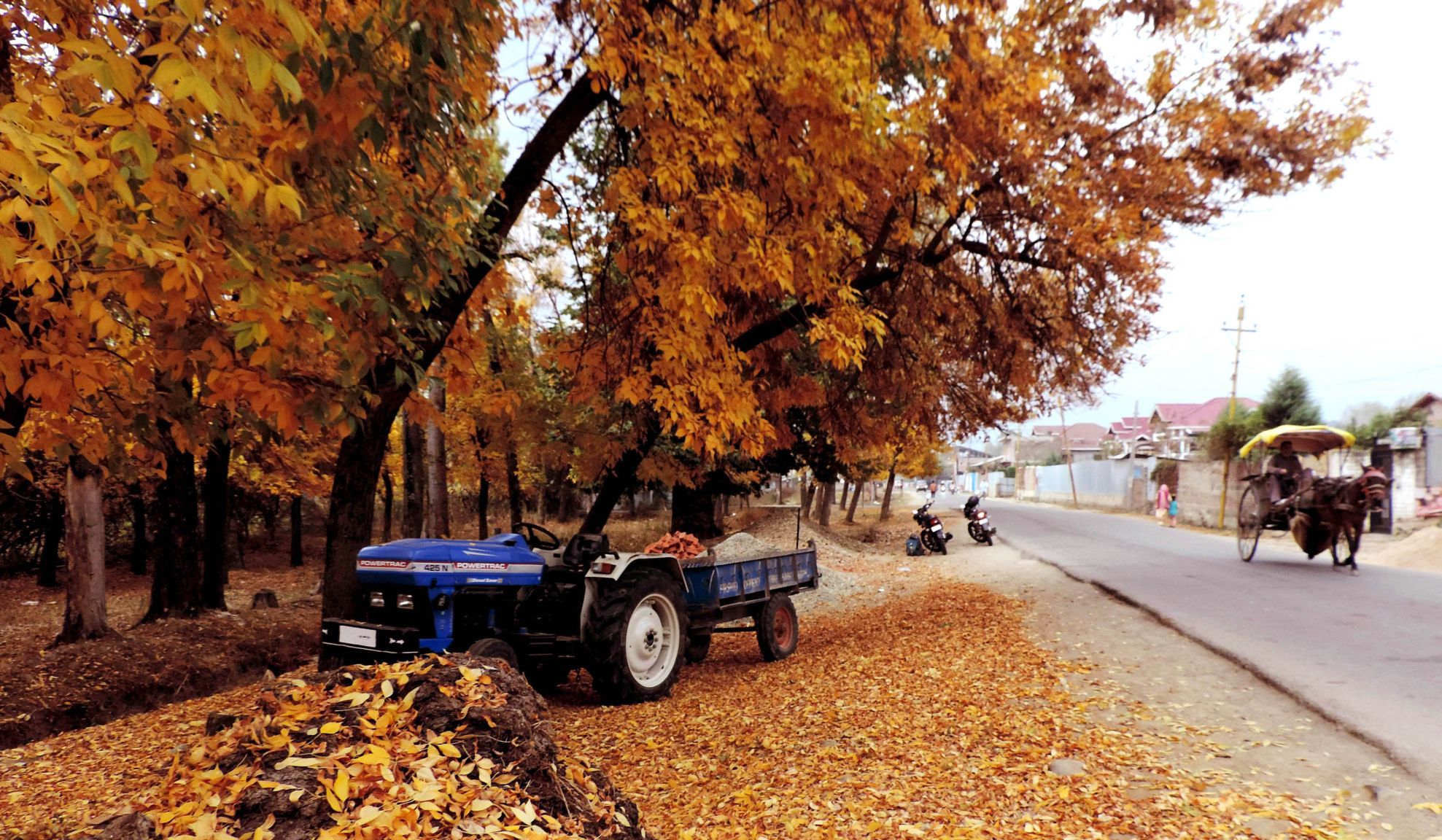
In the heart of the Himalayas, Kashmir’s seasons flow like poetry, each carrying its own charm and story. Among them, Harudh the Kashmiri word for autumn is perhaps the most celebrated and soul-stirring. More than just a season, Harudh is a cultural expression, a period of harvest, beauty, and deep reflection. Harudh begins in late September and continues through November. The Valley transforms into a living painting, chinar trees (booune) blaze with shades of crimson and gold, their leaves falling like embers across Srinagar’s boulevards and Mughal gardens. A Kashmiri saying goes: “Harud chu booun tulan ranguk kanz” (In autumn, the chinar spreads its crown of colors). At the same time, Kashmiri villages come alive with the harvest of rice, maize, walnuts, and apples. Farmers, after months of hard labor, reap the rewards of their toil. For rural households, Harudh is both a season of gratitude and sustenance, as granaries and storehouses are filled in preparation for the harsh Kashmiri winter.Harudh in Kashmir is not only about natural beauty; it is a socially significant season. Families gather to celebrate the harvest, and community bonds are strengthened. The fragrance of dried vegetables (hokh syun) being prepared for winter fills Kashmiri homes. A common expression heard in villages is “Harud gasaan, wathwan rasaan” (Autumn comes, and paths are filled with harvest). Autumn also brings the season of walnuts (doon) and saffron (kong), two of Kashmir’s most prized treasures. The saffron fields of Pampore turn purple with delicate flowers, while walnuts are cracked and shared, symbolizing abundance. Kashmiri poets have long embraced Harudh as a symbol of transition and impermanence. Habba Khatoon, the Nightingale of Kashmir, lamented separation through autumnal imagery “Harud aaw, posh rang gov paan tal” (Autumn came, and the color of flowers fell from the branches).Mahjoor captured both the sorrow and beauty of Harudh when he wrote of chinars burning like torches, symbols of both pain and pride.In folk songs, autumn often appears as a reminder that “sukh chu na draayas, dukh chu na waazas” (happiness does not last, sorrow does not stay forever). Even today, the Harudh literary journal carries this legacy forward, providing a platform for Kashmiri voices to reflect on society, memory, and cultural change.Harudh is often called “sonz haalaatuk mousam” (the golden season) in Kashmir. While the Valley is breath takingly beautiful, it is also a reminder that winter is near a time of cold, silence, and survival.
“Harudh, Kashmir’s season of autumn, is presented as a time of duality —both harvest and farewell, abundance and decline. Harudh is a season of reflection and renewal. It teaches that change is cyclical and that every ending is a threshold to a new beginning, encouraging one to embrace the present, honor the life cycle, and hold onto hope.”
The sight of bare chinar trees against snow-tipped mountains evokes both pride and melancholy in Kashmiri hearts. As people say “Harud chu yaaduk mousam” (Autumn is the season of memories). In Kashmir, Harudh is not merely autumn it is an emotion, a metaphor, and a heritage. It represents the brilliance of life at its peak and the humility of decline. Whether in the fiery leaves of the chinar, the golden grains in the fields, or the verses of Kashmiri poets, Harudh continues to inspire a culture of gratitude, reflection, and creativity.For Kashmiris, Harudh is both a reminder of beauty that must fade and a promise of renewal that always follows. Harudh in Kashmir is not only a season of golden splendour, it is a philosophy etched into the very soul of the valley. When the mighty chinar sheds its crimson-gold leaves, when fields of paddy bow heavy with harvest, and when the soft, melancholic breeze carries whispers of poetry across Dal and Wular, the land itself seems to pause in contemplation.
Harudh teaches that beauty is not everlasting, yet its fading glory is no less profound.To a Kashmiri heart, autumn is a season of yaad (remembrance) and tamaam (completion), when joy and sorrow walk hand in hand. The golden leaves, though destined to fall, do so with such grace that they inspire us to accept life’s transience. In every drifting leaf lies a reminder “Wuchhi tsendah rang, yihai chu zindagi” (look at these colours, this is life itself).In its quiet grandeur, Harudh is both harvest and farewell, both abundance and decline. It is the time when people gather their grains and their thoughts, storing not only food but also memories for the coming winter. And yet, even in its fading light, the valley glows reminding us that endings are never final, but the threshold to new beginnings. Thus, Harudh is Kashmir’s season of gold and reflection an eternal lesson that every change, no matter how bittersweet, carries within it the seed of renewal. The valley’s autumn whispers softly embrace the beauty of the present, honour the cycle of life, and carry hope into the seasons yet to come.
(The author a freelancer is a lawyer by profession. The views, opinions and conclusions expressed in this article are those of the author and aren’t necessarily in accord with the views of “Kashmir Horizon”)






