- Says “In the Age of AI, Teachers are Still Kings Of Learning”
“On the occasion of Teachers’ Day, Lieutenant Governor Manoj Sinha delivered a powerful address in Srinagar, calling on educators to lead Jammu and Kashmir towards a future shaped by sustainability, creativity, and resilience. Drawing from the legacy of Dr. Sarvepalli Radhakrishnan, the LG emphasized that teachers are more than transmitters of knowledge—they are mentors who must prepare the youth to face environmental, technological, and social challenges with responsibility and imagination. His speech placed teachers at the heart of climate action, value creation, and holistic development in an age defined by disruption.”
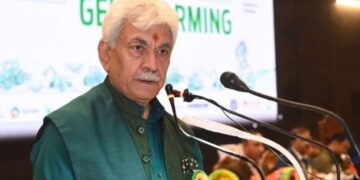
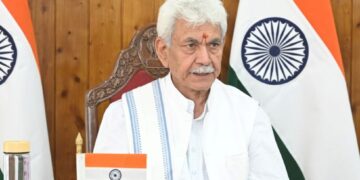
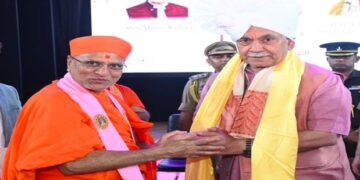
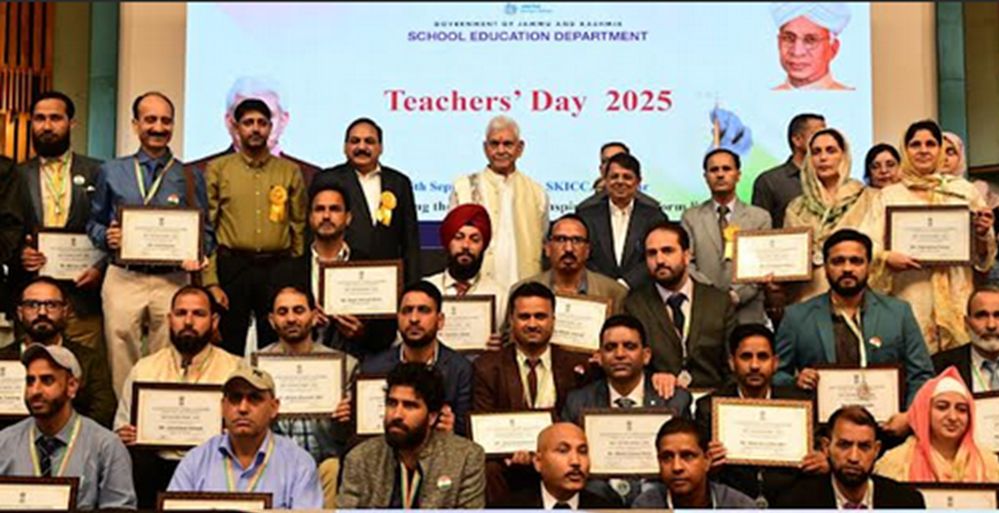
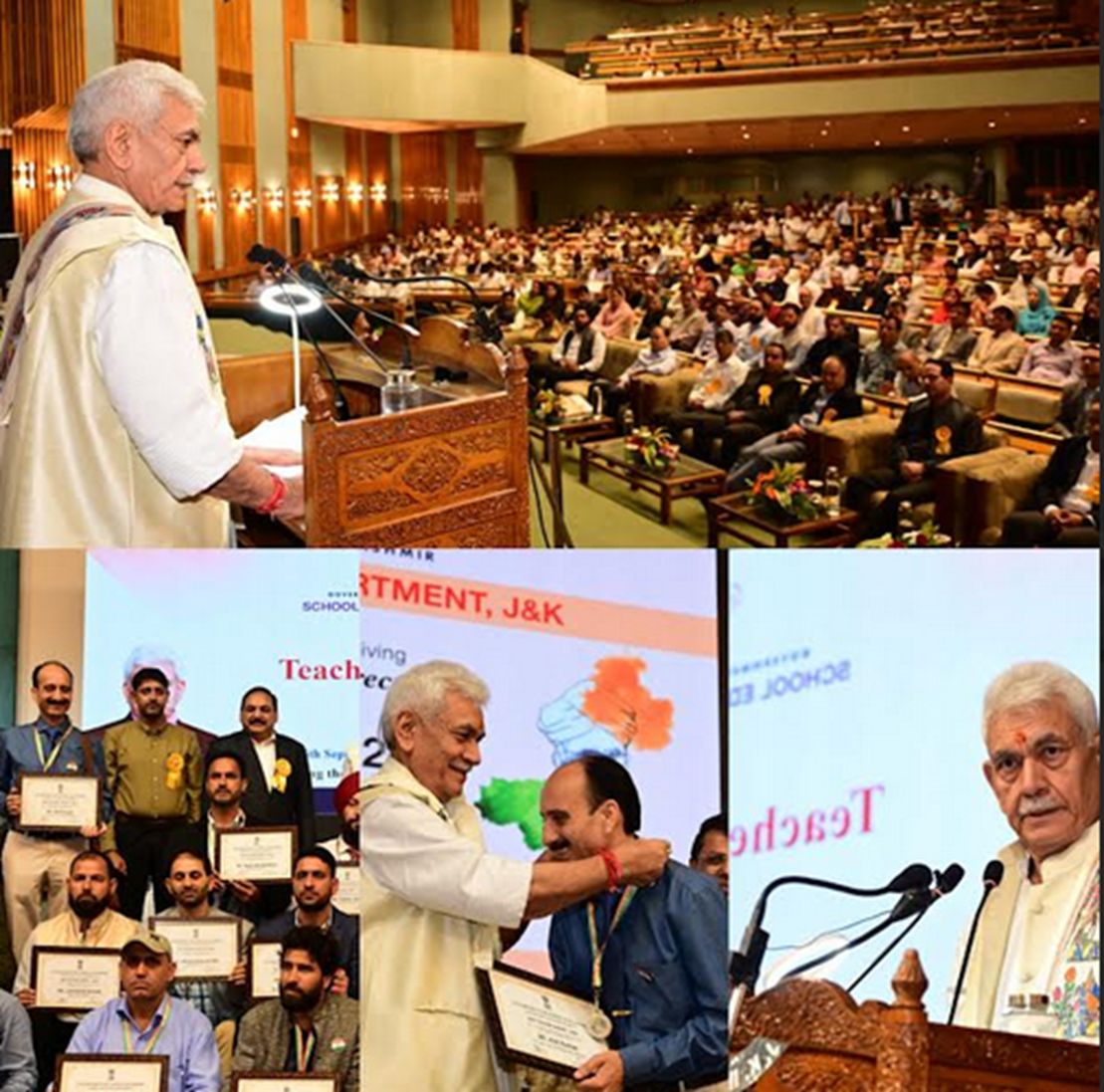
On the occasion of Teachers’ Day, Lieutenant Governor (LG) Manoj Sinha addressed a gathering of educators, students, and policymakers in Srinagar, urging the education community in Jammu and Kashmir to embrace the principles of sustainability, climate resilience, and holistic development as core pillars of learning. The event, marked by tributes to Dr. Sarvepalli Radhakrishnan—the eminent philosopher, teacher, and former President of India—was more than a ceremonial felicitation of teachers. It became a platform for laying out a vision of how education can guide society through the intertwined challenges of environmental degradation, technological disruption, and social transformation.
Teachers’ Day|Symbolism, Legacy: Teachers’ Day in India is not merely a symbolic ritual but a reminder of the unique bond between education and nation-building. By invoking Dr. Radhakrishnan’s legacy, the Lieutenant Governor reinforced the philosophical foundations of teaching as not just knowledge transfer but as value creation and social transformation. Dr. Radhakrishnan’s emphasis on ethical reasoning, critical inquiry, and spiritual balance resonates strongly with today’s context, where society grapples with both hyper-modernity and ecological crises. In aligning his message with this tradition, LG Sinha placed teachers at the forefront of change. His appeal went beyond classroom instruction—he called upon teachers to cultivate resilience, environmental consciousness, and adaptability in students, while inspiring them to balance ambition with responsibility.
Sustainability| A Core Educational Imperative: At the heart of the Lieutenant Governor’s keynote was the idea that education must evolve to reflect the pressing global challenges of sustainability and climate change. His speech underscored how economic growth, if divorced from ecological balance, can lead to inequities and recurring disasters. “The balance between economic growth and environment protection is the key for prosperity and social equity,” he said, pointing out that natural resources are finite and the youth must recognize their role as custodians of biodiversity and ecosystems. This framing reflects a shift from the conventional view of education as a path to employment or individual advancement, toward one where education is the driver of collective survival and planetary well-being. In the context of Jammu and Kashmir—an ecologically fragile region marked by floods, landslides, and glacial retreat—the call for sustainability in education is particularly urgent.
Climate Resilience, Education |A Local Urgency: In his remarks, LG Sinha emphasized the need for schools and colleges to become hubs of climate resilience. He urged institutions to engage students in practical initiatives like the Green Jammu Kashmir Drive and incorporate field experiences alongside theoretical learning. The Lieutenant Governor’s insistence on teaching climate change as a compulsory subject is a bold step in reimagining the curriculum. Beyond awareness, he spoke of the role of education in improving early warning systems and working with local populations to create nature-based solutions for disaster management. This reflects a pragmatic understanding that climate resilience is not just about science and policy but about cultural practices and community involvement. For Kashmir, where memories of the devastating 2014 floods still haunt residents and where recent heavy rains once again disrupted lives, such an educational orientation could mean the difference between preparedness and disaster. Schools becoming centers of disaster literacy and resilience training would not only empower students but also extend benefits to their families and neighborhoods.
Harmony With Nature| Reviving Tradition: The LG’s call to “revive the age-old tradition of living in harmony with nature” echoes indigenous and local knowledge systems that have long emphasized balance and restraint. By combining traditional ecological wisdom with modern scientific approaches, education can provide a nuanced framework for sustainability. This approach also aligns with the National Education Policy (NEP) 2020, which advocates experiential learning, critical thinking, and integration of local contexts. Making climate literacy compulsory and field-oriented would mark a significant departure from rote-based, exam-centered education.
Teachers In The Age of AI|Beyond Information Delivery: Another key dimension of LG Sinha’s speech was the positioning of teachers in a rapidly changing technological landscape. He asserted that teachers cannot be compared with Artificial Intelligence (AI) tools because teaching is not just data transmission but an art of shaping character, values, and emotional intelligence. “The most special quality of a teacher is their ability to bring a human touch to the classroom,” he said, reminding the audience that experiential learning requires empathy, storytelling, and wisdom—qualities beyond the scope of machines. This statement carries profound implications. With AI-driven platforms reshaping education delivery, there is a real risk of reducing learning to algorithmic personalization and digital tutoring. The Lieutenant Governor acknowledged this inevitability but argued that teachers should not compete with technology; rather, they should leverage it to enhance their work. Technology, he suggested, should be treated as a “virtual assistant,” not a replacement. In doing so, he reaffirmed the irreplaceable role of educators as mentors, guides, and facilitators of holistic human development.
Teachers The Architects Of Character, Creativity: The speech also revisited the timeless role of teachers in nurturing not only intellect but also character. LG Sinha stressed that teachers must inspire students to dream big, build resilience, and foster values such as teamwork and perseverance. He reminded the gathering that the pursuit of excellence requires both discipline and imagination. His call to include awards for innovation, new ideas, and research in addition to gold medals and certificates reflects this emphasis on creativity and originality. By recognizing and incentivizing fresh thinking, the education system can foster a culture of innovation among students and teachers alike.
Education ATool Of Social Equity: While sustainability and technology were dominant themes, the LG’s speech also touched upon inclusivity. He appreciated the School Education Department for honoring specially-abled teachers and expanding award categories to include Language and Yoga. These symbolic gestures carry weight in a society where education has historically been unevenly accessible. Inclusivity in awards reflects a broader vision where education is not merely about academic excellence but also about recognizing diverse skills, contributions, and challenges.
Linking Local to Global|India’s Development Agenda: The Lieutenant Governor situated his message within the broader vision of the Government of India. By reiterating Prime Minister Narendra Modi and Home Minister Amit Shah’s commitment to rehabilitating victims of recent natural calamities, he linked the discourse on education to the state’s immediate realities of floods and landslides. This also underscored the idea that education policy cannot exist in isolation from economic, social, and political contexts. In line with India’s commitments under the Sustainable Development Goals (SDGs), the LG’s emphasis on sustainability, climate action, and inclusive growth through education reflects a convergence of local priorities with global frameworks.
“LG Manoj Sinha’s Teachers’ Day message was both a tribute and a blueprint—an appeal to reimagine education as the foundation of a sustainable and resilient Jammu and Kashmir. By positioning teachers as custodians of nature, guides in the age of Artificial Intelligence, and mentors of creativity and character, he reaffirmed their timeless role in nation-building. For a region facing fragile ecology and rapid change, this vision turns classrooms into catalysts of climate action and teachers into architects of transformation.”
Teachers The Catalysts Of Societal Transformation: Analytically, the speech can be read as a blueprint for repositioning teachers as agents of transformation in a society facing multiple transitions—ecological, technological, and cultural. By placing the burden of cultivating sustainable mindsets and equipping youth with life skills, the LG reaffirmed the centrality of teachers in shaping the future. In a region like Jammu and Kashmir, where political instability and natural vulnerabilities often dominate discourse, this narrative brings education back into focus as a long-term solution. Education becomes not just a service sector but a form of resilience-building and peace-building.
Challenges In Implementation: While the vision is compelling, translating it into practice raises several challenges. Curriculum reform to integrate climate education requires careful planning, teacher training, and resource development. Experiential learning needs infrastructure, partnerships, and monitoring. Bridging the gap between rhetoric and classroom realities is often the hardest part of policy. Moreover, balancing technology integration with human-centered pedagogy will require significant investment in teacher capacity building. Many educators may feel overwhelmed by digital tools, while students may gravitate toward the efficiency of AI-driven platforms. Ensuring that teachers remain at the heart of learning while embracing innovation will be a delicate balancing act.
The Road Ahead: The Lieutenant Governor’s Teachers’ Day address was both aspirational and pragmatic. It captured the urgency of climate action, the inevitability of technological disruption, and the timeless importance of teachers in navigating change. For Jammu and Kashmir, the message carries additional significance. With its unique geography and socio-political context, the region stands at the intersection of vulnerability and opportunity. Education that prioritizes sustainability, resilience, and creativity could become a model for other regions grappling with similar challenges. As teachers were felicitated for their contributions, the larger takeaway was clear: the role of educators today extends far beyond classrooms. They are expected to nurture eco-conscious citizens, critical thinkers, innovators, and compassionate leaders. In this sense, teachers are not just carriers of tradition but architects of transformation.
Kashmir Horizon View: The Teachers’ Day address by Lieutenant Governor Manoj Sinha was more than a ceremonial tribute to educators; it was a clarion call for rethinking the role of education in shaping a sustainable and resilient future. By bringing sustainability, climate resilience, and character-building to the center of his message, the LG reaffirmed that teachers are not just facilitators of knowledge but custodians of social transformation. His emphasis on integrating climate education, reviving traditional harmony with nature, and balancing technology with the human touch underscored the urgency of aligning pedagogy with the challenges of the 21st century. At a time when Jammu and Kashmir is navigating environmental vulnerability, economic aspirations, and technological shifts, education emerges as the single most powerful instrument to shape not only future workers but also responsible citizens. Teachers, by virtue of their reach and influence, hold the keys to this transformation. The LG’s insistence that educators inspire creativity, perseverance, and excellence while also preparing students for an uncertain and rapidly changing world is a reminder that teaching remains a profoundly human, ethical, and future-oriented profession.
(“Team Kashmir Horizon” is committed to continuous improvement and invites feedback and suggestions from readers and its followers on social media sites. Reader insights are considered vital for enhancing content quality and empowering the community. The team encourages open communication and values the thoughts and ideas of its audience, believing that such input will enable them to serve the public more effectively. The initiative aims to ensure that readers have the best possible experience with “Kashmir Horizon”. Interested individuals can reach out to us via email at [email protected].)