“Srinagar became the centre of an educational dialogue as LG Manoj Sinha and CM Omar Abdullah stressed the need to reshape Jammu and Kashmir’s learning landscape. While the LG called for innovation, modern curricula, and skill-based growth, Omar Abdullah underlined the urgent task of uplifting government schools to earn parents’ trust.”
Education has emerged as the central theme of Jammu and Kashmir’s developmental discourse. Within the same week, Lieutenant Governor Manoj Sinha and Chief Minister Omar Abdullah underlined the transformative role of education in shaping the Union Territory’s future. While the LG inaugurated the Administrative Block and Amphitheatre at the Central University of Kashmir (CUK), calling for innovation and human capital investment, the CM presided over an Educational Stakeholders Meet at SKICC, stressing the need to uplift government schools and ensure meaningful implementation of the National Education Policy (NEP) 2020. Their combined voices reflect a growing consensus: J&K’s progress hinges on quality education, research, and skill development that can prepare the next generation for India’s Viksit Bharat@2047 vision.
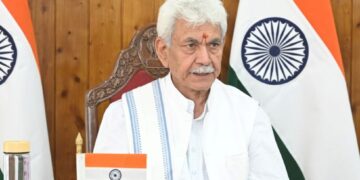
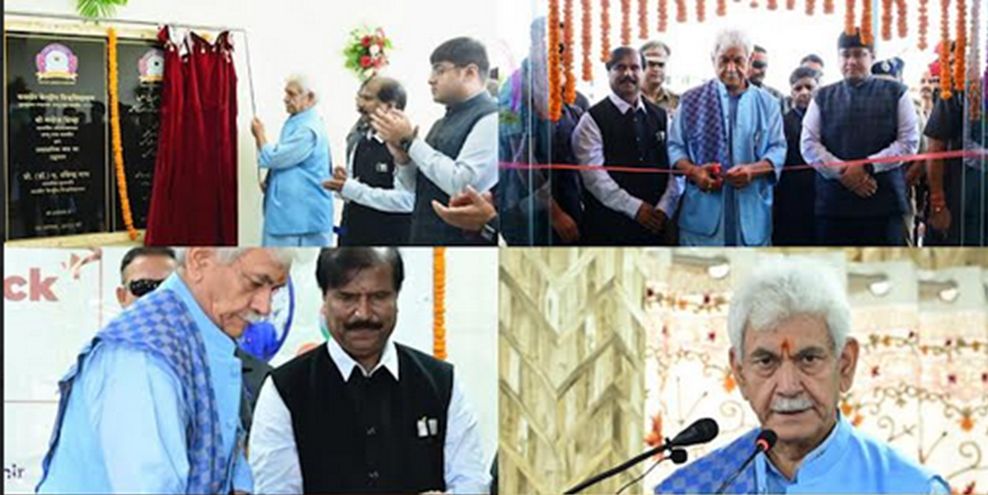
New Chapter For Central University Of Kashmir: At Tulmulla in Ganderbal, the Central University of Kashmir witnessed a landmark addition to its infrastructure with the inauguration of its Administrative Block and Amphitheatre. Lieutenant Governor Manoj Sinha, in his address, placed strong emphasis on the role of universities as the “axis of development,” where teachers, students, and academic institutions together form the core of human capital building. The LG reminded the audience that India’s next two decades of growth will depend heavily on how well its youth are trained, not only in academic excellence but also in problem-solving, critical thinking, and innovation. “Our growth model should focus on creating human capital that can contribute significantly to economic growth,” he said, urging curriculum reforms that move beyond the “Sab Chalta Hai” mindset.
Focus On Human Capital, Knowledge Economy| LG’s Call: LG Sinha’s vision places higher education at the center of India’s journey toward a knowledge economy. He advocated for interdisciplinary courses that combine creativity, innovation, and moral responsibility, enabling students to adapt to rapid technological changes. In his words, “We need human resources with exceptional qualities, who can re-skill and up-skill as technology evolves.” This vision aligns closely with the national roadmap of Viksit Bharat@2047, which sees education not just as an academic pursuit but as a powerful tool for economic and social transformation.
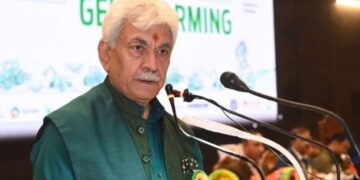
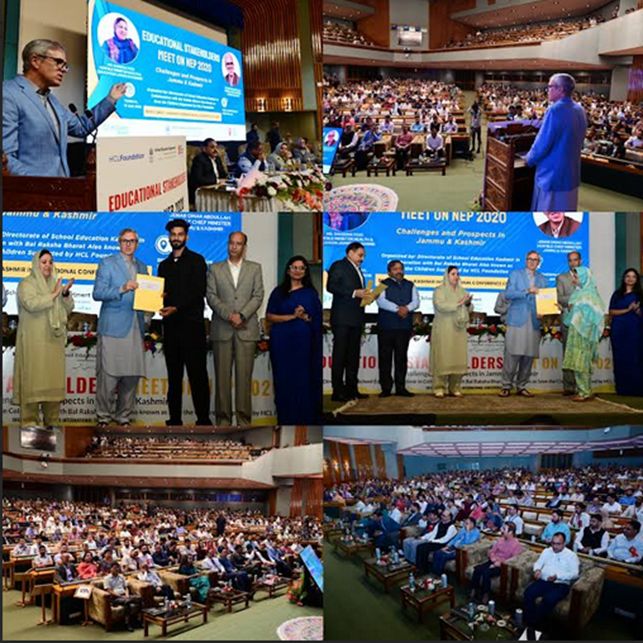
CM Omar’s Call For Government School Upliftment : While the LG focused on universities, Chief Minister Omar Abdullah’s address at SKICC turned the spotlight on government schools. Speaking at the Educational Stakeholders Meet on NEP 2020 – Challenges and Prospects, Omar argued that public education must be improved to the point where parents willingly choose it as the best option for their children. “Education and health sectors form the core for the development of any society. If we do not have education, if we are not healthy, then we have nothing,” Omar said, echoing Nelson Mandela’s timeless words on education being the most powerful weapon to change the world.
Roads, Bridges, Schools |A Balanced Approach: Drawing parallels between physical infrastructure and intellectual development, Omar noted that while governments can build roads, bridges, and factories, without education and health, society cannot truly benefit from them. His message was direct: investment in schools, particularly in far-flung areas, must be treated as a priority, not an afterthought. He called upon teachers to view postings in remote regions not as punishment but as opportunities to make lasting contributions.
NEP 2020| Promise, Challenges : Both leaders underscored the role of the National Education Policy (NEP) 2020 as a framework for reform. At CUK, the LG highlighted the need to revise outdated curricula and foster problem-solving abilities. At SKICC, the CM asked stakeholders to honestly assess five years of NEP implementation in J&K, identify challenges, and develop “10 actionable points” that could guide the government’s roadmap. The participation of educationists, principals, and NGOs like Save the Children and HCL Foundation lent the conference additional weight, creating a forum for dialogue between policymakers and practitioners.
Women Leaders, Advisors Add Perspective: Education Minister Sakeena Itoo emphasized that education remains the backbone of development, noting J&K’s progress had been appreciated nationally. Advisor Nasir Aslam Wani reiterated that Omar’s government has prioritized the education sector since its formation. Their interventions highlighted a political consensus across parties that education must anchor the region’s development strategy.
Technology, Hybrid Learning For Remote Areas : A major highlight of the CM’s event was the e-inauguration of a Hybrid Learning Centre at GBHSS Jawahar Nagar, linking 12 schools digitally to facilitate interactive classes. Additionally, 19 educational infrastructure projects worth Rs. 39.1 crore were inaugurated. These initiatives underscore how technology can bridge the gap between urban and rural education, offering students in remote areas access to subject-specific teachers.
Investing In Research, Innovation: The LG’s remarks also dwelled on the role of research, innovation, and interdisciplinary learning in making Indian universities globally competitive. He argued that human development is “never mechanical” and requires a holistic environment where creativity can thrive. This complements the CM’s stress on hybrid learning — both leaders see technology and innovation as central to improving access and quality.
Education, Employment Linkages: While both events celebrated institutional growth, they also implicitly addressed Kashmir’s employment challenge. With educated youth often struggling to find suitable jobs, both the LG and CM argued for aligning education with economic opportunities. For the LG, this means creating lifelong learners with re-skilling abilities; for the CM, it means ensuring government schools produce confident, capable students who can compete equally with private school graduates.
“Both LG Sinha and CM Omar converged on one point: education is the key to Jammu and Kashmir’s future. A balanced focus on excellence and accessibility can empower the next generation to drive peace, progress, and prosperity in the region.”
Stakeholder Engagement | Teachers At The Core: A recurring theme across both speeches was the central role of teachers. The LG inaugurated a seven-day induction programme for newly recruited faculty at CUK, signaling the importance of training educators to shape the next generation. Meanwhile, Omar stressed that teachers in far-off areas hold the power to transform communities, urging them to treat their postings as a chance to make an impact.
Social, Moral Responsibility Of Education: Education, both leaders agreed, cannot be confined to classrooms. The LG stressed that interdisciplinary studies must cultivate not just technical skills but also social and moral responsibilities. Omar reinforced this by reminding stakeholders of Mandela’s quote, urging teachers and policymakers to see education as a force for justice, equity, and empowerment.
Kashmir Horizon View: The educational vision articulated by Lieutenant Governor Manoj Sinha and Chief Minister Omar Abdullah converges on one central point: education must become the cornerstone of Jammu and Kashmir’s developmental journey. While LG Sinha emphasizes preparing students for the demands of a rapidly changing, technology-driven world, Omar Abdullah underlines the need to strengthen public schools to ensure inclusive access to quality education. Together, their approaches present a roadmap that can transform J&K into an educational hub rooted in equity, excellence, and innovation. The way forward lies in harmonizing policy reforms with on-ground execution. First, there must be a renewed emphasis on curriculum reforms, as highlighted by LG Sinha. Outdated syllabi and rote-learning methods must give way to modern frameworks that encourage problem-solving, innovation, creativity, and moral responsibility. Integrating interdisciplinary courses, as he suggested, will broaden students’ horizons and align them with global educational standards. The induction programme for new faculty at Central University of Kashmir is a welcome step, but similar models should be expanded across schools and colleges. Teachers must be trained not just in subject expertise, but also in new pedagogical techniques, technology use, and socio-emotional learning. Teachers in far-flung areas, as Omar Abdullah suggested, should be seen not as “posted away,” but as torchbearers of opportunity in underserved regions. The education must remain linked with employability. As LG Sinha rightly noted, human capital is the backbone of economic growth. Skill development, vocational training, and research ecosystems must become integral to the education system in J&K, ensuring that students are not only job-seekers but also job-creators in sectors such as tourism, IT, entrepreneurship, agriculture, and renewable energy. Finally, all reforms should be measured through community engagement and accountability. Stakeholder meets, like the one held at SKICC, provide a platform for feedback, but their recommendations must translate into actionable policies with measurable outcomes. Transparency and regular monitoring will ensure that progress is not confined to policy documents but reflected in classrooms across the Union Territory. The vision outlined by LG Manoj Sinha and CM Omar Abdullah signals a rare convergence of thought across political and administrative leadership in J&K: education is not merely one sector among many, but the foundation upon which the future of the region rests. While the Lieutenant Governor focuses on preparing human capital for Viksit Bharat @2047, the Chief Minister emphasizes inclusive development by strengthening government schools. Both approaches are complementary rather than contradictory. If pursued with sincerity, these twin priorities can reshape J&K’s educational landscape. By marrying excellence with equity, the region can nurture a generation of students who are globally competitive yet deeply rooted in their social and moral responsibilities. Education can serve as the bridge between aspiration and opportunity, helping J&K emerge from decades of turbulence into an era of stability, progress, and confidence. The road ahead will not be without challenges financial constraints, teacher shortages, infrastructural deficits, and socio-political complexities all remain. But with consistent investment, political will, and stakeholder collaboration, education can become the most powerful instrument of transformation. As Nelson Mandela reminded the world, “Education is the most powerful weapon which you can use to change the world.” For Jammu and Kashmir, this weapon holds the key to not only changing the world’s perception of the region but also ensuring that its own people write a new chapter of growth, peace, and prosperity.
(“Team Kashmir Horizon” is committed to continuous improvement and invites feedback and suggestions from readers and its followers on social media sites. Reader insights are considered vital for enhancing content quality and empowering the community. The team encourages open communication and values the thoughts and ideas of its audience, believing that such input will enable them to serve the public more effectively. The initiative aims to ensure that readers have the best possible experience with “Kashmir Horizon”. Interested individuals can reach out to us via email at [email protected].)