Old Cases Reopened To Bring Smiles To Silenced Faces
“For the first time, these victims are being institutionally remembered—not just as statistics, but as individuals whose lives were unjustly cut short. The portal invites surviving family members to submit details and documentation so that the administration can verify their cases and extend compensation and welfare support, closing a long-standing gap in justice delivery.”
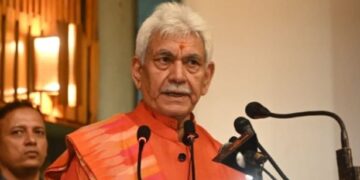
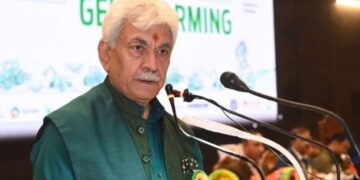
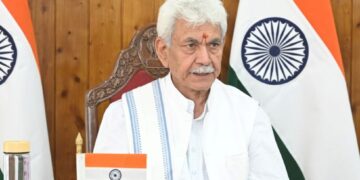
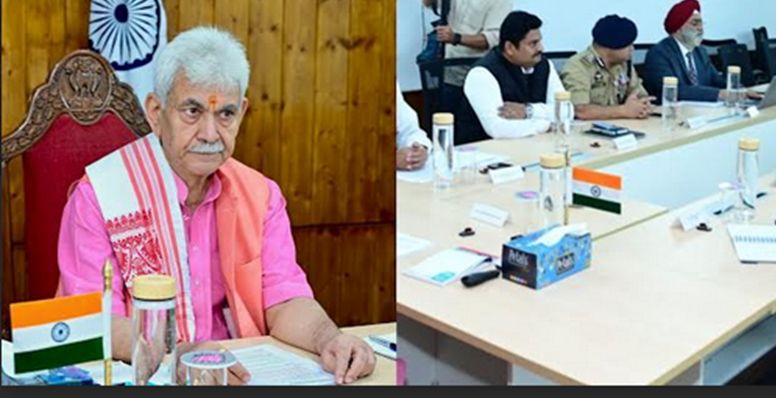
In a landmark step toward providing institutional support and long-overdue justice to victims of terrorism in Jammu and Kashmir, Lieutenant Governor Manoj Sinha this week launched a dedicated web portal for families affected by militancy in the Union Territory. Developed by the Home Department in collaboration with the National Informatics Centre (NIC), the portal aims to streamline relief measures, deliver compassionate appointments, and create a centralized, transparent mechanism for addressing the needs of terror-affected families.Calling the initiative a “historic move to correct decades of neglect and injustice,” the Lieutenant Governor emphasized that this platform will ensure the swift and efficient resolution of cases concerning those who have suffered due to terrorism. “The initiative will streamline and expedite the process of providing relief, compassionate appointments, and other forms of assistance to those who have suffered from terrorism in the UT,” LG Sinha stated at the official launch in Srinagar.
A Centralized System For Data, Support: The newly launched web portal is designed as a comprehensive, district-wise digital repository that captures detailed information about all families who have lost loved ones or property due to terrorism. From financial relief to ex-gratia compensation, and from employment opportunities to restoration of property rights, the portal will act as a one-stop digital interface for facilitating all forms of assistance. Importantly, it also records details of property encroachments and other violations suffered by the Next of Kin (NoKs) of terror victims, many of whom have silently endured not just personal loss but also economic and social marginalization. LG Sinha, who is personally monitoring the progress of each registered case, noted, “We are committed to ensuring that no legitimate case is left unaddressed. Every family will get what they are entitled to, and the days of bogus claims or systemic delays are over.”
Dedicated Helplines, Monitoring Cells: To further ensure the accessibility and inclusiveness of the initiative, toll-free helpline numbers have been set up in the offices of the Divisional Commissioners of both Jammu (0191-2478995) and Kashmir (0194-2487777) divisions. These helplines are managed through control rooms and staffed with trained personnel who will assist families in registering their grievances or follow up on pending claims. In tandem with the portal, Special Monitoring Cells have been established at the offices of the Chief Secretary and the Director General of Police (DGP). These cells will routinely assess the status of pending applications, identify administrative bottlenecks, and work with various departments to guarantee timely resolutions. Senior officials present at the launch included Chief Secretary Atal Dulloo, DGP Nalin Prabhat, Principal Secretary Home Chandrakar Bharti, Principal Secretary to LG Dr. Mandeep K. Bhandari, Commissioner Secretary GAD M. Raju, Divisional Commissioners Vijay Kumar Bidhuri (Kashmir) and Ramesh Kumar (Jammu), IGPs VK Birdi (Kashmir) and Bhim Sen Tuti (Jammu), and NIC SIO Jaskaran Singh Modi.
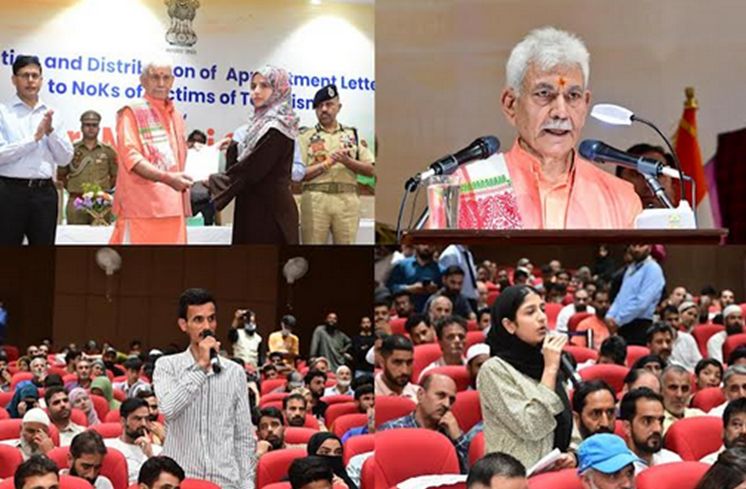
Restoring Dignity To Forgotten Victims: This initiative comes on the heels of another major outreach program on July 13, when LG Sinha handed over appointment letters to the NoKs of 40 terror victims at a public function in Baramulla. That move fulfilled a promise he made to victim families in Anantnag on June 29—to deliver government jobs to eligible members within 30 days, a deadline he met in just 15. While interacting with the families, LG Sinha highlighted how these individuals had been forgotten and neglected for decades, with no institutional mechanism to hear their pleas. “Terror victim families, forsaken and forgotten, suffered silently for decades. Stories of their loved ones, brutally killed by Pakistan-backed terrorists, are being brought to the forefront,” he said. He further decried the previous silence around these families’ suffering. “Truth about these families was deliberately suppressed. No one came to wipe their tears. Everyone knew Pakistan-backed terrorists were involved in brutal killings but no one provided justice to thousands of elderly parents, wives, brothers or sisters.”
Demolishing The False Narrative: In a strong statement against those he termed “conflict entrepreneurs,” LG Sinha declared that for nearly three decades, these elements manipulated public discourse to portray terrorists as victims and India as the aggressor. “These conflict entrepreneurs ruled the roost and even threatened these families. They had cleverly crafted a singular narrative. This false narrative has been completely demolished. The real victims of terrorism have now exposed Pakistan and terror outfits and unmasked these conflict entrepreneurs.” He further warned, “I warn the conflict entrepreneurs to stop spreading narratives that harm the sovereignty and integrity of the country. By propagating the narrative of terror outfits in Jammu and Kashmir, they are disrupting the peace established with blood and sweat.” LG Sinha assured that under the current administration, there would be zero tolerance for sympathizers of terrorism. “We are identifying those elements and removing them from government jobs. The days when family members of dreaded terrorists used to get government jobs are over.”
Justice To The Last Mile: The Lieutenant Governor stated unequivocally that his administration will now reach the doorstep of every victim family. Whether it’s securing livelihood, compensation, or job appointments, no family will be left behind. “We will ensure that every family gets justice, recognition and the support they deserve after years of suffering.” He also announced that helplines have been set up across districts to register grievances. “We are receiving hundreds of complaints from the 1990s also. In many cases, FIRs were not registered, lands were encroached, and properties demolished. I assure the people that culprits will not be spared.” In a particularly emotional segment, the LG recalled specific cases that underline the brutality of terrorism in the region. One such story was that of Wali Mohammad Lone of Baramulla, whose son, Bashir Lone, was shot dead by terrorists in 1992 while returning from a mosque. A year later, two more of his sons—Ghulam Mohiuddin and Abdul Rashid—were kidnapped. Their bodies were never found. Another poignant account was of Raja Begum from Lilam village in Kupwara. In 1999, her husband Ghulam Hassan Lone, her sons Javid and Irshad, and her daughter Dilshada were all murdered by terrorists after refusing to shelter them. “She waited 26 years for justice. We will ensure she doesn’t have to wait anymore,” LG Sinha said.
A Call To The Nation: The Lieutenant Governor issued a broader appeal to the people of Jammu and Kashmir, the media, and citizens across India to help in amplifying the voices of these families. “We must restore the dignity of the real victims of terrorism and bring their stories to light. Let the world know what they have endured and how Pakistan-sponsored terrorism has destroyed lives.” LG Sinha also committed to ensuring justice for Kashmiri Pandits killed during the 1990s insurgency. “Thorough investigations will be carried out and justice will be delivered,” he assured.
Role Of The Centre And The Vision For The Future: The Lieutenant Governor credited Prime Minister Narendra Modi for enabling such people-centric governance in the region. “Under the leadership of Hon’ble Prime Minister Shri Narendra Modi, J&K UT is scripting a golden chapter of inclusive development, peace and social justice,” he said. He emphasized that a transparent, efficient, and justice-oriented system is now in place, contrasting sharply with the past where administrative apathy and vested interests had marginalized the most vulnerable citizens.
“The launch of this portal marks more than just a bureaucratic reform—it represents a moral reckoning. By institutionalizing the stories of terror victims, the government is challenging selective remembrance and ensuring that the pain of countless families does not fade into obscurity. It is a step toward correcting historical neglect, rebuilding public trust, and recognizing that peace in Jammu and Kashmir cannot rest on silence, but on truth and justice.”
Towards a Terror-Free J&K : As the event concluded, LG Manoj Sinha reaffirmed his resolve to realize the vision of a terrorism-free Jammu and Kashmir. He stated that the administration was actively identifying and taking action against those who still attempt to nourish the terror ecosystem at the behest of Pakistan. With hundreds of pending complaints already pouring in from across the UT, the launch of the web portal marks a decisive moment in the region’s march toward healing, justice, and peace. “Let it be known—those days are over when the tears of terror victim families went unnoticed. We will restore their dignity, secure their rights, and ensure that justice, long delayed, is no longer denied,” LG Sinha said as he left the gathering of grieving yet hopeful families.
Kashmir Horizon View: The launch of the dedicated web portal for terror victim families is not just a technological milestone—it signifies a deeper shift in Jammu and Kashmir’s administrative and moral landscape. It marks a formal recognition of the long-neglected pain of thousands of families who bore the brunt of militancy silently. While this initiative is commendable, its long-term success depends on sustained institutional commitment, proactive governance, and citizen-centric implementation. Going forward, the administration must ensure end-to-end digital monitoring of every grievance filed through the portal. A real-time tracking mechanism, where claimants can check the status of their application, must be embedded into the system. Timelines for redressal should be fixed, and departments held accountable for delays. There is also a need for wide-scale awareness and outreach. Many victims or their descendants live in remote areas with limited digital access or knowledge of government procedures. Special camps and local-level awareness drives, particularly in rural and border districts, can bridge this information gap and ensure that no eligible family is left out. Legal support is another critical pillar. Many families have suffered not only personal losses but also encroachments on property and denial of rightful entitlements. A dedicated team of legal advisors at the district level can help victims pursue cases involving illegal occupation, unregistered FIRs, or bureaucratic hurdles in receiving compensation. Importantly, the stories of these families must not remain confined to official records. As LG Manoj Sinha rightly noted, there has been a deliberate attempt to suppress the truth and elevate false narratives that portrayed aggressors as victims. These real stories must be documented and disseminated through education, literature, and digital media to correct the historical record and build societal empathy. Alongside financial and legal aid, psychological support is essential. Many families still carry deep emotional scars. The establishment of district-level trauma and counseling centers can help survivors, especially children and elderly victims, cope with long-term psychological distress. The launch of this web portal represents a turning point in Jammu and Kashmir’s journey from conflict to compassion, from neglect to justice. It is a long-overdue acknowledgment of those who were not just victims of bullets and bombs, but also of silence and systemic apathy. For years, these families were either ignored or used as footnotes in a larger political narrative. Today, they are finally being seen and heard. Lieutenant Governor Manoj Sinha has taken a bold and necessary step—one that challenges decades of misinformation and distortion. By giving voice to the real victims of terrorism and providing them with tangible support, the administration is rewriting the script of accountability and justice in the Union Territory. The initiative not only addresses past wrongs but also lays the foundation for a future rooted in truth, dignity, and inclusive governance. It signals the end of a dark chapter where families of dreaded militants were rewarded, while those who lost everything to terrorism were abandoned. That injustice is now being corrected. As the portal begins receiving cases, and as more families come forward with their stories, the administration must remain vigilant, empathetic, and committed. With each resolved claim, each restored piece of land, and each appointment letter handed over, Jammu and Kashmir moves one step closer to healing.
(“Team Kashmir Horizon” is committed to continuous improvement and invites feedback and suggestions from readers and its followers on social media sites. Reader insights are considered vital for enhancing content quality and empowering the community. The team encourages open communication and values the thoughts and ideas of its audience, believing that such input will enable them to serve the public more effectively. The initiative aims to ensure that readers have the best possible experience with “Kashmir Horizon”. Interested individuals can reach out to us via email at [email protected].)