

The impacts of anthropogenic climate change are being felt all over the globe. The 6th Assessment report of the Inter-Governmental Panel on Climate Change (IPCC) has categorically stated that the earth’s temperature in the decade 2011-20 has risen by 1.1 degree Celsius compared to the pre-industrial(1850-1900) levels .At the same time, developed countries continue to occupy a disproportionate share of the global carbon budget and remain unwilling to provide the means of implementation to spur climate action. Transcending these concerns, the ancient Vedic principle of “Sarvebhavantusukhinah” — may all beings be happy — has guided human civilization for millennia. As the world grapples with the existential challenge of climate change, the timeless Vedic wisdom has found resonance in India’s approach to climate stewardship. On the one hand, the global community often focuses on the “inconvenient truths” of climate change — rising temperatures, erratic weather patterns, and increasing disasters. India, on the other hand, has championed a philosophy of “convenient action”. This approach, rooted in our civilizational ethos, has transformed India into a conscientious global climate citizen over the past eleven years. A verse from the Atharva Veda, “What of Earth we dig out, let that quickly grow over, let us not hit thy vitals or pierce thy heart,” reflects principles of regenerative natural resource management predating modern climate science by thousands of years. Our approach to climate action has woven this ancient understanding into contemporary policy frameworks, forging a unique synthesis of traditional wisdom and modern action. In keeping with this approach, within weeks of assuming office in 2014, Prime Minister Shri Narendra Modi demonstrated his climate commitment and far-sightedness through a simple yet profound administrative decision. By adding “Climate Change” to the Ministry of Environment and Forests, he elevated climate action from a peripheral concern to a governance priority. The creation of the National Adaptation Fund for Climate Change in 2015 exemplified this commitment, providing states with dedicated resources for climate resilience. Multiple State Governments responded by establishing their own Climate Change Departments, creating a federal cascade of climate action. In 2015, under PM Modi, India took a leading role in global climate negotiations. The PM himself went to Paris and played a pivotal role in forging the Paris Agreement, demonstrating India’s commitment at the highest level in conserving and preserving Mother Earth. Unlike nations that viewed climate commitments as burdens, India preferred to demonstrate concrete action by framing its first Nationally Determined Contributions (NDC) at COP21 in Paris in the same year as an expression of our responsibility to the global community guided by our domestic imperatives and own national circumstances. A seminal initiative launched in 2015 -the year of signing of Paris Agreement was the formation of the International Solar Alliance (ISA), which has grown from strength to strength and whose membership now stands at over 120 countries. This alliance created a platform for solar-rich countries to collaborate on clean energy solutions. The impetus provided to Renewable Energy(RE) has seen the growth in installed capacity of RE from mere 76GW in 2014 to 220 GW in March ,2025 and is likely to reach 500 GW by 2030. In terms of installed capacity, India is 4th in RE, 4th in Wind Energy and 3rd in Solar Energy – a remarkable achievement in a decade. India’s commitment to transformative climate action gained momentum with the launch of flagship schemes. The Pradhan Mantri Ujjwala Yojana (2016) brought clean cooking fuel to millions of women, demonstrating how climate action must serve social justice. The PM-KUSUM scheme (2019) empowered farmers with solar energy solutions, while the Rooftop Solar Programme accelerated distributed renewable energy adoption across the country. On September 23, 2019, Hon’ble Prime Minister Shri Narendra Modi announced the Coalition for Disaster Resilient Infrastructure (CDRI) at the United Nations Climate Action Summit in New York City, with the formal launch on August 28, 2019, creating a global partnership to promote disaster-resilient infrastructure development. LeadIT (Leadership Group for Industry Transition) was created in partnership with Sweden, demonstrating India’s commitment to industrial transformation for climate goals. The Production Linked Incentive (PLI) scheme for solar manufacturing (2020) strengthened domestic solar manufacturing capabilities, reducing import dependence and creating a robust indigenous solar ecosystem.
“During India’s G20 Presidency, climate considerations were integrated into various working groups, like Lifestyle for Sustainable Development in the Development Working Group and just and inclusive energy transition in the Energy Working Group. India launched the Global Biofuel Alliance for sustainable biofuel cooperation, demonstrating climate leadership by aligning human action with natural harmony.”
At COP26 in Glasgow (2021), India made historic announcements further consolidating India’s climate trajectory. While delivering the National Statement, he announced India’s ambitious Panchamrit — five nectar elements comprising enhanced climate commitment and achieving net-zero emissions by 2070.During the same address, the Prime Minister introduced Mission LiFE – Lifestyle for Environment, thereby involving citizens globally in the collective fight against climate change. This historic commitment positioned India as a climate leader among developing nations. On November 2, 2021, at Glasgow during COP26, PM Modi launched IRIS (Infrastructure for Resilient Island States), joined by the Prime Ministers of Australia, Fiji, Jamaica, Mauritius, and the UK, demonstrating global solidarity for climate-vulnerable nations. India updated its NDC in 2022, including Mission LiFE as a non-quantitative target for propagating a healthy and sustainable way of living based on traditions and values of conservation and moderation.Building on these commitments, India submitted its Long-Term Low Emission Development Strategy (LT-LEDS) in November 2022, providing a roadmap for sustainable development while achieving net-zero emissions by 2070. The same year witnessed the launch of the National Green Hydrogen Mission, positioning India to become a global hub for green hydrogen production and export, aligning with our vision of energy independence and clean energy transition. The year 2023 marked a significant milestone with the announcement of Viksit Bharat2047, India’s vision for becoming a developed nation by 2047 by maintaining a delicate balance between “Ecology and Economy “and “Prakriti and Pragati”. India’s climate action is in sync with the vision of Viksit Bharat@2047. Apart from actions towards mitigating climate change, India has also submitted its Adaptation Communication with the Biennial Update Report, demonstrating comprehensive climate reporting. Two transformative citizen focused initiatives were launched in 2024.The PM Surya GharMuftBijliYojana democratized solar energy access, while the launch of “Ek Ped Maa Ke Naam” (One Tree in Mother’s Name) created a mass movement for afforestation, empowering every citizen to contribute to climate action. Recognizing nuclear power as a critical component for achieving energy security and sustainability, 2025 saw the launch of the National Energy Mission for Viksit Bharat and the National Manufacturing Mission. The Nuclear Energy Mission, with an allocation of ₹20,000 crore from Union Budget 2025-26, focuses on research and development of Small Modular Reactors (SMRs), aiming to develop at least five indigenously designed and operational SMRs by 2033, positioning India as a leader in next-generation nuclear technology. India is well on track to achieving its enhanced NDC by 2030 and is preparing for the revision of NDC for the period 2030-35. India is also likely to submit first National Adaptation Plan, demonstrating continuous improvement in climate action. India is taking climate action both on the supply side through mitigation measures and on the demand side by promoting environment-friendly lifestyles at the individual level. Most notably, India has transformed climate action from a governmental responsibility into a mass movement with a call from Jan Bhagidari. India’s international climate initiatives embody the ancient Indian principle of “VasudhaivaKutumbakam” — the world is one family. The International Solar Alliance (ISA), Coalition for Disaster Resilient Infrastructure (CDRI), Global Biofuel Alliance, LeadIT and the International Big Cat Alliance (IBCA) represent India’s commitment to walking the talk and sharing solutions rather than merely highlighting challenges. During India’s G20 Presidency, climate considerations were mainstreamed across several working groups beyond the Environment and Climate Working Group. The Development Working Group focused on Lifestyles for Sustainable Development while the Energy Working Group focused on just and inclusive energy transition, demonstrating how climate concerns transcend sectoral boundaries.India also launched the Global Biofuel Alliance, creating a platform for international cooperation on sustainable biofuels. In transforming “inconvenient truths” into “convenient action”, the PM has shown that climate leadership requires not just scientific understanding, but the wisdom to align human action with natural harmony.
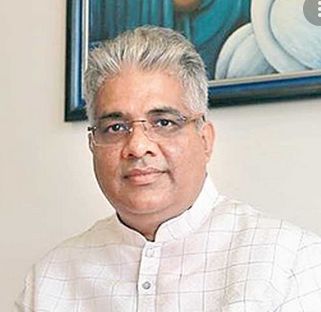
(The author is Union Cabinet Minister for Environment, Forest & Climate Change. Press Information Bureau-PIB Srinagar has mailed this article to “Kashmir Horizon” for publication in this newspaper. The views, opinions and conclusions expressed in this article are those of the author and aren’t necessarily in accord with the views of “Kashmir Horizon”)
Bhupender Yadav






