

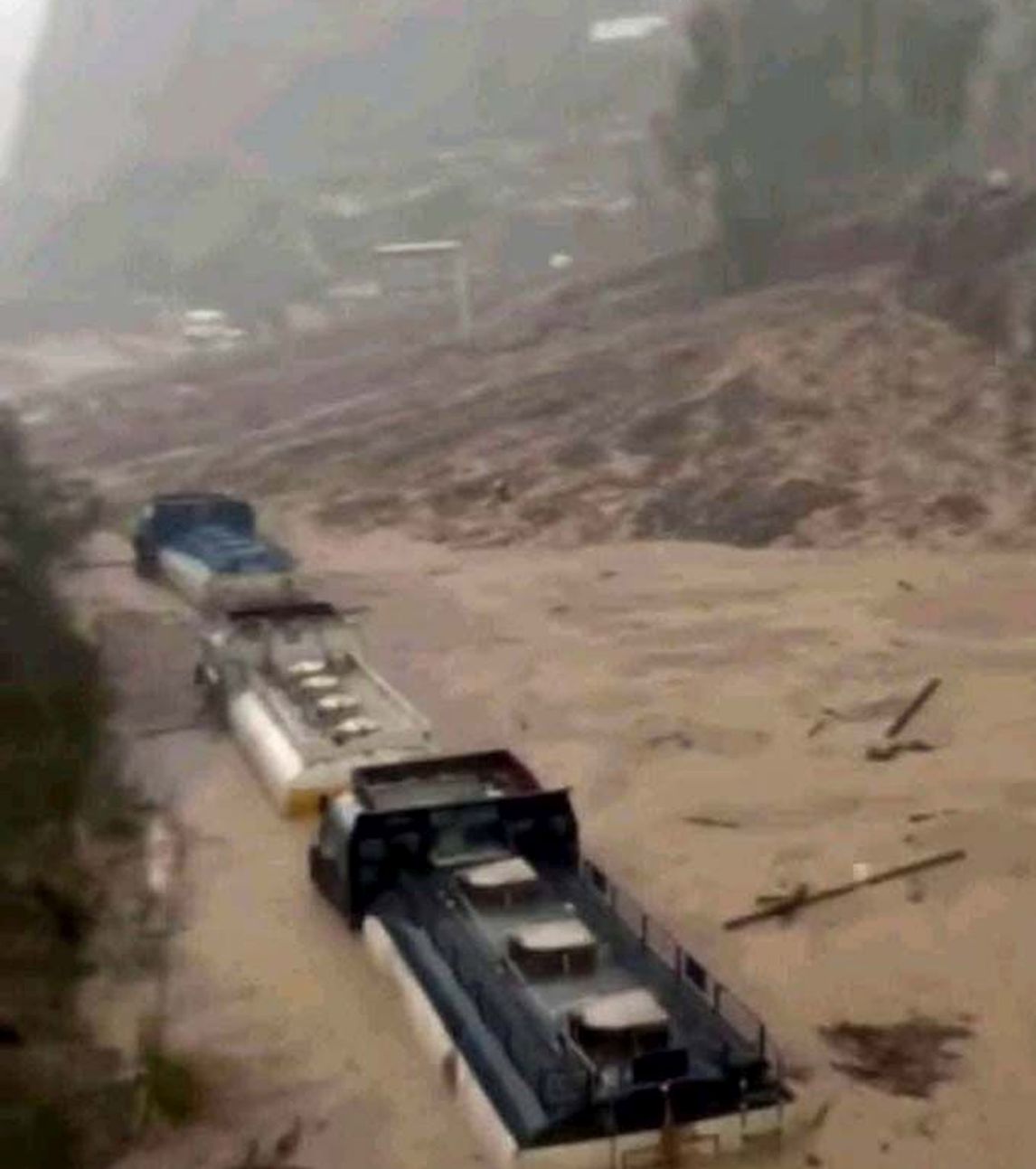
In a heart-wrenching blow to the people of Kashmir, a massive hailstorm accompanied by heavy rainfall and subsequent landslides has ravaged the region, particularly targeting the valley’s lifeline its apple orchards. Known for its pristine beauty and rich horticultural heritage, the Kashmir Valley today stands on the brink of an economic and humanitarian crisis. The hailstorm, which lasted only minutes, has brought devastation of unimaginable scale, wiping out acres of orchards and leaving thousands of families struggling to survive.
Economic Backbone Of Valley Crushed: Horticulture, especially apple cultivation, is not merely an occupation for the people of Kashmir; it is a tradition, a culture, and the primary source of income for a vast majority of the population. The valley contributes nearly 75% of India’s total apple production, and thousands of households, directly and indirectly, rely on the apple economy.This hailstorm, however, has upended their world. In districts like Shopian, Anantnag, Baramulla, Pulwama, Kulgam, and Budgam, farmers are reporting total destruction of crops. The unripe apple fruits, which were almost ready to be harvested in a few months, have been shredded to the ground. Trees have been stripped of leaves and branches, and the already fragile hopes of the local orchardists have been turned into despair.Local growers from kashmir valley recounted in tears, “said that these orchard has been in our family for three generations. It fed us, clothed us, and helped educate our children. In just one storm, it’s all gone. We have nothing left now not even hope.
Landslides Worsen The Tragedy: As if the destruction of orchards wasn’t enough, heavy rains have triggered landslides in several areas, especially in the hilly regions of Ramban district and along the Jammu-Srinagar National Highway. These landslides have not only blocked vital transport routes, disrupting movement of essential supplies and emergency services, but also damaged homes and displaced entire communities in the affected villages.Villagers from Ramban and adjoining areas reported collapsing houses, mudslides sweeping through fields, and lives being upturned overnight. “Our house cracked from the base and the roof caved in. Entire families have been forced to take refuge in temporary shelters or under open skies, with no access to clean water, food, or medical aid. Many have lost not only their homes but also the stored harvests, cattle sheds, and the few personal belongings they cherished.
Humanitarian Crisis For The Poor: What makes this tragedy all the more painful is the disproportionate impact it has had on the poor. The majority of the orchardists and villagers in Kashmir belong to economically weaker sections of society. Their homes are modest, often made of mud or wood, and lack the structural resilience to withstand extreme weather events.The loss of apple orchards means a direct loss of annual income. For many, there is no plan B. These orchards were not just pieces of land they were their only means to feed their families, send their children to school, and survive the long, harsh winters of Kashmir. Now, they stand broken, without income, shelter, or resources to rebuild their lives.The affected residents are not just demanding charity they are demanding justice and recognition of their plight.
“Apple orchards are not just fields of fruit they are symbols of Kashmir’s identity, its pride, and its heritage. Generations have nurtured these lands with love, care, and patience. Losing them is akin to losing a part of one’s soul. This disaster is a wake-up call not just for the administration but for the entire nation to stand in solidarity with Kashmir’s farmers, laborers, and poor residents who today find themselves at the edge of despair.”
Call For Immediate Government Intervention: In light of this calamity, there is an urgent and growing demand for the Government of Jammu and Kashmir to step in with comprehensive relief and rehabilitation measures. The situation calls for:-
1. Immediate assessment of damage to apple orchards and residential structures by government teams, with transparency and fairness in documentation.
2. Financial compensation and subsidies for affected farmers, including crop insurance payouts, debt waivers, and interest-free loans for replanting orchards.
3. Rehabilitation support for families who lost their homes, including temporary shelters, construction material assistance, and basic livelihood grants.
4. Restoration of blocked roads and essential services in landslide-hit areas, especially along the Jammu-Srinagar highway which is a critical lifeline.
5. Long-term disaster preparedness programs, including installation of weather forecasting systems, support for climate-resilient crops, and structural reinforcements in vulnerable zones.
The administration must recognize the severity of the crisis and respond with urgency and empathy. Bureaucratic delays, red tape, and piecemeal announcements will not suffice. What is needed is a coordinated, people-centered relief effort, driven by compassion and accountability.
A Cry For Heritage, Hope: Beyond the physical damage, this calamity has torn apart the emotional and cultural fabric of the valley. Apple orchards are not just fields of fruit they are symbols of Kashmir’s identity, its pride, and its heritage. Generations have nurtured these lands with love, care, and patience. Losing them is akin to losing a part of one’s soul. This disaster is a wake-up call not just for the administration but for the entire nation to stand in solidarity with Kashmir’s farmers, laborers, and poor residents who today find themselves at the edge of despair.
They deserve not just sympathy, but active support.
They deserve not just promises, but action.
They deserve not just survival, but the chance to rebuild with dignity.
Let the response to this tragedy become an example of governance that cares, and of a society that refuses to let its most vulnerable be forgotten in the rubble of nature’s fury.
(The author a lawyer by profession is a freelancer. The views, opinions and conclusions expressed in this article are those of the author and aren’t necessarily in accord with the views of “Kashmir Horizon”)
Advocate Sajad Paul
[email protected]






