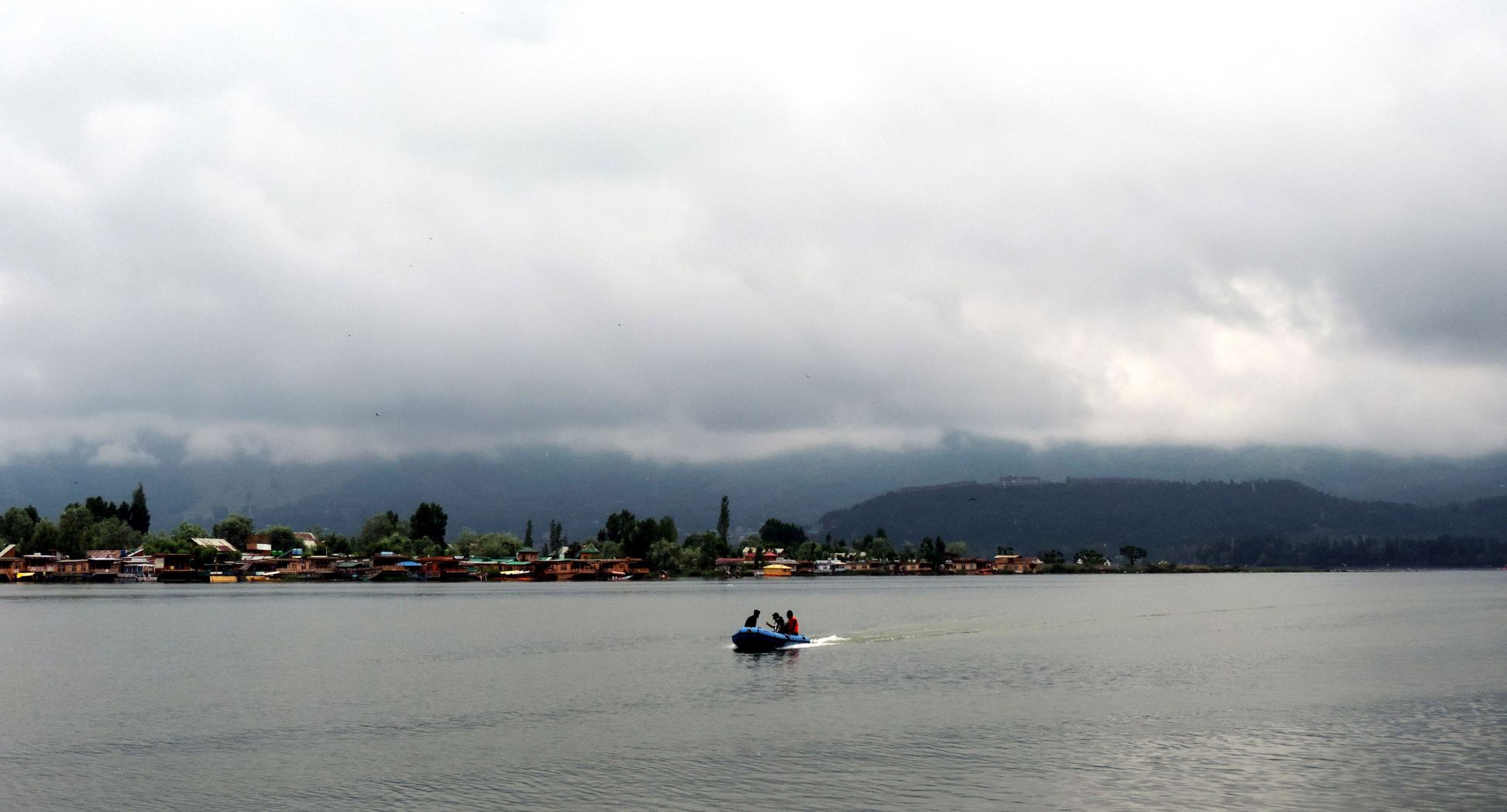
Srinagar: The Jammu & Kashmir government has taken major steps to conserve Dal Lake and other key water bodies, including Anchar, Gilsar, and Wular lakes. In response to a query by MLA Farooq Shah, the Chief Minister, who also oversees Housing and Urban Development, outlined these efforts during the assembly session on Wednesday.
The government is actively working on 337.17 sq. km of lake ecosystems, with 25.01 sq. km specifically focused on Dal and Nigeen lakes. A large-scale dredging operation has already cleared 6.5 sq. km, expanding open water areas to 20.3 sq. km.
To reduce pollution, five Sewage Treatment Plants (STPs) with a total capacity of 36.73 MLD have been built, while natural oxidation ponds treat an additional 10 MLD of sewage. In partnership with NAFED, a scientific waste management system has been introduced, along with an Online Continuous Emission Monitoring System (OCEMS) to track water quality.
The government has also relocated 3,108 families from Dal Lake, ensuring better living conditions and reducing human pressure on the fragile ecosystem. Catchment area protection is another key focus, with 165,000 trees planted, along with check dams, anti-erosion measures, and fencing to prevent degradation.
For better monitoring, 29 CCTV cameras have been installed around the lakes, and drones are being used to map boundaries and prevent encroachments. A bathymetric hydrological survey has been conducted to assess water depth, quality, and sediment levels for better conservation planning.
A significant boost to conservation efforts comes from the ₹263 crore Integrated Management Plan under the Prime Minister’s Development Package (PMDP). With ₹212.38 crore allocated, this five-year project, approved by IIT Roorkee and endorsed by the MoEF&CC and MHA, focuses on sewage management, catchment protection, and silt control.