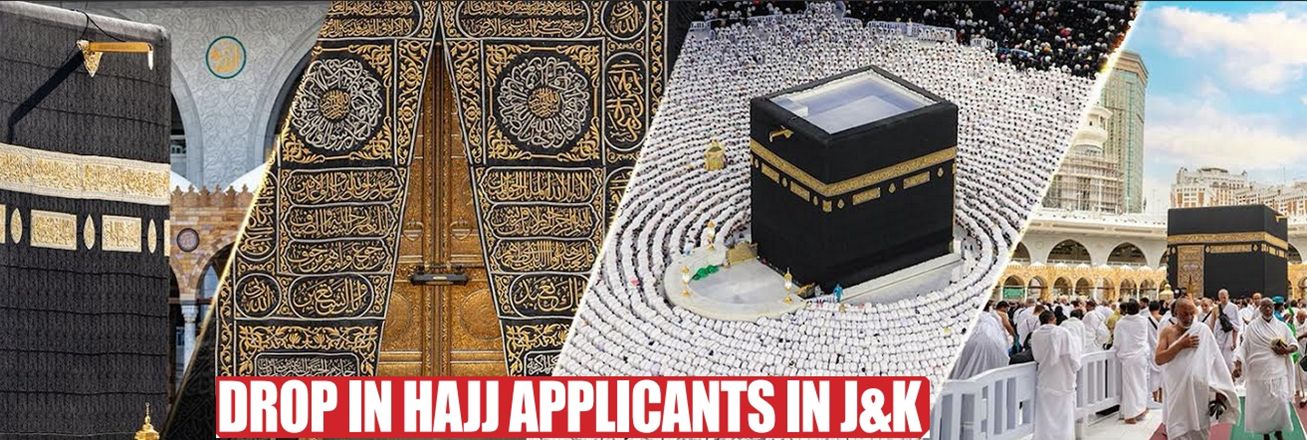
Srinagar: The number of people applying for the Haj pilgrimage from Jammu and Kashmir has been witnessing a sharp decline over the years, raising concerns among authorities and religious bodies. From a peak of 35,000 applications in 2017, the number has now plummeted to just over 4,100 in 2025, with only 3,622 pilgrims confirmed for the journey. This downward trend has been consistent over the years, with applications dropping significantly post-2019. Various socio-economic and policy-driven factors have contributed to this continuous fall, with stakeholders expressing concerns over accessibility and affordability of the pilgrimage for common people.
Despite multiple deadline extensions for submitting applications, the response from the region has remained muted. Authorities attribute this decline to the soaring costs of the pilgrimage, economic hardship, and a shift in priorities among the residents. The financial burden of undertaking Haj from Srinagar has become a major deterrent, with pilgrims required to pay approximately Rs 4.2 lakh for the journey, compared to Rs 3.6 lakh from Delhi. The airfare alone from Srinagar stands at Rs 1.7 lakh, significantly higher than Rs 1.1 lakh from Delhi, making the pilgrimage more expensive for those traveling from Jammu and Kashmir. Religious leaders and social organizations have urged the government to reassess airfare policies to bring relief to aspiring pilgrims. Dr. Shujaat Ahmad Qureshi, Executive Officer of the J&K Haj Committee told Kashmir Hthe total number of confirmed pilgrims for Haj 2025 stands at 3,622, all of whom have completed the required payment process. He explained that out of India’s total Haj quota of 1,75,025 slots, 1,22,550 are allocated to the Haj Committee of India (HCOI), with Jammu and Kashmir receiving 4.89% of the quota, along with an additional 2,000 slots. Besides government allocations, 14 private Haj Group Operators (HGOs) have been granted a collective quota of 750 pilgrims in Jammu and Kashmir. Officials believe that the introduction of private operators was meant to streamline the process, but affordability still remains a major hurdle for many aspirants. Economic constraints have emerged as a significant factor affecting the number of applicants. Many government employees and private-sector workers have chosen to prioritize essential expenses such as healthcare and education over religious travel. Bashir Ahmad Bashir, a leader in the horticulture trade, emphasized that the rising costs of living have made it difficult for many to set aside funds for the pilgrimage. Additionally, a growing number of individuals are opting for Umrah, which is a more flexible and affordable alternative to Haj, further contributing to the drop in applications. Families struggling with everyday financial responsibilities find it increasingly difficult to save for Haj, leading to a decline in applications year after year.
International Financial Factors Driving Up Costs: Experts also cite international financial factors as reasons for the increasing cost of Haj. Atfaf Qureshi, an expert on Haj affairs, explained that the introduction of Value Added Tax (VAT) by Saudi Arabia in 2019, along with the strengthening of the Saudi Riyal against the Indian Rupee, has significantly raised the cost of the pilgrimage. As a result, many potential pilgrims from Jammu and Kashmir have been unable to afford the journey. The fluctuation in exchange rates, along with rising service charges and accommodation costs, has further pushed Haj out of reach for many lower-income families. Analysts suggest that future Haj policies must consider international economic factors when finalizing quotas and costs. The decline in applications is evident across all districts of Jammu and Kashmir, except for district Doda, which witnessed a marginal 9% increase. Srinagar district, which received 2,607 applications in 2024, has recorded a drastic fall of over 64% in 2025, with only around 930 applicants. Other districts such as Budgam, Anantnag, Bandipora, and Baramulla have also reported significant declines, further highlighting the widespread impact of economic constraints on Haj participation. The decrease in numbers is not just an urban phenomenon; rural areas that traditionally saw high participation are also witnessing a significant drop. Local scholars and religious bodies have expressed their concerns over this declining trend, calling for more support from the administration to facilitate Haj for those who wish to undertake it. While the government facilitates a significant portion of Haj applications through the Haj Committee of India, private Haj Group Operators (HGOs) also play a crucial role in organizing the pilgrimage. In Jammu and Kashmir, 14 private HGOs have been allotted a quota of 750 pilgrims for 2025. These operators often offer additional services such as personalized travel assistance, better accommodation, and flexible itinerary options. However, the cost factor remains an issue, as private packages tend to be more expensive than those provided by the government. Many pilgrims express concerns that while private options may provide better facilities, they are often unaffordable for the common person. The government and community leaders have called for immediate intervention to make the pilgrimage more affordable. Suggestions include subsidizing airfare for Srinagar-based pilgrims, offering flexible payment options, and engaging with Saudi authorities to explore possibilities for cost reduction. Many believe that unless concrete measures are taken, the trend of declining Haj applications from Jammu and Kashmir will continue in the coming years. Social and religious organizations have suggested creating a Haj financial aid fund, where those who wish to perform Haj but lack resources can receive assistance. Additionally, a long-term savings plan for aspiring pilgrims could help them accumulate the required amount over time. With Haj 2025 set to take place in the last week of April, the window for last-minute interventions is narrowing. Whether authorities can implement policies to assist potential pilgrims remains uncertain. However, the ongoing decline in applications is a matter of growing concern, necessitating urgent action to ensure that those who aspire to undertake the sacred journey are not held back due to financial constraints. As the final arrangements for this year’s pilgrimage are being made, stakeholders hope that future policies will address these pressing challenges and enable more people from Jammu and Kashmir to fulfill their religious aspirations. Experts suggest that a long-term, sustainable approach is required to ensure that Haj remains accessible to a larger segment of the population. Reducing the cost burden, ensuring transparent quota distribution, and offering financial assistance programs could help in reversing the downward trend. Furthermore, the government could explore negotiations with airlines and Saudi authorities to lower airfare and accommodation expenses for pilgrims traveling from Jammu and Kashmir. As discussions around the affordability of Haj continue, many in the region remain hopeful that necessary reforms will be introduced to make the sacred journey feasible for all those who wish to undertake it.
Keep the human compassion at the heart of healthcare: LG Sinha
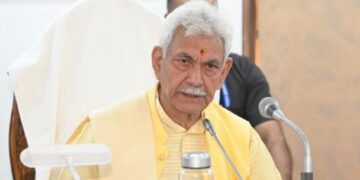
• Congratulates GMC Srinagar on Advancing Internal Medicine Conference • Highlighted vital role of physicians in delivering holistic • Medical...
Read moreDetails