“LG Sinha’s announcement follows the successful conduct of assembly elections in 2023, an event he described as a “positive change” reflecting the people’s unwavering faith in democratic institutions. With the recent completion of the Electoral Commission’s revision process—adding 341,000 new voters while removing 110,000—the UT now boasts an electorate of over seven million. A key factor delaying local body elections has been the awaited recommendations from the Other Backward Classes (OBC) Commission regarding reservations for OBC candidates, as mandated by a parliamentary bill passed last year. The implementation of these provisions is expected to shape the electoral landscape in the upcoming polls, ensuring broader representation and inclusivity in governance.”

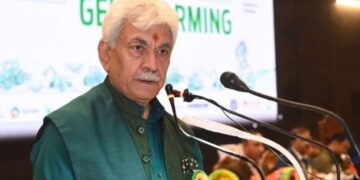
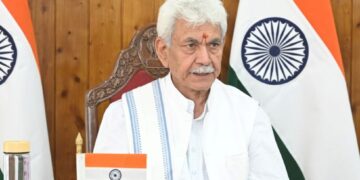
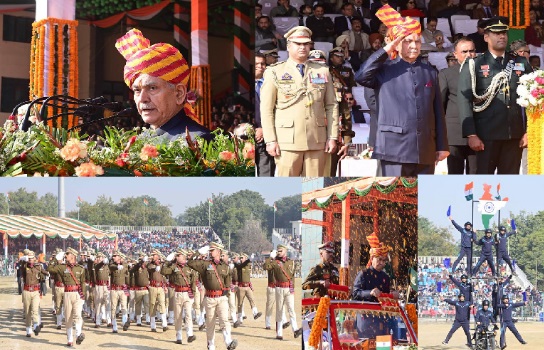
On the occasion of the 76th Republic Day, Lieutenant Governor Manoj Sinha made a significant announcement regarding the long-awaited Panchayat and civic body elections in Jammu and Kashmir. While the exact timeline remains unspecified, this move is widely seen as a crucial step toward strengthening grassroots democracy in the Union Territory (UT). By emphasizing the establishment of a three-tier governance structure, Sinha reaffirmed the administration’s commitment to decentralization and local empowerment.
Electoral Milestones, Democratic Engagement: LG Sinha’s announcement follows the successful conduct of assembly elections in 2023, an event he described as a “positive change” reflecting the people’s unwavering faith in democratic institutions. With the recent completion of the Electoral Commission’s revision process—adding 341,000 new voters while removing 110,000—the UT now boasts an electorate of over seven million. A key factor delaying local body elections has been the awaited recommendations from the Other Backward Classes (OBC) Commission regarding reservations for OBC candidates, as mandated by a parliamentary bill passed last year. The implementation of these provisions is expected to shape the electoral landscape in the upcoming polls, ensuring broader representation and inclusivity in governance. The Panchayat and urban local body elections are particularly significant, as they serve as the foundation for participatory democracy and grassroots decision-making. The administration’s commitment to conducting these elections reflects an overarching vision of governance where local representatives play a central role in policy implementation and regional development.
Economic, Employment Boost through ‘Mission YUVA’: Beyond electoral democracy, Sinha’s address also unveiled ‘Mission YUVA,’ an ambitious initiative aimed at transforming Jammu and Kashmir into an entrepreneurial and employment hub. The initiative is set to facilitate the creation of 137,000 enterprises, generating approximately 425,000 jobs over the next five years. Notably, the scheme will prioritize nano-entrepreneurs, particularly women and first-generation business owners from remote regions. Supporting micro, small, and medium enterprises (MSMEs) in emerging sectors, scaling existing businesses, and fostering innovative startups are among the primary objectives of the mission. If executed effectively, ‘Mission YUVA’ could significantly alleviate unemployment while enhancing the socio-economic landscape of the region. This initiative aligns with the broader vision of self-reliance and sustainable economic growth in Jammu and Kashmir. By encouraging youth to explore entrepreneurship, the government aims to reduce dependency on public sector employment while fostering innovation and productivity in various industries.
Reforming Public Sector Recruitment: To streamline government recruitment, the administration has made 40,000 appointments over the past five years, ensuring transparency and meritocracy in the hiring process. Additionally, fast-track recruitment for compassionate appointments has been accelerated, while 10,616 positions have been referred to the Public Service Commission and Services Selection Board, with notifications already issued for 7,376 posts. These measures are expected to address employment concerns, particularly among the youth, while reinforcing public confidence in the government’s hiring policies. By eliminating malpractices and ensuring that recruitment is based purely on merit, the administration aims to build a more capable and efficient workforce for the UT.
Healthcare And Palliative Care Initiatives: Lieutenant Governor Manoj Sinha inaugurated the 32nd International Conference of the Indian Association of Palliative Care (IAPC) at AIIMS Jammu. Over 800 national and international delegates participated in discussions aimed at fostering advancements in palliative care for patients diagnosed with terminal illnesses. The conference, organized by the IAPC J&K Chapter and AIIMS Jammu, sought to improve quality of life through innovations in care and support systems. In his keynote address, Sinha urged experts to keep Standard Operating Procedures (SoPs) updated and emphasized the need for greater sensitivity toward patients and their families. He highlighted the administration’s efforts, including the establishment of 10-bed state-of-the-art Palliative and Geriatric Care Wards in all districts since 2022. Sinha also called upon the private sector to collaborate with the administration to set up palliative care centers in remote areas. He emphasized that healthcare professionals must be trained in pain management, continuity of care, and the seamless integration of curative and palliative treatments. On the occasion, the Lieutenant Governor inaugurated the Radiotherapy Oncology and Operation Theatre Complex at AIIMS Jammu and launched the AIIMS Pain Policy. He praised AIIMS Jammu’s vision of pain-free patient care and commended the Indian Association of Palliative Care for its role in expanding specialized care. The establishment of a Radiotherapy Oncology facility at AIIMS Jammu is expected to reduce the need for patients to travel long distances for radiation therapy, ensuring timely diagnosis and treatment within the region. Additionally, the Operation Theatre Complex, featuring eight advanced operation theatres, including integrated OTs with live surgical broadcasting and a hybrid OT with rotatory MRI and CT scan technology, will enhance surgical precision and medical training.
Bridging The Gap In Elderly Healthcare: The Lieutenant Governor further underscored the importance of addressing the needs of an ageing population. By 2050, 20.8% of India’s population will be above 60 years of age, necessitating the development of a strong care economy. He suggested creating a comprehensive healthcare package that includes regular check-ups, geriatric care, mental health support, and palliative care services to ensure that senior citizens live with dignity and comfort.
“The administration’s commitment to conducting Panchayat and Urban Local Bodies elections reflects an overarching vision of governance where local representatives play a central role in policy implementation and regional development. Beyond electoral democracy, Sinha’s address also unveiled ‘Mission YUVA,’ an ambitious initiative aimed at transforming Jammu and Kashmir into an entrepreneurial and employment hub. The initiative is set to facilitate the creation of 137,000 enterprises, generating approximately 425,000 jobs over the next five years. Notably, the scheme will prioritize nano-entrepreneurs, particularly women and first-generation business owners from remote regions.”
Sports, Infra Development; A New Dawn for J&K: Sinha’s Republic Day address also underscored substantial progress in sports and youth development. With over 4,500 children receiving free training at 92 Khelo India Centres, Jammu and Kashmir has begun to make its mark in national-level competitions. The return of international cricket to the region through the Legends League tournament marks a symbolic yet critical milestone in restoring normalcy and sports culture in the UT. Infrastructure advancements include the upcoming Khel Gaon in Nagrota, a multi-sports hub, as well as high-performance training centers across districts. Further, the establishment of a water sports academy in Srinagar and a fencing academy in Jammu signals a diversified approach to sports promotion.
Women’s Empowerment, Self-Reliance Initiatives: The government is actively encouraging urban youth to explore self-employment opportunities through programs like the National Urban Livelihood Mission and the Himayat scheme. A key aspect of these initiatives is the transformation of 40,000 women into ‘Lakhpati Didis’—a concerted effort to empower rural women economically.
Rehabilitation, Support For Displaced Communities: Acknowledging historical grievances, Sinha highlighted the government’s efforts to support displaced persons. As per official data, financial assistance amounting to Rs 1,452 Cr has been allocated to 33,636 displaced persons from Pakistan-occupied Jammu and Kashmir (PoJK) and Chhamb. Furthermore, 3,541 West Pakistani refugees have received financial aid of Rs 89 Cr. Additionally, the government is providing transit accommodation to Kashmiri migrant employees, with 6,000 flats sanctioned—of which 2,832 have been completed and 2,016 are in various stages of development. These measures indicate a broader push for resettlement and inclusion.
Kashmir Horizon View: Lieutenant Governor Manoj Sinha’s Republic Day address underscored a multi-faceted vision for Jammu and Kashmir, balancing democratic empowerment with economic revitalization. With continued administrative focus, the future of Jammu and Kashmir appears poised for transformation through a combination of electoral participation, economic opportunities, and infrastructural progress. As Jammu and Kashmir embraces this developmental momentum, its path forward remains marked by resilience, innovation, and a commitment to inclusive governance. Strengthened democratic structures, improved healthcare, economic reforms, and cultural revitalization set the stage for long-term growth and stability, ensuring a brighter future for all its citizens. LG Sinha’s announcement follows the successful conduct of assembly elections in 2023, an event he described as a “positive change” reflecting the people’s unwavering faith in democratic institutions. With the recent completion of the Electoral Commission’s revision process—adding 341,000 new voters while removing 110,000—the UT now boasts an electorate of over seven million. A key factor delaying local body elections has been the awaited recommendations from the Other Backward Classes (OBC) Commission regarding reservations for OBC candidates, as mandated by a parliamentary bill passed last year. The implementation of these provisions is expected to shape the electoral landscape in the upcoming polls, ensuring broader representation and inclusivity in governance. The Panchayat and urban local body elections are particularly significant, as they serve as the foundation for participatory democracy and grassroots decision-making. The administration’s commitment to conducting these elections reflects an overarching vision of governance where local representatives play a central role in policy implementation and regional development. Beyond electoral democracy, Sinha’s address also unveiled ‘Mission YUVA,’ an ambitious initiative aimed at transforming Jammu and Kashmir into an entrepreneurial and employment hub. The initiative is set to facilitate the creation of 137,000 enterprises, generating approximately 425,000 jobs over the next five years. Notably, the scheme will prioritize nano-entrepreneurs, particularly women and first-generation business owners from remote regions. Supporting micro, small, and medium enterprises (MSMEs) in emerging sectors, scaling existing businesses, and fostering innovative startups are among the primary objectives of the mission. If executed effectively, ‘Mission YUVA’ could significantly alleviate unemployment while enhancing the socio-economic landscape of the region. This initiative aligns with the broader vision of self-reliance and sustainable economic growth in Jammu and Kashmir. By encouraging youth to explore entrepreneurship, the government aims to reduce dependency on public sector employment while fostering innovation and productivity in various industries. To streamline government recruitment, the administration has made 40,000 appointments over the past five years, ensuring transparency and meritocracy in the hiring process. Additionally, fast-track recruitment for compassionate appointments has been accelerated, while 10,616 positions have been referred to the Public Service Commission and Services Selection Board, with notifications already issued for 7,376 posts. These measures are expected to address employment concerns, particularly among the youth, while reinforcing public confidence in the government’s hiring policies. By eliminating malpractices and ensuring that recruitment is based purely on merit, the administration aims to build a more capable and efficient workforce for the UT.
(In commitment to continuous improvement the “Team Kashmir Horizon” invites it’s valuable readers to share their valuable feedback and suggestions with the “Team Kashmir Horizon”. The insights of readers will surely play a vital role in improving the content quality of “Kashmir Horizon” and contribute more for the empowerment of people. Please feel free to reach out to us at editor@ thekashmirhorizon.com. Team “Kashmir Horizon” eagerly anticipates thoughts and ideas of it’s readers, which will help us serve people and even more effectively. The inputs of valuable readers are highly valued as “Kashmir Horizon” strives to provide it’s readers the best possible experience. Thank you for being a part of the reader community!)