“Chief Minister Omar Abdullah directed the formation of a cabinet sub-committee to engage stakeholders and ensure that public interest remains at the forefront of any decision.”Dialogue and consensus are crucial in such matters,” Says Minister Javed Rana, adding “Addressing concerns about the disproportionate allocation of reserved seats. The government’s approach aims to balance the need for social justice with the principles of meritocracy.”
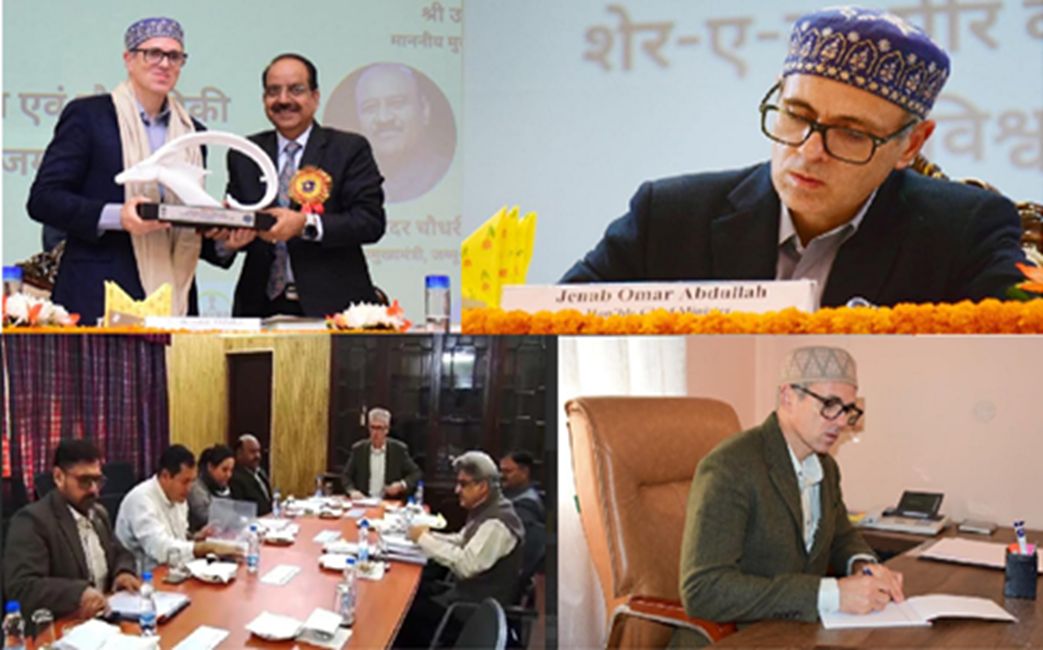
The newly elected Jammu and Kashmir Chief Minister, Omar Abdullah, chaired a cabinet meeting on Friday to address various pressing issues, including employment, reservation policies, and recruitment processes. This was the second such meeting since the government assumed office over a month ago. The discussions revealed the administration’s commitment to tackling unemployment, rationalizing reservation policies, and addressing public grievances, all while navigating the complexities of governance in the Union Territory (UT).
Key Discussions In The Cabinet Meeting: Deputy Chief Minister Surinder Kumar Choudhary, several ministers, and Chief Secretary Atal Dulloo participated in the meeting, which resulted in significant decisions and the formation of a sub-committee to engage with stakeholders on the issue of revising reservation limits in government jobs. Minister for Jal Shakti and Forests, Javed Ahmed Rana, briefed the media about the deliberations. “Critical issues, including employment, reservation, recruitment processes, and development, were discussed under the leadership of the Chief Minister,” Rana stated. He emphasized the importance of addressing these issues to fulfill promises made in the election manifesto. One of the highlights of the discussion was the focus on unemployment, a concern that has grown increasingly urgent in recent years. The Chief Minister instructed all ministers to prioritize employment generation within their respective departments, underscoring the government’s commitment to presenting concrete measures within a 100-day agenda. Rana affirmed that addressing unemployment was not merely a campaign promise but a critical element of the government’s immediate goals. Vacant posts in various departments will soon be advertised, with deliberations held on whether to route these through the Public Service Commission (PSC) or the Services Selection Recruitment Board (SSRB).
Reservation Reforms, Rationalization: The cabinet meeting also delved into the contentious issue of reservations in government jobs. The Jammu and Kashmir Public Service Commission recently advertised 575 posts for school lecturers, sparking unrest among unemployed youth. Of these, 337 posts were reserved for specific categories, leaving only 238 open to meritorious candidates. This distribution triggered protests from youth organizations and National Conference MP Aga Syed Ruhullah, who demanded rationalization of the reservation policy. In response, Chief Minister Omar Abdullah directed the formation of a cabinet sub-committee to engage stakeholders and ensure that public interest remains at the forefront of any decision. “Dialogue and consensus are crucial in such matters,” Minister Javed Rana said, addressing concerns about the disproportionate allocation of reserved seats. The government’s approach aims to balance the need for social justice with the principles of meritocracy.
Age Relaxation And Daily Wagers: The meeting also discussed age relaxation for job aspirants and the plight of daily wagers, another pressing issue in the region. “The issue of daily wagers is significant, and the Chief Minister has already instructed ministers to initiate processes to address their concerns,” Rana noted. Daily wagers, who form a substantial segment of the workforce in Jammu and Kashmir, have long demanded regularization of their services. The government’s acknowledgment of their grievances and steps to resolve them signal a shift towards greater transparency and accountability.
Resolution On Special Status: Another critical issue addressed was the resolution on restoring Jammu and Kashmir’s special status, recently passed in the Legislative Assembly. Chief Minister Omar Abdullah reiterated that the resolution remains “alive” and has not been rejected. “The resolution was passed by a majority in the Assembly. It holds significance, as evidenced by references from the Prime Minister and Home Minister,” Omar stated during the e-inaugural ceremony of the Bagh-e-Gul-e-Dawood, a Chrysanthemum Theme Garden. He emphasized that restoring statehood to Jammu and Kashmir is a prerequisite for pursuing further demands, including the reinstatement of Article 370.
Addressing Governance Challenges: The Chief Minister also highlighted governance challenges in the Union Territory, particularly the central government’s jurisdiction over security, policing, and law and order. He stressed the importance of restoring statehood to enable the local government to address these issues effectively. Concerns over the misuse of verification processes to harass individuals were also raised. Omar Abdullah assured efforts to bring leniency to the process while maintaining transparency and fairness. In the context of public utilities, the government is working to reduce electricity cuts during winter. “Additional quotas have been sanctioned, and areas with minimal electricity theft will experience fewer power cuts,” Omar announced.
Reservations Amid Judicial Pronouncements: The issue of reservations in Jammu and Kashmir is not isolated but part of a larger national debate. The Supreme Court of India has addressed the issue of reservations for open merit candidates and their interaction with the reservation system in several key judgments.
50% Cap On Reservations: The landmark Indra Sawhney vs. Union of India (1992) case established that reservations under Articles 15(4) and 16(4) should not exceed 50%, ensuring sufficient representation for open merit candidates. However, the judgment allowed for exceptions in extraordinary situations, such as addressing the needs of far-flung areas or marginalized groups, provided such cases are justified with strong evidence and handled cautiously
Open Category Access For Reserved Candidates: In Saurav Yadav v. State of Uttar Pradesh (2021), the Court clarified that candidates from reserved categories who qualify based on merit are entitled to be counted in the open or general category. This ensures that merit-based selections are not restricted by vertical or horizontal reservation slots, safeguarding opportunities for open merit candidates
Quantifiable Data Requirement: For reservations to be valid, the government must substantiate them with data proving the backwardness and underrepresentation of specific groups, as highlighted in M. Nagaraj v. Union of India (2006). Excessive or poorly justified reservations could be struck down as unconstitutional.
“Judicial precedents, such as M. Nagaraj vs. Union of India (2006), emphasize the importance of quantifiable data in substantiating reservations, a guideline the administration must integrate into its policymaking to ensure constitutional compliance and public trust. Simultaneously, the Abdullah government must address broader governance challenges, including the restoration of statehood, which remains a critical demand in the region. Statehood would grant the local administration greater control over law and order, security, and public utilities, enabling more effective governance. The acknowledgment of daily wagers’ grievances, efforts to reduce electricity cuts, and investments in tourism projects like the Bagh-e-Gul-e-Dawood reflect the government’s focus on immediate and long-term development. By balancing reservation reforms with inclusive economic policies and fostering dialogue with all stakeholders, the administration can pave the way for stability and progress in Jammu and Kashmir.”
Public Engagement And Development Initiatives: Public engagement remains central to the Omar Abdullah-led administration’s governance model. By forming a sub-committee to discuss reservation reforms and addressing youth grievances, the government is fostering a participatory approach to decision-making. Development initiatives also featured prominently in the administration’s agenda. The foundation stone for a hi-tech flower nursery and the creation of the Bagh-e-Gul-e-Dawood were laid, with projects estimated at Rs. 4.83 crore and Rs. 1.869 crore, respectively. These initiatives aim to boost tourism and provide educational resources for local gardeners, contributing to the region’s economic growth. The Abdullah government faces a challenging path as it seeks to balance electoral promises with the realities of governance in a Union Territory. Employment generation, rationalizing reservation policies, addressing daily wagers’ concerns, and restoring statehood are among the key issues that will define its tenure. The Chief Minister’s emphasis on transparency, accountability, and public engagement reflects a commitment to addressing the aspirations of Jammu and Kashmir’s diverse population. However, the road ahead will require navigating political complexities, ensuring judicial compliance, and fostering consensus among stakeholders. As the government moves forward, its success will hinge on its ability to deliver on promises, address pressing public grievances, and chart a path toward inclusive development and self-governance. By prioritizing dialogue and consensus, the Omar Abdullah-led administration has taken a step in the right direction, but sustained efforts and effective implementation will be critical to achieving long-term stability and progress in the region.
Kashmir Horizon View: The reservation controversy in Jammu and Kashmir is emblematic of the broader challenges faced by the Omar Abdullah-led administration, as it seeks to reconcile social equity with meritocracy. The recent uproar over the disproportionate allocation of reserved seats for school lecturers underscores the need for transparent and equitable policies. While reservations aim to uplift marginalized groups, they must also align with constitutional mandates. Landmark Supreme Court judgments, such as Indra Sawhney vs. Union of India (1992), have set a 50% cap on reservations to ensure that open merit candidates have adequate opportunities. This limit, however, allows for exceptions in extraordinary circumstances, provided they are justified with strong evidence—a principle the administration must heed to avoid legal challenges and public dissent. Beyond addressing the immediate concerns of reservation reform, the government must focus on comprehensive measures to tackle unemployment, a pressing issue in the Union Territory. The Chief Minister’s directive to prioritize job creation across departments and advertise vacant posts through transparent mechanisms reflects a commitment to fulfilling electoral promises. Additionally, the administration’s efforts to engage stakeholders through a cabinet sub-committee indicate a participatory approach to resolving contentious issues. Judicial precedents, such as M. Nagaraj vs. Union of India (2006), emphasize the importance of quantifiable data in substantiating reservations, a guideline the administration must integrate into its policymaking to ensure constitutional compliance and public trust. Simultaneously, the Abdullah government must address broader governance challenges, including the restoration of statehood, which remains a critical demand in the region. Statehood would grant the local administration greater control over law and order, security, and public utilities, enabling more effective governance. The acknowledgment of daily wagers’ grievances, efforts to reduce electricity cuts, and investments in tourism projects like the Bagh-e-Gul-e-Dawood reflect the government’s focus on immediate and long-term development. By balancing reservation reforms with inclusive economic policies and fostering dialogue with all stakeholders, the administration can pave the way for stability and progress in Jammu and Kashmir.
(In commitment to continuous improvement the “Team Kashmir Horizon” invites it’s valuable readers to share their valuable feedback and suggestions with the “Team Kashmir Horizon”. The insights of readers will surely play a vital role in improving the content quality of “Kashmir Horizon” and contribute more for the empowerment of people. Please feel free to reach out to us at editor@ thekashmirhorizon.com. Team “Kashmir Horizon” eagerly anticipates thoughts and ideas of it’s readers, which will help us serve people and even more effectively. The inputs of valuable readers are highly valued as “Kashmir Horizon” strives to provide it’s readers the best possible experience. Thank you for being a part of the reader community!)