“The Jammu and Kashmir Assembly elections of 2024 have concluded successfully, representing a significant moment in the Union Territory’s political journey. This was the first assembly election since 2014, drawing considerable attention and participation from the public”
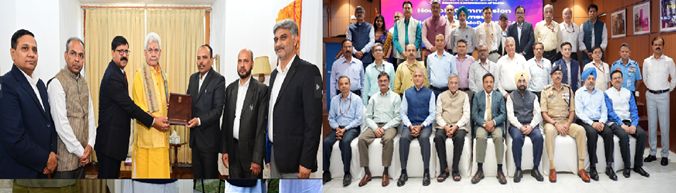
In a moment that marks a pivotal chapter in Jammu and Kashmir’s democratic journey, Chief Electoral Officer (CEO) Pandurang K. Pole met with Lieutenant Governor Manoj Sinha at Raj Bhawan. This significant meeting came on the heels of the recently concluded Jammu and Kashmir Assembly elections, a historic event that not only redefined the region’s political landscape but also rekindled the hopes of its citizens. The meeting saw the participation of senior officials from the Election Commission of India (ECI), including Pramod Kumar Sharma, Principal Secretary; Manzoor Ahmad Bhat, Special Secretary; and Anil Salgotra, Joint CEO of the Chief Electoral Office in Jammu and Kashmir.
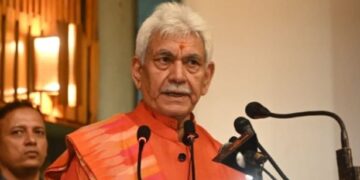
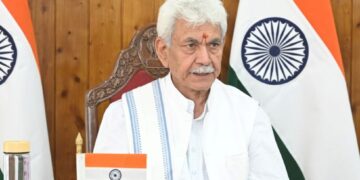
LG Congratulates CEO On Successful Electoral Process: Lieutenant Governor Manoj Sinha congratulated CEO Pandurang Pole and his team for the successful completion of the electoral process, which saw an impressive turnout and was conducted without major incidents. The Lieutenant Governor lauded the Election Commission, J&K Police, and security personnel for ensuring that the elections were conducted in a peaceful, transparent, and fair manner. “The peaceful conduct of these elections reflects the resilience and democratic spirit of the people of Jammu and Kashmir,” Sinha said. He commended the collaborative efforts of various stakeholders in organizing the polls, emphasizing that the successful elections reaffirmed the public’s confidence in the democratic process.
First J&K Assembly Election Since 2014: This was the first Jammu and Kashmir Assembly election since 2014, drawing significant national and international attention. The 2024 elections were seen as a critical milestone in Jammu and Kashmir’s political landscape, as it marked the first time the electorate in the Union Territory voted to elect representatives to the Legislative Assembly since the bifurcation of the state in 2019. CEO Pandurang Pole expressed satisfaction with the overall conduct of the elections, emphasizing that it was a major step forward for the region’s democratic processes. “The Jammu and Kashmir Assembly elections of 2024 have concluded successfully, representing a significant moment in the Union Territory’s political journey. This was the first assembly election since 2014, drawing considerable attention and participation from the public,” he said.
Record-Breaking Voter Turnout; Public Reaffirms Faith in Democracy: The record-breaking voter turnout during the three phases of elections has been seen as a positive indicator of the public’s renewed faith in democratic institutions. According to official figures, the overall voter turnout across the Union Territory reached an all-time high, with thousands of citizens coming forward to cast their votes despite concerns about security and other challenges. CEO Pole noted that this turnout reflected the people’s unwavering belief in the power of the ballot. “The people of Jammu and Kashmir have sent a strong message by participating in large numbers in these elections. This is a clear demonstration of the public’s faith in the democratic process,” he said. The enthusiasm shown by voters across various constituencies is a testament to the region’s determination to embrace democracy, even after years of political uncertainty.
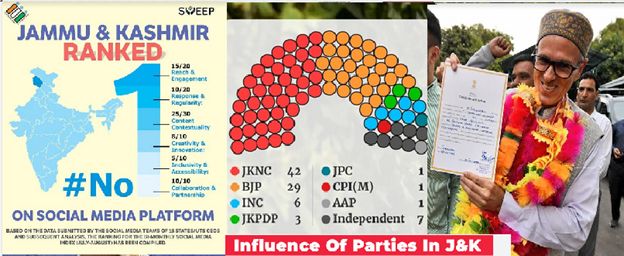
Three Phases, 90 Seats, And 873 Candidates: The Jammu and Kashmir Assembly elections were conducted in three phases, with 24 constituencies voting in the first phase, followed by 26 constituencies in the second phase, and 40 in the final phase. A total of 873 candidates contested the elections, vying for the opportunity to represent their respective communities in the 90-member Legislative Assembly. The robust voter turnout and the competitive nature of the elections were widely viewed as signs of renewed political engagement in the region. The elections covered all major regions of Jammu and Kashmir, including the Kashmir Valley, Jammu, and Ladakh, with voters turning out in large numbers to exercise their democratic right. The Election Commission and local authorities made extensive preparations to ensure the smooth conduct of the polls, deploying thousands of security personnel and implementing robust logistical arrangements.
CEO Commends Election Staff And Security Forces: CEO Pandurang Pole expressed his gratitude to the thousands of officials and personnel involved in conducting the elections. He praised the dedication and hard work of the District Election Officers (DEOs), Field Surveillance Teams (FSTs), Static Surveillance Teams (SSTs), Vehicle Surveillance Teams (VSTs), and the Voter Verifiable Paper Audit Trail (VVPAT) staff, along with the more than 75,000 polling personnel who ensured that the electoral process went off without a hitch. Pole also acknowledged the critical role played by the security forces in ensuring that the elections were conducted peacefully. “We owe a great deal to the security personnel who ensured that voters could cast their ballots without fear. Their presence and vigilance played a key role in maintaining the peace during the election period,” he said.
The Power of the People; Successful Election Underscores Democratic Commitment: In his remarks, CEO Pole emphasized that the success of the elections was not just a victory for the Election Commission but also for the people of Jammu and Kashmir. “The successful conduct of these elections is a testament to the dedication of everyone involved and the commitment of the people of Jammu and Kashmir to participate in the democratic process,” Pole stated. He noted that the collaborative efforts between election officials, security forces, and the public had created an environment where voters could freely participate in the democratic process. “This election has set a new benchmark for democratic engagement in the region, and we are proud of the role that everyone played in making this possible,” Pole added.
Model Code of Conduct Lifted Following Election Results:
With the completion of the electoral process, the Election Commission of India (ECI) has announced that the Model Code of Conduct (MCC), which had been in place since August 16, 2024, is no longer in effect in Jammu and Kashmir. The MCC, which regulates the conduct of political parties and candidates during elections, had been enforced as part of the ECI’s efforts to ensure fair and transparent elections. As per Order No. 37/6/1/INST/ECI/FUNCT/MCC/2024, issued on October 10, 2024, the ECI declared that the MCC has ceased to be in operation, effective immediately. This announcement marks a significant step towards the resumption of normal governance in the Union Territory, as several government orders and developmental projects that had been on hold due to the MCC can now proceed.
Pending Projects To Resume As MCC Ends: The lifting of the MCC is expected to provide a boost to infrastructure and developmental projects across Jammu and Kashmir. Various government initiatives that were previously stalled due to the enforcement of the code are now set to resume, with officials expressing optimism that the “free flow of funds” will enable the swift completion of key projects. During the election period, several crucial infrastructure projects, including road development, water supply improvements, and educational initiatives, had been put on hold. With the conclusion of the elections and the lifting of the MCC, officials have indicated that these projects will now move forward, bringing much-needed development to the region.
President’s Rule Set To Be Revoked Ahead of New Govt: Before the newly elected government, led by Omar Abdullah, can take the oath of office, the Union Government is required to revoke President’s Rule in Jammu and Kashmir. President Droupadi Murmu will issue a formal order revoking the proclamation of President’s Rule, which has been in effect since October 31, 2019.
Chronology Of President Rule In J&K: The chronology of Presidential Rule in Jammu and Kashmir reflects a significant and tumultuous period in the region’s political landscape, characterized by instability and governance challenges. The series of events began in June 2018 when the Bharatiya Janata Party (BJP) withdrew its support from the coalition government led by Mehbooba Mufti. This withdrawal led to the collapse of the state government, prompting Governor N.N. Vohra to assume control of the administration. This marked the beginning of Governor’s Rule under Section 92 of the Jammu and Kashmir Constitution. As the situation remained unstable, the central government decided to impose President’s Rule after six months of Governor’s Rule. On December 19, 2018, the Union Government recommended this move, which was promptly approved by President Droupadi Murmu under Article 356 of the Indian Constitution. The following day, Presidential Rule was officially imposed in Jammu and Kashmir, leading to the suspension of the state assembly and transferring legislative powers to the Parliament. On October 31, 2019, a significant turning point occurred when the Jammu and Kashmir Reorganisation Act was enacted. This legislation reorganized the state into two Union Territories: Jammu and Kashmir and Ladakh, continuing the imposition of President’s Rule in the newly formed Union Territory of Jammu and Kashmir. Following the reorganization, President’s Rule persisted, as the region remained without an elected legislative assembly. By March 2020, the situation had not changed, with President’s Rule continuing due to the absence of a legislative assembly. This situation persisted for several years, with President’s Rule being extended on October 31, 2020, and again on October 31, 2021. Each extension reflected the ongoing political instability and the lack of processes to hold elections in the region. In October 2022, the Union Territory continued to operate under President’s Rule, as political processes for conducting elections had yet to be initiated. Following the completion of the 2024 Assembly elections, which took place recently, the Election Commission declared on October 10 that the Model Code of Conduct (MCC) was no longer in effect. This declaration paved the way for the newly elected government to assume office, effectively concluding the long-standing Presidential Rule in the region. As of October 2024, the revocation of President’s Rule is anticipated, which will enable the Omar Abdullah-led government to take oath, contingent upon necessary approvals from the Union Cabinet. This entire period of Presidential Rule has been marked by significant changes and challenges for the people of Jammu and Kashmir, culminating in the recent elections that represent a renewed hope for restoring democracy and addressing the region’s pressing needs ECI expresses gratitude to officials from MHA, Paramilitary forces, IAF & Railways for their significant & commendable contribution in seamless & peaceful conduct of recently concluded LSElections2024 & Assembly elections in J&K & Haryana.
“The Jammu and Kashmir elections of 2024 are a crucial step toward reaffirming the region’s commitment to democracy and governance. With Pandurang K. Pole at the helm as CEO, the successful electoral process not only reflects the dedication of election officials but also symbolizes the hopes and aspirations of the people, who are eager for progress and stability in their region.”
Kashmir Horizon View: The recent Jammu and Kashmir Assembly elections of 2024 mark a significant milestone in the region’s democratic journey, underscoring the importance of electoral participation in shaping governance and public policy. For the first time since 2014, the people of Jammu and Kashmir had the opportunity to elect their representatives, a development that resonates deeply in a region that has experienced prolonged political turmoil and uncertainty. Pandurang K. Pole, the Chief Electoral Officer (CEO) of Jammu and Kashmir, has highlighted the importance of these elections as a vital step in restoring faith in democratic institutions. “The successful conduct of these elections is not just a reflection of the Election Commission’s efforts but also a testament to the commitment of the people of Jammu and Kashmir to actively participate in the democratic process,” he stated. The elections witnessed record-breaking voter turnout, which underscores the public’s renewed enthusiasm for civic engagement and political participation. The 2024 elections were conducted in three phases, with a total of 873 candidates contesting for 90 seats in the Legislative Assembly. This robust participation from various political factions indicates a vibrant and competitive electoral landscape. “The high voter turnout clearly demonstrates the unwavering belief in the power of the ballot,” CEO Pole remarked, emphasizing that this election represented a significant moment for the region’s democratic future. The significance of these elections extends beyond mere numbers. They serve as a platform for the people of Jammu and Kashmir to voice their aspirations and demands. As the newly elected representatives assume office, they will face the critical task of addressing pressing issues such as infrastructure development, job creation, and security, all of which are vital for the region’s stability and growth. Moreover, the recent elections are poised to pave the way for governance that is more accountable and responsive to the needs of the populace. The removal of the Model Code of Conduct has already set the stage for the swift execution of development projects that were on hold, providing a much-needed boost to the region’s infrastructure. The Jammu and Kashmir elections of 2024 are a crucial step toward reaffirming the region’s commitment to democracy and governance. With Pandurang K. Pole at the helm as CEO, the successful electoral process not only reflects the dedication of election officials but also symbolizes the hopes and aspirations of the people, who are eager for progress and stability in their region.
(In commitment to continuous improvement the “Team Kashmir Horizon” invites it’s valuable readers to share their valuable feedback and suggestions with the “Team Kashmir Horizon”. The insights of readers will surely play a vital role in improving the content quality of “Kashmir Horizon” and contribute more for the empowerment of people. Please feel free to reach out to us at editor@ thekashmirhorizon.com. Team “Kashmir Horizon” eagerly anticipates thoughts and ideas of it’s readers, which will help us serve people and even more effectively. The inputs of valuable readers are highly valued as “Kashmir Horizon” strives to provide it’s readers the best possible experience. Thank you for being a part of the reader community!)