“The entire counting process will be conducted under the guidelines set by the Election Commission of India (ECI) and will be video recorded. The EVMs are currently being stored under a three-layer security cordon in strong rooms at SKICC-Centaur, following the completion of voting on September 25, 2024.”
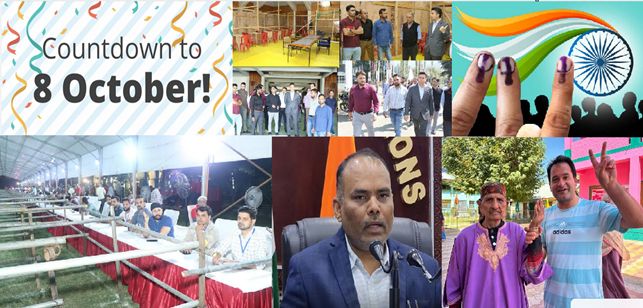
As the Jammu and Kashmir Assembly elections draw to a close, preparations for the much-anticipated vote counting, scheduled for October 8, 2024, are in full swing. This pivotal moment will determine the future legislative landscape of the Union Territory, supported by comprehensive security measures to ensure the process remains transparent and secure. Over 900 candidates contested in the three-phase J&K elections, reflecting not only an increase in the number of candidates but also higher footfall, a surge in public campaigns, and enhanced political activity across the region. Chief Electoral Officer (CEO) P.K. Pole told Kashmir Horizon that all arrangements for the vote counting are finalized, emphasizing the deployment of a strong three-tier security system at all counting centers across J&K. This rigorous security setup aims to maintain the integrity of the electoral process in a region where political developments hold considerable significance. Meanwhile a three-tier security grid will be deployed around the counting centers to guarantee a secure environment and seamless proceedings,” an official stated. Round-the-clock monitoring will be conducted using CCTV surveillance, while drones will be employed for aerial monitoring of the centers. The voting for the three-phase Jammu and Kashmir Assembly elections concluded on October 1, with polling held on September 18, 25, and October 1. The overall voter turnout was recorded at 63.88%, with male turnout at 64.68% and female turnout at 63.04%. These elections were the first Assembly polls in J&K since the abrogation of Article 370, and also the first in a decade, the last being in 2014. Meanwhile counting halls have been set up to accommodate the process for each constituency, with sufficient tables arranged for round-wise counting of the Electronic Voting Machines (EVMs). This setup will ensure an efficient and orderly counting process. The randomization of counting staff, a key measure to maintain impartiality, is nearly complete. This step is critical to ensuring fairness, and we are in the final stages of finalizing the teams, who are well-prepared for the task ahead. The entire counting process will be conducted under the guidelines set by the Election Commission of India (ECI) and will be video recorded. The EVMs are currently being stored under a three-layer security cordon in strong rooms at SKICC-Centaur, following the completion of voting on September 25, 2024.
Significance Of 2024 Assembly Elections: These elections are particularly historic as they mark the first Assembly elections since the abrogation of Article 370, which had previously granted special autonomy to Jammu and Kashmir. The elections are also the first to be held after more than a decade. Voting took place across three phases—on September 18, September 25, and October 1, 2024—covering 90 constituencies. Voter turnout has been a focal point throughout the election. Across the three phases, an overall voter turnout of 63.88% was recorded, with marginal differences between male and female participation: male turnout was 64.68%, while female turnout stood at 63.04%. These figures highlight the strong sense of civic responsibility demonstrated by the people of J&K despite the region’s unique political challenges.
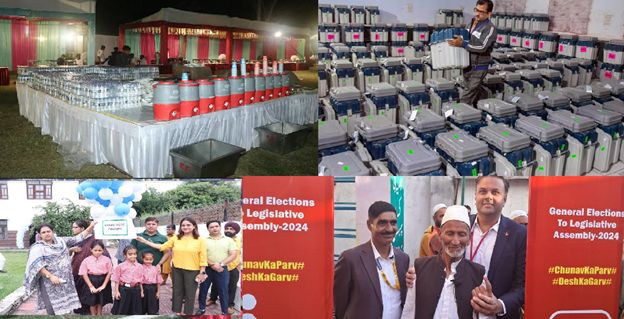
Counting Centers; Ensuring A Smooth ,Transparent Process: The meticulous planning for vote counting goes beyond security. The Election Commission of India (ECI) has made comprehensive logistical arrangements to ensure a smooth and efficient counting process. Counting halls have been set up across J&K, with adequate tables for round-wise counting of Electronic Voting Machines (EVMs). Trained counting staff and a randomization process, designed to prevent any biases, further ensure the impartiality and accuracy of the vote count. In addition to securing the counting centers, the ECI has put in place essential infrastructure, including basic amenities like washrooms, drinking water, and fire safety measures. Medical teams will also be present at key locations to handle any emergencies. These preparations reflect the ECI’s commitment to ensuring a hassle-free and transparent vote-counting process.
A Peaceful Conclusion To The Voting Process: The polling for the 2024 J&K Assembly elections concluded peacefully, marking the end of the third phase on October 1. The entire election process, from voter registration to polling day, has been praised for the resilience and democratic spirit of J&K’s citizens. The elections, held in three phases, saw voter turnouts of 61.38%, 57.31%, and 68.72%, respectively, bringing the overall voter turnout to 63.45%.
Constituency-Wise Turnout: Civic Engagement In Action: Detailed polling data highlights interesting trends in voter engagement across J&K’s diverse regions. In the Kashmir Valley, districts like Kupwara (65.81%), Bandipora (67.57%), and Ganderbal (62.83%) showed strong voter participation, while urban centers like Srinagar (30.08%) saw lower turnout. In contrast, rural areas in the Jammu region, such as Kishtwar (80.20%) and Udhampur (75.87%), recorded higher engagement. These variations demonstrate the different levels of political engagement across the region.
Surge In Women Participation: A notable feature of the 2024 elections has been the significant increase in female voter participation. In the third phase, women outnumbered men at the polls, with 70.02% of women casting their votes compared to 69.37% of men. This positive trend signals a progressive shift in the region’s political culture, with more women actively participating in the electoral process.
“The newly elected government has a unique opportunity to redefine the future of Jammu and Kashmir by focusing on inclusive development, robust governance, and economic rejuvenation. Through sustained efforts in education, healthcare, tourism, and youth engagement, the region can chart a path towards long-term peace and prosperity.”
Seamless, Peaceful Conduct Of Elections: The Election Commission’s meticulous planning ensured the smooth and streamlined conduct of the J&K Assembly elections. No repolls were recorded, and despite an increase in the number of Assembly Constituencies (ACs) from 83 in 2014 to 90 in 2024, the elections were completed in three phases, compared to five in 2014. Notably, there were no significant law-and-order incidents, a stark improvement from 2014, when over 170 incidents, including 87 on polling days, were reported. Strict instructions were issued from the beginning to ensure a level playing field for all political parties, with no complaints of arbitrary preventive detention—an unprecedented development. Additionally, the last-minute relocation of polling stations, a common issue in 2014, was strictly prohibited in 2024, ensuring voters cast their ballots at their designated locations. The Commission also curtailed the influence of money and muscle power, with enhanced enforcement efforts resulting in record seizures of Rs 130 crore, including Rs 110.45 crore worth of drugs. Twelve ACs were identified as expenditure-sensitive, ensuring heightened vigilance throughout the elections.
Security, Transparency Measures: Robust security measures created a safe environment for voters to cast their ballots without fear. For the first time, webcasting was in place at 100% of polling stations, compared to just 20% in 2014, ensuring full transparency during the voting process.
Expanding Voter Engagement: Efforts to increase voter participation saw a 23% rise in the electorate since 2014, with women accounting for a 27.9% increase. Young voters, especially first-time voters, enthusiastically embraced democracy, proudly displaying their inked fingers after casting their votes.
Deepening Political Participation: The 2024 elections saw a 7% increase in candidates compared to 2014. Women candidates made significant gains, rising from 28 to 43, and independent candidates increased by 26%, reflecting growing grassroots political participation. Nine seats were reserved for Scheduled Tribes (ST) for the first time, promoting inclusivity. Additionally, Registered Unrecognized Political Parties (RUPPs) saw a 71% increase in participation.
Embracing Democracy In Former Boycott Areas: Areas previously known for militancy and election boycotts saw a remarkable rise in voter turnout. Pulwama recorded a 12.97% increase, Zainapora in Shopian saw a 9.52% rise, and Eidgah in Srinagar registered a 9.16% uptick, showcasing renewed public confidence in the democratic process.
Reaching Remote And Frontier Areas: Determined to ensure every voter is included, the Commission set up polling stations even in remote areas, including 469 stations near the Line of Control (LoC) and the International Border. This effort ensured that voters in these sensitive areas could exercise their democratic rights.
Enhancing Voter Experience And Inclusivity: Innovations, such as home-voting for elderly and disabled voters, were introduced for the first time in J&K’s Assembly elections. Additionally, the Election Commission ensured polling stations were equipped with Assured Minimum Facilities (AMF) to enhance the voting experience, with special stations managed by women and PwDs set up in each AC. As Jammu and Kashmir awaits the outcome of the vote count, the peaceful and orderly conduct of the elections stands as a testament to the region’s growing democratic maturity.
Kashmir Horizon View: As Jammu and Kashmir transitions into a new political era following the 2024 Assembly elections, several critical areas demand attention to ensure the region’s sustainable development and political stability. The way forward must prioritize inclusive governance, enhanced public services, infrastructural development, and increased opportunities for economic growth. A few strategic suggestions will help foster trust in governance, enhance civic engagement, and promote lasting peace in the Union Territory. First and foremost, the newly elected representatives should focus on strengthening the democratic institutions that have taken root in Jammu and Kashmir, especially after the abrogation of Article 370. This involves ensuring a consistent dialogue between the government and the people. Bridging the gap between governance and grassroots needs through transparent and accountable institutions can restore the trust of the electorate, particularly in rural areas where civic amenities often lag. Establishing local governance structures, like Panchayats and Municipal bodies, will be crucial in making the governance system more inclusive and participatory, giving every community a voice in decision-making processes. Security remains a pivotal issue for Jammu and Kashmir, and while elections were conducted peacefully, it is essential to maintain robust security infrastructure. However, there must also be a shift toward promoting socio-economic development alongside security measures. The region’s youth need employment opportunities, education, and training programs. Therefore, targeted investments in skill development and entrepreneurship should be made, particularly in sectors like tourism, handicrafts, and IT services, where the region has natural potential. This approach would address unemployment and help reduce alienation among the youth, fostering a sense of ownership and participation in the region’s development. Tourism, a vital sector in Jammu and Kashmir’s economy, must be revamped with a sustainable approach. Developing eco-tourism, improving infrastructure, and ensuring safety for tourists are all essential steps to boost this industry. Additionally, promoting lesser-known regions and cultural heritage sites will help diversify the tourist experience and reduce pressure on overburdened areas like Srinagar and Gulmarg. The creation of public-private partnerships can play a pivotal role in mobilizing resources and expertise to revitalize tourism, which would contribute significantly to the region’s economic recovery. Education and healthcare also require urgent reforms. Modernizing educational infrastructure, equipping schools with better resources, and emphasizing vocational training can uplift the educational standards of the region. On the healthcare front, enhancing primary health centers in remote and rural areas and equipping them with modern facilities and staff is crucial. The pandemic has exposed gaps in health infrastructure, and this is a sector that needs immediate attention. Finally, peace building efforts must continue to foster communal harmony and prevent the resurgence of militancy. Interfaith dialogues, community-level engagements, and cultural exchanges can help bridge communal divides. The government should also invest in creating spaces for young people to engage in sports, arts, and social causes, providing alternatives to conflict and militancy. In conclusion, the newly elected government has a unique opportunity to redefine the future of Jammu and Kashmir by focusing on inclusive development, robust governance, and economic rejuvenation. Through sustained efforts in education, healthcare, tourism, and youth engagement, the region can chart a path towards long-term peace and prosperity.
(In commitment to continuous improvement the “Team Kashmir Horizon” invites it’s valuable readers to share their valuable feedback and suggestions with the “Team Kashmir Horizon”. The insights of readers will surely play a vital role in improving the content quality of “Kashmir Horizon” and contribute more for the empowerment of people. Please feel free to reach out to us at editor@ thekashmirhorizon.com. Team “Kashmir Horizon” eagerly anticipates thoughts and ideas of it’s readers, which will help us serve people and even more effectively. The inputs of valuable readers are highly valued as “Kashmir Horizon” strives to provide it’s readers the best possible experience. Thank you for being a part of the reader community!)