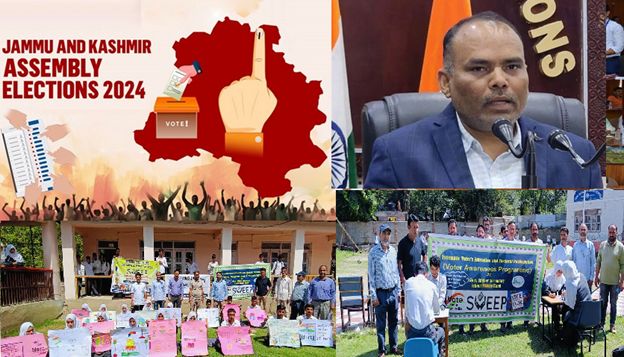
“The Special Summary Revision of 2024 indicates that the number of registered voters has reached 88.03 lakh, including 44.89 lakh male voters, 43.13 lakh female voters, and 168 voters identifying as third-gender. Particularly notable is the addition of 93,000 new voters across J&K, many of whom are first-time voters between the ages of 18 and 19. With over 45,000 young voters participating, their involvement may shape the future political landscape by introducing new perspectives and priorities.”
The Jammu and Kashmir Assembly elections, set to begin on September 18, 2024, represent a monumental political event for the region, marking the first election since the abrogation of Article 370 in 2019. This election, held after more than a decade of political shifts, holds immense significance as it offers the people of Jammu and Kashmir (J&K) a chance to influence the future political, economic, and social trajectory of the Union Territory (UT). Over 88.3 lakh registered voters will participate, with a total of 911 candidates, including 57 women, running for various positions in a landscape that has been largely male-dominated. The election will take place in three phases, each reflecting the scale and complexity of organizing elections in this politically sensitive region. Each phase involves its own logistical and security challenges, given J&K’s history of political volatility, making the phased approach essential to ensure a smooth, orderly election.
Historical Context; A Decade In Waiting: Jammu and Kashmir’s political context has changed drastically over the past decade. The abrogation of Article 370 in 2019 led to the bifurcation of the former state into two Union Territories: Jammu and Kashmir, and Ladakh. This move altered the political and administrative structure of the region, heightening anticipation around the upcoming Assembly elections. Many key issues, such as autonomy, governance, and development, are expected to take center stage during the election. Before the revocation of Article 370, J&K enjoyed a special status under India’s constitution, granting it autonomy over internal matters except defense, communications, and foreign affairs. The 2019 revocation of this status sparked debates and protests, leading to new political alignments, making these elections a platform for various political voices to emerge and shape the region’s future.
Phased Elections: Breakdown, Participation: The election process has been divided into three phases to manage both logistical and security challenges effectively.
Phase 1: The first phase witnessed significant enthusiasm, with 280 candidates submitting nominations. However, not all moved forward, as 36 nominations were rejected, and 25 candidates withdrew. Ultimately, 219 candidates remain in the race for the first phase.
Phase 2: The second phase saw slightly higher participation, with 329 nominations. Following the withdrawal of 27 candidates and the rejection of 62, 239 candidates will contest the seats available in this phase.
Phase 3: The final phase has seen the highest number of nominations, with 518 submissions. As in previous phases, rejections and withdrawals will impact the final count, with 66 nominations already rejected. The definitive list of candidates for this phase will be announced by September 17, 2024, the deadline for withdrawals. This phased approach not only allows for better logistical handling but also mitigates the risk of political unrest and volatility. J&K’s history of conflict and unrest underscores the importance of securing a stable and fair election process.
Electoral Demographics; Growing Youth, Female Participation: The 2024 elections have also brought about a shift in the demographic makeup of participants, reflecting a more inclusive political environment. Among the 911 total candidates, 57 are women. While this represents only a small percentage of the overall pool, it marks an important shift in a region that has traditionally been male-dominated. Women’s participation reflects a broader national trend toward more inclusive politics, particularly in a region where women have historically been underrepresented in leadership roles. The growing female engagement is seen as a step toward fostering a more balanced and representative democracy in J&K. Another key demographic aspect is the rise in young voters. The Special Summary Revision of 2024 indicates that the number of registered voters has reached 88.03 lakh, including 44.89 lakh male voters, 43.13 lakh female voters, and 168 voters identifying as third-gender. Particularly notable is the addition of 93,000 new voters across J&K, many of whom are first-time voters between the ages of 18 and 19. With over 45,000 young voters participating, their involvement may shape the future political landscape by introducing new perspectives and priorities. The slight improvement in the elector-population ratio from 0.59 to 0.60 suggests progress in ensuring that the voter registration process is inclusive and effective, thereby strengthening the legitimacy of the elections.
Election Schedule And Security Preparations: The Election Commission of India (ECI) has developed a detailed election schedule, with voting for the first phase set to take place on September 18, 2024. The second phase will follow on September 25, and the third and final phase will occur on October 1. The results will be declared on October 8, following the counting of votes. Security remains a critical concern due to J&K’s history of political unrest. The ECI has made extensive security arrangements in collaboration with local and national agencies to ensure the safety of voters, candidates, and officials. The phased approach is designed not only to mitigate logistical challenges but also to address security risks effectively.
ECI’s Two-Day Visit: In preparation for the elections, a team of senior ECI officials conducted a two-day visit to assess readiness in J&K. They visited several districts, including Ramban and Anantnag, and held review meetings with civil and police officials from all 20 districts. A key focus of the visit was to ensure that the elections are conducted freely, fairly, and transparently, with security provisions being prioritized for all candidates without discrimination. Concerns about last-minute changes to polling stations were also addressed. The ECI has prohibited such changes, which have often been justified on security grounds, to prevent confusion among voters and ensure smooth polling.
New Political Landscape;Post-Article 370 Realities: The upcoming elections will likely act as a referendum on the changes that have occurred since 2019, with political parties presenting different visions for J&K’s future. Traditional political parties like the National Conference (NC) and the People’s Democratic Party (PDP) face new challenges from emerging parties. With the revocation of Article 370, the political focus has shifted from demands for autonomy to debates around development, governance, and security. The increased political engagement, as seen in the number of candidates and voters, is evidence of the region’s shifting dynamics. These elections are expected to have far-reaching implications not just for J&K but also for its relationship with the rest of India.
“Green Elections” Initiative: Jammu and Kashmir Chief Electoral Officer (CEO) PK Pole has announced that the Assembly elections will be conducted as “green elections,” focusing on environmental sustainability. In response to global warming and rising temperatures, the CEO has introduced an initiative where 10-12 plants will be planted at every polling station. This move aligns with global environmental concerns and highlights the need for eco-friendly measures during the election process. Pole also emphasized the continuation of the home voting facility, first introduced during the recent Lok Sabha elections, for elderly citizens and people with disabilities. This effort aims to make the election process more inclusive and accessible to all citizens.
“Efforts to improve voter participation and environmental sustainability should continue to evolve, setting a precedent for future elections in the region. The 2024 elections represent both a challenge and an opportunity for J&K to redefine its political landscape and move toward a more stable and prosperous future.”
Defining a New Era for J&K: The Jammu and Kashmir Assembly elections of 2024 are set to be a landmark event, offering voters a crucial opportunity to shape the future of the region. With over 88 lakh registered voters and 911 candidates participating, the elections signal a shift toward more inclusive and representative politics, especially with increased participation from women and young voters. The political landscape of J&K has undergone profound changes since the abrogation of Article 370, and the results of this election will have long-lasting effects on the Union Territory’s governance and its relationship with India.
Kashmir Horizon View: The Jammu and Kashmir Assembly elections of 2024 are a historic event, taking place after more than a decade and following significant political changes in the region. With over 88.3 lakh registered voters and 911 candidates, including 57 women, this election marks a key moment in shaping the political and social trajectory of the Union Territory. Since the revocation of Article 370 in 2019, J&K has undergone significant administrative changes, and these elections are expected to serve as a platform for discussing critical issues such as governance, development, and autonomy. The increased participation of women and youth, particularly the 45,000 first-time voters, highlights a shift toward more inclusive political engagement. The phased approach, combined with detailed security arrangements, aims to manage the region’s political volatility and ensure a fair electoral process. The focus on “green elections” and continued home voting for the elderly and disabled further reflects efforts to make the elections environmentally sustainable and inclusive.The results will be a test of the political strategies of both traditional and emerging parties, especially in the context of the post-Article 370 realities. The growing involvement of women and young voters suggests a potential shift in the region’s political dynamics, making this election a turning point in fostering more inclusive governance. Moving forward, it is essential that the elected leadership focuses on bridging the gaps between different regions and communities within Jammu and Kashmir. Prioritizing development, governance, and security will be key in addressing long-standing issues while also ensuring the effective integration of the region with the rest of India. Moreover, ongoing efforts to improve voter participation and environmental sustainability should continue to evolve, setting a precedent for future elections in the region. The 2024 elections represent both a challenge and an opportunity for J&K to redefine its political landscape and move toward a more stable and prosperous future.
(In commitment to continuous improvement the “Team Kashmir Horizon” invites it’s valuable readers to share their valuable feedback and suggestions with the “Team Kashmir Horizon”. The insights of readers will surely play a vital role in improving the content quality of “Kashmir Horizon” and contribute more for the empowerment of people. Please feel free to reach out to us at editor@ thekashmirhorizon.com. Team “Kashmir Horizon” eagerly anticipates thoughts and ideas of it’s readers, which will help us serve people and even more effectively. The inputs of valuable readers are highly valued as “Kashmir Horizon” strives to provide it’s readers the best possible experience. Thank you for being a part of the reader community!)