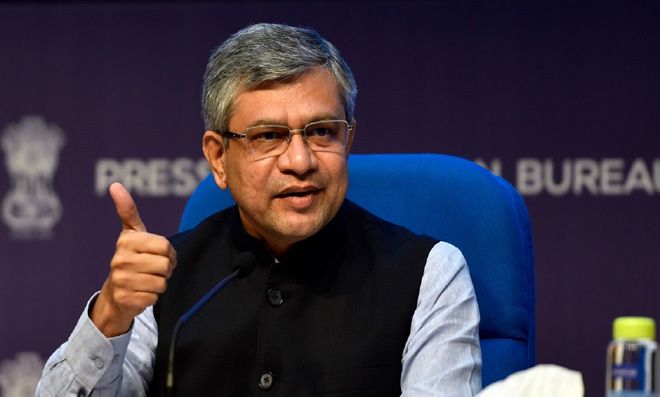
New Delhi: The Cabinet Committee on Economic Affairs (CCEA), chaired by Prime Minister Narendra Modi, has given the green light to three significant railway projects with a total estimated cost of ₹6,456 crore.
These projects, spearheaded by the Ministry of Railways, are set to transform the transportation landscape across India by improving connectivity, enhancing logistical efficiency, and contributing to the nation’s economic growth.
It includes approved projects include the construction of two new railway lines and a multi-tracking project. Together, these initiatives will expand the existing Indian Railways network by approximately 300 kilometers, covering seven districts across four states—Odisha, Jharkhand, West Bengal, and Chhattisgarh.
The new lines will provide direct connectivity to previously unconnected areas, improving mobility and ensuring more efficient and reliable services for Indian Railways. The multi-tracking project will ease operations on some of the busiest sections of the network, reducing congestion and paving the way for smoother transportation.
The projects will result in the construction of 14 new stations, enhancing accessibility to two aspirational districts—Nuapada in Odisha and East Singhbhum in Jharkhand. This development will significantly improve connectivity for approximately 1,300 villages, benefiting around 30 lakh people in total.
These railway expansions are essential for the transportation of key commodities such as agricultural products, fertilizers, coal, iron ore, steel, cement, and limestone. The capacity augmentation is expected to add an impressive 45 million tonnes per annum (MTPA) to the freight traffic, strengthening supply chains and fueling economic growth.
The construction of these projects is projected to generate direct employment opportunities, with an estimated 114 lakh man-days of work expected to be created. This will provide a significant boost to local economies and contribute to the overall development of the regions involved.
In addition to economic advantages, the projects are also aligned with India’s climate goals. Indian Railways, known for its environmental friendliness and energy efficiency, will help reduce the country’s logistics costs while contributing to the reduction of oil imports by approximately 10 crore liters. Furthermore, the projects are expected to lower CO2 emissions by 240 crore kilograms, which is equivalent to planting 9.7 crore trees.
These railway projects are a crucial part of the PM-Gati Shakti National Master Plan for multi-modal connectivity, which emphasizes integrated planning to achieve seamless movement of people, goods, and services across the country. They are also in line with Prime Minister Modi’s vision of a “New India” and the broader “Atmanirbhar Bharat” (self-reliant India) initiative. By bringing comprehensive development to the regions involved, the projects will create new employment and self-employment opportunities, empowering local populations and fostering economic independence.
These projects marks a significant step forward in India’s infrastructural development. With a focus on enhancing connectivity, improving logistical efficiency, and supporting economic growth, these initiatives will have far-reaching impacts on the country’s transportation network, economy, and environment.
The projects are expected to be completed by the 2028-29 financial year, bringing long-term benefits to millions of people across the nation.
Terrorism Curbed In J&K, Peace Taking Roots: HM Amit Shah

Says “Security Forces Broke Backbone Of Terrorism, Hotspots Now Witnessing Progress” New Delhi ,Srinagar | October, 21: Union Home Minister...
Read moreDetails