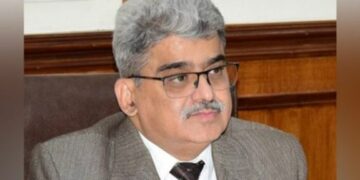
Srinagar: Chief Election Commissioner Rajiv Kumar announced that the Jammu and Kashmir Assembly elections will be conducted “well within the timeframe” and will adhere to the Supreme Court’s deadline of September 30 for completing the democratic process in Jammu & Kashmir. The Election Commission of India (ECI) has scheduled the Assembly elections to take place in three phases: September 18, September 25, and October 1, with the results to be declared on October 4. This will mark the shortest election process in the last two decades and the first Assembly election in the region in a decade, following the dissolution of the previous government in June 2018 and the revocation of Article 370 in August 2019. Chief Election Commissioner Rajiv Kumar, addressing a press conference in New Delhi, explained that the decision to expedite the election process was made to streamline the procedure, addressing criticisms of excessively prolonged timelines experienced during the Lok Sabha elections.Kumar highlighted that the elections are critical for restoring democratic governance as mandated by the Supreme Court. He anticipates that the final voter list will be ready by August 20, after the Amarnath Yatra, with approximately 87 lakh voters expected to participate in the upcoming polls.
“The people want change, and they want to shape a new future,” Kumar stated, outlining the Commission’s comprehensive preparations to ensure a secure and successful election in Jammu and Kashmir,” he said. The Jammu will elect representatives to its 90-seat Assembly, which is divided into 43 seats for the Jammu region and 47 seats for Kashmir. Voting is scheduled across the three phases—September 18, September 25, and October 1—culminating in the results announcement on October 4. The decision to hold the elections in three phases is significant, considering past elections in the region were spread over longer durations due to security concerns. For instance, the 2002 elections were held in four phases between September and October, the 2008 elections spanned seven phases from November to December, and the 2014 elections were conducted over five phases. Prime Minister Narendra Modi, during a recent visit to Srinagar, assured that elections would soon take place and committed to restoring statehood to the region.
In his remarks, Kumar said that palpable enthusiasm among the electorate, which was observed during a recent visit to J&K. He recalled the “long queues” at polling stations during the Lok Sabha elections in J&K and Ladakh as a clear indication of the people’s desire for change. Kumar remarked that these queues are “evidence that people want change and to be part of it,” emphasizing that the demand for democracy remains strong, with voters choosing “ballots over bullets” to shape their future. The Election Commission plans to continue special arrangements for Kashmiri migrants, building on the ease of voting introduced during the recent Lok Sabha elections. These arrangements include the removal of the requirement for Kashmiri migrants from Jammu and Udhampur districts to fill out “Form M” to vote. The voting scheme has been revised to map these voters to special polling stations based on their current location, simplifying the process. Additionally, Kashmiri migrants residing in Delhi and other parts of the country will benefit from the relaxed requirement for self-attestation, replacing the previous need for certification by gazetted officers. Earlier this month, an Election Commission team led by Rajiv Kumar visited J&K for two days, meeting with political party representatives and senior police and security officials. This visit, the third by the Election Commission since 2019, follows previous visits related to the Lok Sabha elections in 2019 and 2024. During these earlier visits, the Commission had decided against holding simultaneous assembly elections. In December of last year, the Supreme Court directed the Election Commission to conduct assembly elections by September 30. The court had been reviewing petitions challenging the revocation of Article 370 and the bifurcation of J&K into the union territories of J&K and Ladakh. While upholding the revocation of Article 370, the court emphasized the need to establish a democratically elected government in J&K and to restore statehood as soon as possible. The First Phase (September 18): Pulwama, Anantnag, Shopian, Kulgam, Ramban, Kishtwar, Doda Second Phase (September 25): Ganderbal, Srinagar, Budgam, Poonch, Reasi, Rajouri Third Phase (October 1): Bandipora, Kupwara, Baramulla, Udhampur, Jammu, Samba, Kathua. This election will be a pivotal moment for Jammu and Kashmir, marking a significant step towards restoring democratic governance and political stability in the region. The Election Commission has unveiled the schedule for the Jammu and Kashmir Assembly elections, marking the first such elections in the region in a decade. This significant event will see over 87.09 lakh eligible voters, comprising 44.46 lakh men and 42.62 lakh women. Among the electorate are 3.71 lakh first-time voters aged 18-19 and 20.7 lakh young voters aged 20-29. Special provisions will be made for 82,590 persons with disabilities (PwD), 73,943 voters over the age of 85, 2,660 centenarians, and 169 voters identifying as third gender. The electoral process will establish 11,838 polling stations across 9,169 locations, with a division of 9,506 in rural areas and 2,332 in urban zones. Noteworthy features include 90 polling stations staffed by PwD and an additional 90 managed exclusively by women. Furthermore, 360 model polling stations will showcase local materials and art forms, enhancing the voter experience. Chief Election Commissioner Rajiv Kumar highlighted that all polling stations will be situated on the ground floor with accessible roadways. Each station will be equipped with assured minimum facilities (AMF), including drinking water, waiting sheds, restrooms, proper lighting, ramps for PwD voters, and standard voting compartments. Additionally, permanent ramps and infrastructure are being developed to ensure long-term accessibility. Specific measures will be implemented for senior citizens and differently-abled voters, including dedicated tagging to their polling stations, support from volunteers, and priority access. Special provisions will also be made for voters with speech and hearing impairments, with polling personnel trained to assist them. The Election Commission will provide transport facilities for PwD and senior voters on election day. In a move toward gender equality, at least one polling station in every Assembly constituency will be managed exclusively by women. Additionally, each district will feature a polling station operated by the youngest eligible government employee, emphasizing the commitment to inclusivity and innovation in the electoral process.
CM Omar Unveils Rs 58.26-Cr Projects in G’bal, Inaugurates five projects worth Rs 16.72 crore, lays foundation for two others
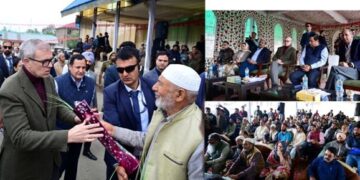
Reviews Ring Road, Sindh River Front works; hears growers’ concerns at Zazuna Mandi Ganderbal|Oct, 15: Chief Minister Omar Abdullah on...
Read moreDetails