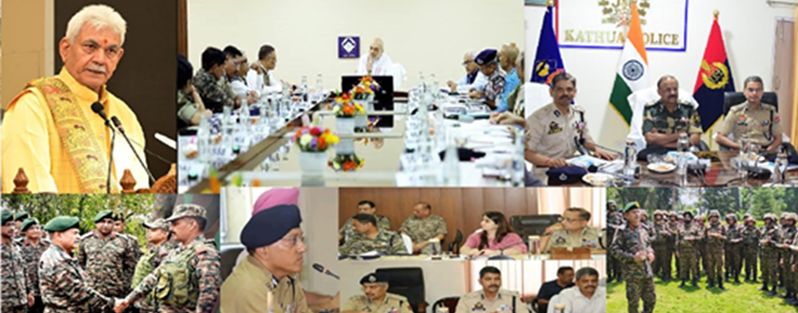
“A Division From Western Command To come under the XVI Corps of Northern Command To Enhance Counter-Militancy Ops”
“Focus on enhancing intelligence, security measures to counter evolving militant threat in Jammu region”
“Enhancing Border Surveillance Along LoC, Other Border Areas Is Vital To Preventing Militant Infiltration”
“Enhancing Telecommunications Infra In Remote, Hilly Areas Will Facilitate Rapid Information Sharing, Coordinated Responses By Security Forces”
Srinagar: Security forces are reinforcing their presence in Jammu, with additional deployments of Army, BSF, and Assam Rifles personnel. The J&K Police are also intensifying their intelligence efforts. As per officials’ concerns remain about potential Chinese support for these militant activities, adding complexity to the security landscape. A senior police officer said that the challenge is compounded by strained relations between security forces and local communities, particularly the Gujjar-Bakarwals, due to socio-political issues and recent events. “Despite these difficulties, security officials are committed to rebuilding a robust counter-militancy grid, emphasizing patience and perseverance in their efforts to secure the region,” he said.
Security Shift Since August 2019: Following the revocation of Jammu and Kashmir’s special status on August 5, 2019, and its reorganization into Union Territories, the region has seen a strategic shift. This period has involved efforts towards societal, political, and economic reforms, including the promise of elections. However, a recent surge in militant activities in Jammu has highlighted vulnerabilities in the region’s security apparatus.
Challenges in Counter-Militancy Efforts: The situation has been complicated by the redeployment of Army forces to eastern Ladakh in 2021, after the Galwan Valley clash, creating a security vacuum in Jammu. The lack of paramilitary forces to fill this gap allowed militants to infiltrate and establish networks. Officials recognize this as a critical oversight, which they are now addressing.
Strengthening Security in Jammu: In response to the increased threat, security forces have been reinforced in Jammu. This includes the deployment of 3,000 Army soldiers, 2,000 BSF personnel, and two Assam Rifles battalions. The J&K Police are also enhancing their intelligence operations, focusing on individuals who migrated to Pakistan and may now support militancy related activities.
Emerging Concerns and Strategic Adjustments: There are concerns about potential support from China to Pakistani-backed militants, possibly in the form of equipment or telecommunications aid. With militancy related activities shifting to interior regions like Kathua and Doda, security forces are reconfiguring their strategy. A division from the Western Command will now come under the XVI Corps of the Northern Command to enhance counter-militancy operations.
Current Militant Presence: As per Defence sources, it is estimated that 80-90 militants, including many foreign nationals, are active in the Kashmir Valley, while 90-100, mostly foreign militants, operate in Jammu. “The increased focus on Jammu by militant groups follows the India-China standoff and the reorganization of Jammu and Kashmir,” he said. The source said local dynamics and Intelligence Challenges as prolonged period of peace in Jammu since the mid-2000s led to a reduction in security measures and weakened human intelligence networks. He said security officials stress the need for patience and consistent effort to rebuild the counter-militancy grid in Jammu. Despite the challenges, including limited telecommunications infrastructure and complex local dynamics, the focus remains on enhancing intelligence and security measures to counter the evolving militant threat in the region. To address the security challenges in Jammu and enhance the counter-militancy grid, several measures can be implemented:
Strengthen Security Presence: Increasing the deployment of security forces, including the Army, BSF, and paramilitary units, is crucial to filling existing security gaps. Establishing strategic outposts, especially in hilly terrains where militants might seek refuge, will provide a stronger defense against infiltration and attacks.
Community Engagement: Building trust with local communities, particularly the Gujjar-Bakarwals, is essential. Addressing their concerns and ensuring their safety through outreach programs can rebuild trust and encourage cooperation with security forces. Additionally, civic engagement initiatives, including development projects and community welfare programs, will improve living conditions and reduce the appeal of extremist ideologies.
Border Security and Infiltration Prevention: Enhancing border surveillance along the Line of Control (LoC) and other border areas is vital to preventing militant infiltration. Improving inter-agency coordination will ensure a unified approach to border security and counter-militancy efforts, making it more difficult for militants to enter the region.
Counter-Radicalization Efforts: Implementing deradicalization and reintegration programs for individuals susceptible to extremist ideologies will focus on education, vocational training, and psychological support. Promoting counter-narratives through media and community leaders will challenge extremist propaganda and highlight the negative impact of militancy. Enhancing telecommunications infrastructure in remote and hilly areas will facilitate rapid information sharing and coordinated responses by security forces. “The security establishment can enhance its ability to counter the evolving militant threat in Jammu, ensure the safety of local populations, and stabilize the region,” he said.