Srinagar: In a monumental stride, the Jammu and Kashmir Government has unveiled a visionary initiative, extending a 10 percent reservation to Paharis and three other indigenous tribes, thereby amplifying the total reservations under the Scheduled Tribe (ST) category to a commendable 20 percent.
Concurrently, an empowering eight percent reservation has been earmarked for Other Backward Classes (OBCs), coupled with the inclusion of 15 new castes in the OBC roster, in alignment with the recommendations put forth by the Socially and Educationally Backward Classes (SEBC) Commission.
The parliamentary approval during the budget session in February paved the way for the long-awaited reservations for the Pahari Ethnic Tribe, Paddari tribe, Kolis, and Gadda Brahmins. This historical decision not only acknowledges their cultural significance but also heralds a new era of inclusivity and equitable opportunities.
The assurance given to the Gujjars and Bakerwals, safeguarding their existing 10 percent reservation under the ST category, underscores the government’s unwavering commitment to preserving the rights of all tribal communities. Amidst the celebration of diversity, today’s proposition, elevating OBC reservations from four to eight percent, signifies a progressive leap towards socio-economic parity.
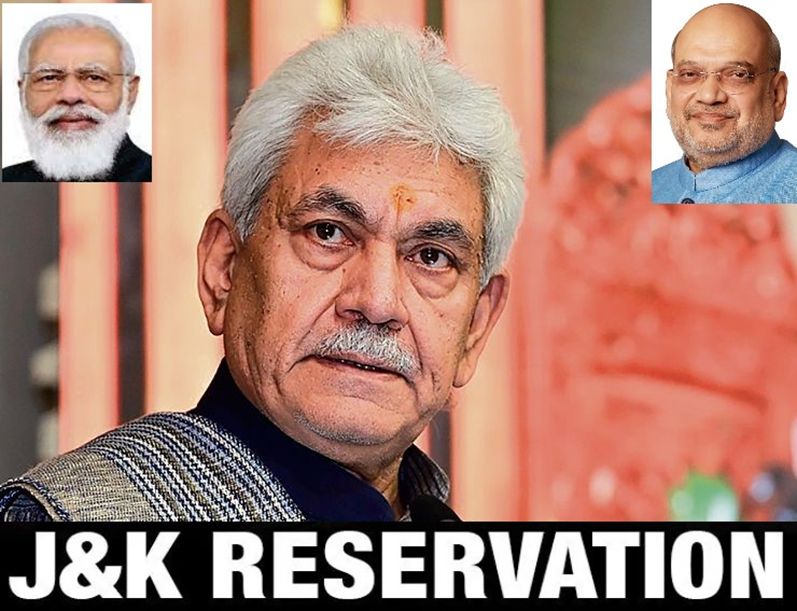
Led by Lieutenant Governor Manoj Sinha, the Administrative Council, in a harmonious assembly with Advisor Rajiv Rai Bhatnagar, Chief Secretary Atal Dulloo, and Principal Secretary to LG Dr. Mandeep K Bhandari, endorsed these transformative measures, igniting a beacon of hope for marginalized communities.
The official announcement of the ST status granted to Paharis by Union Home Minister Amit Shah on October 4, 2022, marked a pivotal moment in their quest for recognition and representation.
With meticulous attention to fairness, 10 percent reservation has been allocated to Pahari Ethnic Group, Paddari tribe, Kolis, and Gadda Brahmins, amplifying the overall reservation for STs to an equitable 20 percent.
In a spirit of egalitarianism, the Administrative Council has championed an equal and separate distribution of reservation benefits, ensuring that both previously recognized and newly inducted tribes enjoy equitable opportunities for progress and development.
Enclaves of Paharis thrive in the picturesque landscapes of Poonch, Rajouri, Baramulla, and Kupwara districts, symbolizing resilience and cultural richness. Similarly, the tranquil settlements of Paddari tribes in the heart of Kishtwar resonate with ancestral heritage, while the modest populations of Koli and Gadda Brahmins carry forward the legacy of their forebears with pride.
Following the historic abrogation of Article 370, the allocation of 10 percent reservation to STs in the Jammu and Kashmir Legislative Assembly serves as a beacon of empowerment, securing nine reserved seats out of the total 90.
Furthermore, the expansion of OBC reservations from four to eight percent, replacing the erstwhile quota under the Other Social Castes (OSCs) category, reflects a paradigm shift towards social justice and inclusivity.
The parliamentary endorsement during the previous budget session heralded a new dawn of opportunities for OBCs in government jobs, educational institutions, Panchayats, and Municipalities.
In a testament to the Government’s unwavering commitment to equity, the inclusion of 15 new castes in the OBC list, alongside revisions in nomenclature and synonymy, underscores a holistic approach towards recognizing and addressing the diverse needs of underrepresented communities.
Looking ahead, there are promising indications of extending eight percent reservation to OBCs in Panchayats and Municipalities, signaling a forthcoming era of inclusive governance and grassroots empowerment. The delay in conducting elections, attributed to the integration of OBC reservations, serves as a testament to the transformative impact of these progressive measures.
Moreover, the Administrative Council’s decision to replace outdated terminologies with the inclusive term “Persons with Disabilities,” in accordance with the Rights of Persons with Disabilities Act, 2016, reaffirms the Government’s resolve to foster a society where every individual is valued and empowered.
As these visionary amendments come into effect, they pave the way for a future where every citizen, regardless of background or circumstance, has an equal opportunity to thrive and contribute to the collective tapestry of progress and prosperity.
CM Omar Unveils Rs 58.26-Cr Projects in G’bal, Inaugurates five projects worth Rs 16.72 crore, lays foundation for two others
Reviews Ring Road, Sindh River Front works; hears growers’ concerns at Zazuna Mandi Ganderbal|Oct, 15: Chief Minister Omar Abdullah on...
Read moreDetails