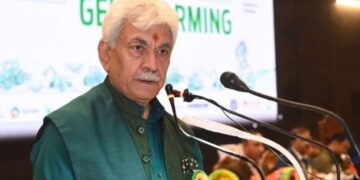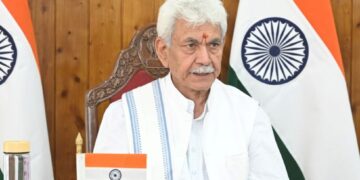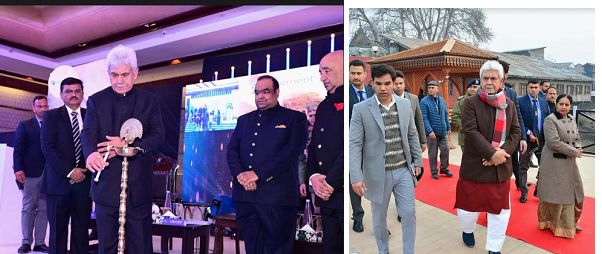
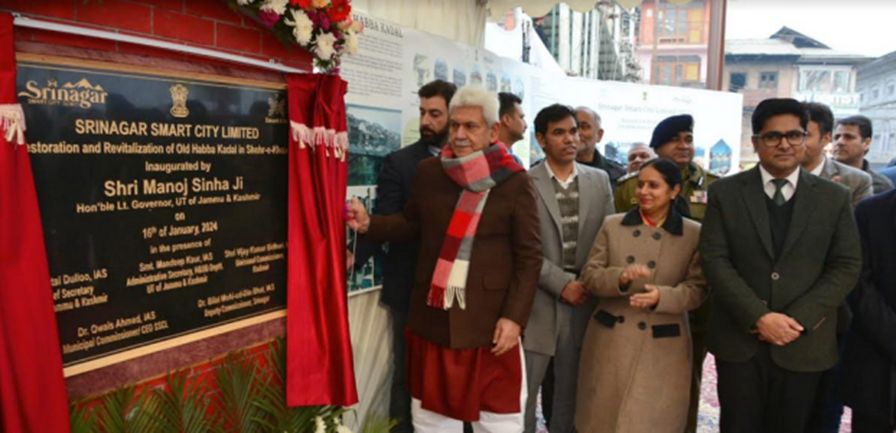
Lieutenant Governor Manoj Sinha this week announced a transformative phase underway in rural Jammu and Kashmir, describing it as a remarkable and unimaginable transformation. During his visit to Baramulla, he inaugurated the General Bipin Rawat Stadium and laid the foundation stone for development projects valued at Rs 38 crore. LG Sinha highlighted the accelerated growth experienced in all districts, emphasizing the substantial transformation witnessed in rural Jammu and Kashmir. He expressed satisfaction in fulfilling the hopes and aspirations of the people, providing improved quality of life, and ensuring equal economic opportunities for growth. Commending the achievements in infrastructure development, knowledge economy promotion, and achieving 100% saturation of schemes, LG Sinha envisioned these efforts contributing to the region realizing its true potential and destiny. In a heartfelt tribute, LG Sinha remembered the contributions of General Bipin Rawat, acknowledging his significant role in bringing peace, progress, and prosperity to North Kashmir. He also emphasized the key initiatives taken by the J&K Administration for the development of Baramulla District, including the addition of six new destinations to the tourism circuit. LG Sinha addressed the importance of snowfall for the operation of power projects and the flourishing tourism sector in Kashmir. He encouraged active participation in the “Jhanda Ooncha Rahay Hamara” program on Republic Day, expressing his desire to see the skies of Baramulla adorned with the Tricolor. Regarding elections for Urban Local Bodies (ULBs) and Panchayats, LG Sinha stated that they will commence after the completion of reservations for Other Backward Classes (OBCs), and efforts are underway in that direction. During the Viksit Bharat Sankalp Yatra, LG Sinha stressed the need for collective efforts to ensure comprehensive inclusion of all beneficiaries. He inaugurated and laid the foundation stone for development projects worth Rs 38 crore, underscoring the transformative changes in Jammu and Kashmir under the leadership of Prime Minister Narendra Modi. Later in the evening, LG Manoj Sinha inaugurated the revamped Old Habba Kadal Bridge on the River Jhelum in Srinagar’s Shehr-e-Khaas area. Commending the efforts of the Srinagar Smart City Limited and the local community, the Lt Governor celebrated the transformation of the historic bridge into a pedestrian corridor and a modern public space.
“The Phase-II project aims to enhance the Jhelum Riverfront’s quality and restore the city’s connection with the river. The comprehensive Phase-II project includes the restoration of 24 Ghats in Shehr-e-Khaas, stabilization of embankment, stone pitching of bunds, improvement of access streets to Ghats, Ghat steps and surface enhancements, ramp access at water transport Ghats, improved illumination, guard rails and supports, jetty, boat charging points, antiskid paving, and seating spaces.”
Highlighting the extensive restoration undertaken by Srinagar Smart City Limited, the project included structural retrofitting, new wooden decking, heritage-styled wooden gazebos and kiosks, restoration of traditional balustrades and grill-work, installation of utility ducts, stone pitching, and the reconstruction of the Ghat on River Jhelum. Additionally, improvements such as entry plazas, gates, facade enhancements of adjacent buildings, and lighting were incorporated, creating a vibrant and creative space that enhances the liveliness and quality of life in the city. Emphasizing the significance of the revitalized bridge, the Lt Governor envisioned it as a dynamic social hotspot, providing a welcoming environment for community interaction in the lively Shehr-e-Khaas neighborhood. During the same event, Lt Governor Sinha laid the foundation stone for Jhelum Riverfront Phase-II, extending from Downstream Budshah Bridge to Chattabal Weir, with an estimated cost of 17.82 crore. The Phase-II project aims to enhance the Jhelum Riverfront’s quality and restore the city’s connection with the river. The comprehensive Phase-II project includes the restoration of 24 Ghats in Shehr-e-Khaas, stabilization of embankment, stone pitching of bunds, improvement of access streets to Ghats, Ghat steps and surface enhancements, ramp access at water transport Ghats, improved illumination, guard rails and supports, jetty, boat charging points, antiskid paving, and seating spaces.
“The laying of the foundation stone for Jhelum Riverfront Phase-II reflects a broader vision for comprehensive riverfront development. This initiative not only enhances the visual appeal of the riverfront but also aims to restore the city’s connection with the Jhelum River, promoting sustainable and aesthetically pleasing urban spaces. Improved infrastructure, heritage restoration, and the creation of attractive public spaces contribute to the overall appeal of the city for tourists. This can potentially boost tourism, providing economic benefits to the local community through increased footfall, business opportunities, and cultural exchange.”

Kashmir Horizon View: Lieutenant Governor Manoj Sinha’s visit to Baramulla holds significant importance for several reasons including admin’s focus on accelerated growth and remarkable transformation in rural Jammu and Kashmir signals positive changes in the region. The visit serves as a testament to the administration’s commitment to fulfilling the aspirations of the people and providing equal economic opportunities. The inauguration and foundation stone laying for development projects worth Rs 38 crore, including stadiums, tourism circuit additions, and various other initiatives, underscore the government’s dedication to improving infrastructure in Baramulla. These projects contribute to the overall development and well-being of the local community. The addition of new destinations to the tourism circuit in Baramulla and LG Sinha’s emphasis on the importance of snowfall for the tourism sector highlight the administration’s focus on promoting tourism. This is crucial for the economic development of the region and provides livelihood opportunities for the local population. LG Sinha’s comments on the upcoming elections for Urban Local Bodies (ULBs) and Panchayats, contingent on the completion of reservations for Other Backward Classes (OBCs), indicate a commitment to democratic processes and community participation in decision-making. Similarly, the inauguration of the revamped Old Habba Kadal Bridge and the laying of the foundation stone for Jhelum Riverfront Phase-II in Srinagar hold significant importance for various reasons: The restoration of the Old Habba Kadal Bridge, a historic landmark, showcases the commitment to preserving and revitalizing cultural heritage. This project not only enhances the aesthetic appeal of the area but also ensures the longevity of a significant architectural structure. The transformation of the bridge into a pedestrian corridor and a modern public space emphasizes the importance of community-friendly infrastructure. The project aims to create a vibrant and creative space, fostering community interaction and improving the overall quality of life in the Shehr-e-Khaas neighborhood. The successful completion of the project by the Srinagar Smart City Limited underscores the effectiveness of smart city initiatives in urban development. The incorporation of modern amenities, heritage elements, and creative design exemplifies a forward-thinking approach towards city planning. The laying of the foundation stone for Jhelum Riverfront Phase-II reflects a broader vision for comprehensive riverfront development. This initiative not only enhances the visual appeal of the riverfront but also aims to restore the city’s connection with the Jhelum River, promoting sustainable and aesthetically pleasing urban spaces. Improved infrastructure, heritage restoration, and the creation of attractive public spaces contribute to the overall appeal of the city for tourists. This can potentially boost tourism, providing economic benefits to the local community through increased footfall, business opportunities, and cultural exchange. In summary, the inauguration signifies a holistic approach to urban development, combining heritage preservation, community enhancement, smart city principles, and sustainable riverfront development. It reflects a commitment to creating aesthetically pleasing, functional, and environmentally conscious urban spaces that contribute to the overall well-being of the residents and the attractiveness of the city.
( In commitment to continuous improvement the “Team Kashmir Horizon” invites it’s valuable readers to share their valuable feedback and suggestions with the “Team Kashmir Horizon”. The insights of readers will surely play a vital role in improving the content quality of “Kashmir Horizon” and contribute more for the empowerment of people. Please feel free to reach out to us at editor@ thekashmirhorizon.com. Team “Kashmir Horizon” eagerly anticipates thoughts and ideas of it’s readers, which will help us serve people and even more effectively. The inputs of valuable readers are highly valued as “Kashmir Horizon” strives to provide it’s readers the best possible experience. Thank you for being a part of the reader community!)