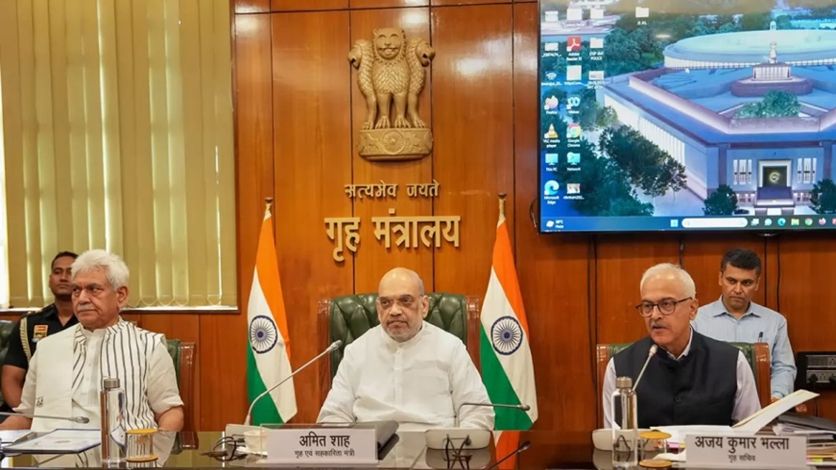
In a bid to fortify the security landscape and eliminate the persistent threat of militancy, Union Home Minister Amit Shah chaired a high-level meeting last week to scrutinize the area domination plan of security agencies operating in the sensitive region of Jammu and Kashmir. This strategic move comes at a crucial juncture, marked by recent incidents of violence, including an ambush in Poonch district that claimed the lives of five soldiers. The meeting, attended by key figures such as Lieutenant Governor Manoj Sinha, National Security Advisor Ajit Doval, and other senior officials, aimed to delve into every aspect of security enhancement and implementation across Jammu and Kashmir, with a specific focus on eradicating both established militant networks and local militant affiliations. During the comprehensive review of the security grid and the overall security scenario in Jammu and Kashmir, Amit Shah issued explicit directives to strengthen counter-militancy operations and eliminate the support ecosystem on the ground through time-bound actions. The Minister emphasized the need for security agencies to deploy strategically in vulnerable areas, aligning with the Modi government’s unwavering zero-tolerance approach against militancy. Shah said “We have to eliminate the militant ecosystem through comprehensive and intensified security approaches,” highlighting the gravity of the situation and the imperative for proactive measures. Recognizing the importance of adhering to due procedures in counter-militancy operations, Amit Shah underscored the need to further strengthen local intelligence networks throughout Jammu and Kashmir. The Minister’s emphasis on intelligence gathering aligns with global best practices, acknowledging the pivotal role of timely and accurate information in countering militant activities. Shah’s directives reflect a nuanced approach that combines robust operational strategies with a focus on intelligence capabilities to pre-empt and neutralize potential threats. He also commended the efforts of security agencies and the administration of Jammu & Kashmir, noting a significant decline in militancy-related incidents, infiltration, and improvements in the overall law and order situation. This acknowledgment serves as a testament to the collaborative efforts of various stakeholders involved in maintaining security and stability in the region. The Home Minister’s appreciation reinforces the commitment to recognize and reward the dedication of security personnel working tirelessly to protect the nation. The timing of the high-level meeting is significant, considering the recent ambush in Poonch district, where five soldiers lost their lives. Additionally, the government’s review of security arrangements comes in response to the tragic discovery of three civilians found dead. These incidents underscore the persistent challenges faced in the region, necessitating a proactive and adaptive security strategy. The meeting provided a platform to assess the prevailing security situation in Jammu and Kashmir and formulate targeted responses to emerging threats. The meeting also reflected on past incidents of violence, such as the ambush in Poonch district two weeks prior and anti-militancy operations resulting in casualties among soldiers in the Rajouri-Poonch region. The escalation of violence in the Pir Panjal region, encompassing Rajouri, Poonch, and parts of Reasi districts, has raised concerns.
“Following the meeting, in a bid to counter infiltration attempts amid dense fog in Jammu and Kashmir, security forces have rolled out a winter strategy featuring heightened border surveillance. Specialized check posts have been strategically placed along the International Border and the Line of Control. The collaborative effort involves the Jammu and Kashmir Police, Army, and sister concern agencies working in synergy to dismantle the militant ecosystem. Additional surveillance posts, intensified patrolling, surprise search operations, and enhanced security measures in sensitive areas are part of the comprehensive plan to ensure border security during the winter season.”
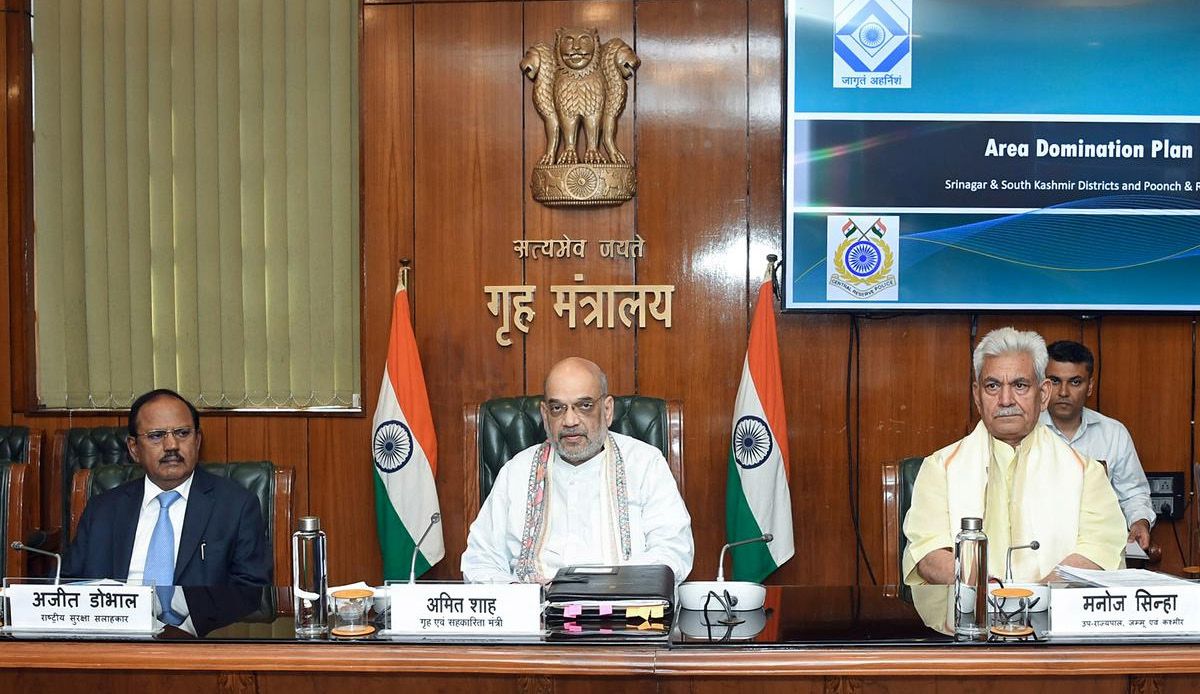
The historical context of the region, which enjoyed relative peace between 2003 and 2021, has been disrupted by frequent encounters and increased militant activities. The Pir Panjal region, comprising Rajouri district alongside Poonch and parts of Reasi districts, has emerged as a flashpoint of militancy in recent years. The strategic significance of Pir Panjal underscores the need for a targeted and nuanced security approach to curb militancy effectively. The security situation in Jammu and Kashmir has witnessed periodic escalations, marked by incidents of violence and casualties among security forces. Notably, in November of the preceding year, five soldiers, including two Captains, were killed in action during an anti-militancy operation in Rajouri’s Kalakote. This incident highlighted the continued operational challenges faced by security forces in the region. In April and May 2023, twin attacks in the Rajouri-Poonch region resulted in the deaths of ten soldiers in action, further underscoring the persistent threat of militancy in the region. Amit Shah’s engagement with the security situation in Jammu and Kashmir is part of the government’s commitment to a zero-tolerance policy against militancy. The Home Minister had previously chaired a similar high-level review meeting in January of the preceding year, emphasizing that all security agencies are fighting a decisive battle against militancy under the leadership of Prime Minister Narendra Modi. The consistent reinforcement of this zero-tolerance stance reflects the government’s determination to address security challenges head-on and protect the nation from external threats. In previous meetings, Shah had directed the government’s commitment to strengthening the 360-degree security mechanism. This comprehensive approach involves addressing not only the visible and immediate threats but also dismantling the support and information systems that sustain militant activities. The Minister’s insistence on a holistic security strategy signifies an understanding of the multifaceted nature of security challenges in Jammu and Kashmir. The 360-degree security mechanism aligns with international best practices, where a combination of military, intelligence, and diplomatic efforts is crucial for long-term stability. The emphasis on strengthening local intelligence networks echoes the global trend in counter-militancy strategies. Local intelligence, rooted in communities, provides valuable insights into the dynamics of potential threats. By empowering and enhancing the capabilities of local intelligence networks, security agencies can gather timely and accurate information, enabling preemptive actions against militancy related activities. Amit Shah’s directive highlights the recognition of the integral role that local communities play in maintaining security and stability. As the next Lok Sabha elections approach, the Modi government is keen on fostering an environment conducive to fair and peaceful polling. The security strategy outlined by Amit Shah aligns with this vision, aiming to eliminate local militant-supporting networks and win the trust of the people. Creating a secure atmosphere is essential for ensuring the integrity of the electoral process and enabling citizens to exercise their democratic rights without fear or intimidation. The government’s commitment to both security and democratic principles reflects a balanced and nuanced approach to governance. Amit Shah’s comprehensive review of the security situation in Jammu and Kashmir signifies a proactive and adaptive approach to address the evolving challenges in the region. Following the meeting, in a bid to counter infiltration attempts amid dense fog in Jammu and Kashmir, security forces have rolled out a winter strategy featuring heightened border surveillance. Specialized check posts have been strategically placed along the International Border and the Line of Control. The collaborative effort involves the Jammu and Kashmir Police, Army, and sister concern agencies working in synergy to dismantle the militant ecosystem. Additional surveillance posts, intensified patrolling, surprise search operations, and enhanced security measures in sensitive areas are part of the comprehensive plan to ensure border security during the winter season.
“Sharing timely and accurate information is in the eyes of security experts essential for preemptive actions against potential threats. Government needs to invest in modern surveillance technologies and intelligence-gathering tools. This includes drones, satellite imagery, and other advanced equipment to enhance the effectiveness of security operations. Fostering stronger ties with local communities to build trust and encourage their active participation in maintaining security could also be one of the priorities for the Government. Stablishing community policing initiatives can also aid in gathering intelligence and identifying potential threats.”
Kashmir Horizon View: Collaboration between central intelligence agencies, local intelligence networks, and communities is and would be mostly likely be the priorities of the Government in future also . Sharing timely and accurate information is in the eyes of security experts essential for preemptive actions against potential threats. Government needs to invest in modern surveillance technologies and intelligence-gathering tools. This includes drones, satellite imagery, and other advanced equipment to enhance the effectiveness of security operations. Fostering stronger ties with local communities to build trust and encourage their active participation in maintaining security could also be one of the priorities for the Government. Stablishing community policing initiatives can also aid in gathering intelligence and identifying potential threats.
( In commitment to continuous improvement the “Team Kashmir Horizon” invites it’s valuable readers to share their valuable feedback and suggestions with the “Team Kashmir Horizon”. The insights of readers will surely play a vital role in improving the content quality of “Kashmir Horizon” and contribute more for the empowerment of people. Please feel free to reach out to us at editor@ thekashmirhorizon.com. Team “Kashmir Horizon” eagerly anticipates thoughts and ideas of it’s readers, which will help us serve people and even more effectively. The inputs of valuable readers are highly valued as “Kashmir Horizon” strives to provide it’s readers the best possible experience. Thank you for being a part of the reader community!)