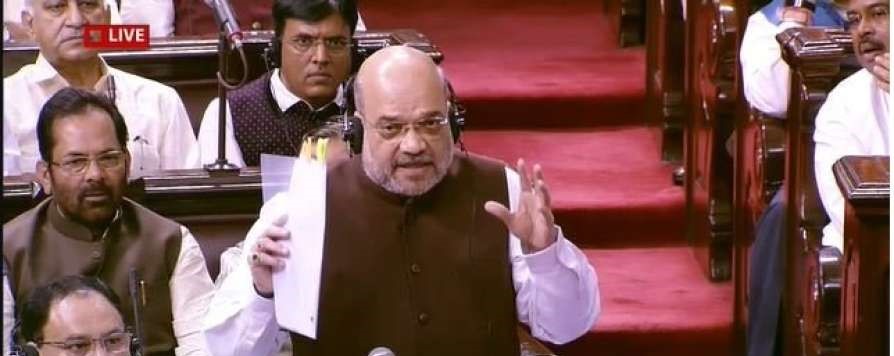
In a recent address to Parliament the Union Home Minister Amit Shah lauded the positive impact of the abrogation of Article 370 on the region of Jammu and Kashmir, emphasizing remarkable progress in tourism and various developmental sectors. Shah highlighted the surge in tourist numbers, rising from approximately 14 lakh before the current government’s tenure to an astounding 2 crore in recent years. The socio-economic landscape of Jammu and Kashmir has undergone a significant transformation, as evidenced by the impressive growth in the Gross State Domestic Product (GSDP). Over a span of five years, the GSDP skyrocketed from Rs 1 lakh crore to an impressive Rs 2,27,927 crore. This economic upswing has been coupled with strategic investments in education and healthcare infrastructure, including the establishment of prestigious institutions such as the Indian Institutes of Technology (IIT), Indian Institutes of Management (IIM), and two All India Institutes of Medical Sciences (AIIMS). These initiatives underscore a concerted effort to enhance human capital and provide quality healthcare services to the populace. A key aspect of the government’s commitment to comprehensive development is the focus on critical infrastructure. Home Minister Amit Shah highlighted the initiation of new road projects, railway developments, and irrigation initiatives that have played a pivotal role in fostering connectivity and facilitating the movement of goods and services. This infrastructural push not only contributes to economic development but also integrates the region more closely with the rest of the country.
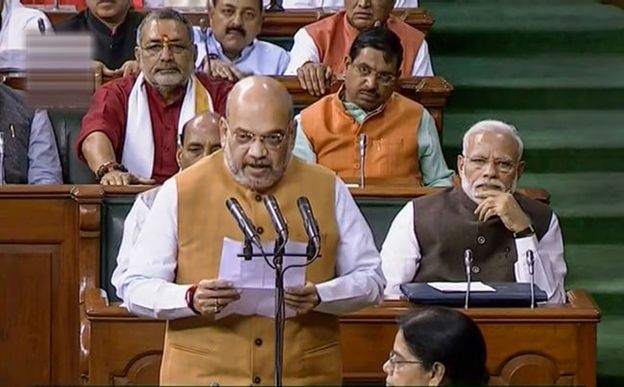
“Shah’s address, prompted by discussions on the Jammu and Kashmir Reservation (Amendment) Bill, 2023, and Jammu and Kashmir Reorganization (Amendment) Bill, 2023, shed light on the positive impact of the government’s strategic measures. Delving into the historical context of militancy in the region, Shah criticized the lack of effective measures in earlier decades, leading to the necessity of the bills currently under discussion. Highlighting a significant shift, he presented compelling statistics illustrating the transformative impact of the Modi government’s approach to counter-militancy”.
Addressing historical grievances, Shah emphasized the government’s proactive stance in providing justice to those displaced due to conflict. The restitution of properties and the establishment of a legal framework to address the grievances of the displaced people reflect a commitment to redress historical injustices and facilitate a return to normalcy. Water management projects in Jammu and Kashmir have seen significant achievements under the leadership of the Union Home Minister and Minister of Cooperation. Projects such as the Ravi Canal Project, Tassar Chalan Teen Tal Irrigation Project, and Phase-III flood management project in the Jhelum and its tributaries demonstrate the government’s commitment to enhancing the region’s resilience against natural disasters. The ongoing Phase-II, with an estimated cost of Rs 1632 crore, aims to further augment transmission capacity from 31885 to 41000 after the completion of Phase-I. The successful realization of the Shahpur Kandi Dam project adds another feather to the cap of water resource management in the region. Shah pointed out the swift accomplishment of desilting major canals in Jammu province, a task neglected for decades, within 59 days of the imposition of President’s rule, addressing a long-standing issue after 70 years. The expansion of the rail network is a significant development to improve connectivity in the region. The completion of the Rs 8.45 crore Qazigund Banihal tunnel, undertaken at an estimated cost of Rs 3127 crore, is a vital infrastructure development that enhances transportation links. In rural areas, approximately 8000 kilometers of new roads have been constructed, contributing to improved accessibility and connectivity for the local population. The recognition of ten crafts from Jammu and Kashmir with Geographical Indication (GI) tags, including the Gucchi mushroom from Doda and Basmati rice from R S Pura receiving an organic certificate, highlights the rich agricultural heritage and quality produce of the region. Moreover, the successful implementation of the Rs 5013 crore scheme for comprehensive agricultural development underscores the government’s commitment to promoting sustainable and inclusive growth in the agricultural sector. These achievements collectively represent a holistic approach to infrastructure development, irrigation management, and agricultural progress in Jammu and Kashmir, contributing significantly to the overall socio-economic advancement of the region. The transformative changes underscore a new era of prosperity and development in the region post the abrogation of Article 370. He said there is a commendable reduction in militancy in the Union Territories of Jammu and Kashmir under the leadership of Prime Minister Narendra Modi. Shah’s address, prompted by discussions on the Jammu and Kashmir Reservation (Amendment) Bill, 2023, and Jammu and Kashmir Reorganization (Amendment) Bill, 2023, shed light on the positive impact of the government’s strategic measures. Delving into the historical context of militancy in the region, Shah criticized the lack of effective measures in earlier decades, leading to the necessity of the bills currently under discussion. Highlighting a significant shift, he presented compelling statistics illustrating the transformative impact of the Modi government’s approach to counter-militancy. Shah remarked, “The era of militancy in Jammu and Kashmir began in the 1980s, leading to the displacement of generations. Had militancy been addressed without political considerations, the bills currently under discussion might not have been necessary.” Providing statistics on militancy-related incidents, Shah revealed a substantial decrease over the years. Between 1994 and 2004, there were 40,164 incidents, which decreased to 7,217 between 2004 and 2014. Under the Modi government, this number further plummeted to a mere 2,197—a staggering 70% reduction. Shah emphasized that approximately 65% of these incidents were quelled through effective police action.
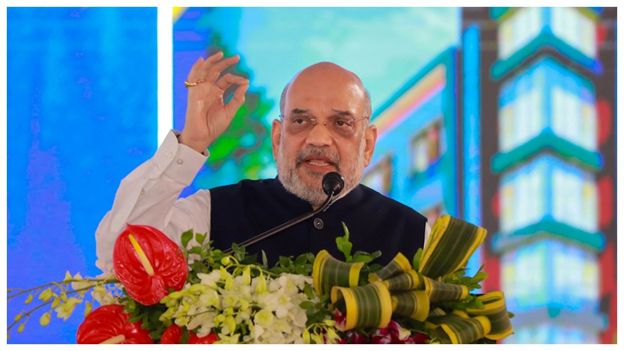
“Support initiatives that preserve and promote the rich cultural heritage of Kashmir. Maintain a robust security framework to address any potential security challenges promptly. Enhance intelligence-sharing mechanisms to prevent the resurgence of militant activities. Support initiatives that facilitate reconciliation and healing among communities affected by past conflicts. Implement programs that address historical grievances and promote unity. By combining these approaches, policymakers can contribute to the sustainable peace and development of Kashmir, fostering a positive environment for the residents and the region as a whole.”
Highlighting positive outcomes, Shah presented statistics indicating a 72% decrease in civilian casualties and a 59% reduction in security forces’ fatalities during the Modi government’s tenure. Instances of stone pelting, organized strikes, and fatalities related to these incidents witnessed a remarkable decline, contributing to an overall improvement in the security landscape. The Union Minister attributed this notable reduction in militancy to the government’s comprehensive approach, citing the implementation of the Zero Militancy Plan and a strategic focus on dismantling the entire ecosystem supporting militancy. The Home Minister underscored the government’s commitment to securing the region, evidenced by the decline in incidents such as ceasefire violations and infiltrations. In his address to the Lok Sabha, Amit Shah asserted that the strategic measures and persistent efforts of the government have not only improved security but have also laid the foundation for a more stable and prosperous region, showcasing a substantial decline in militancy in Jammu and Kashmir during the Modi era.
Kashmir Horizon View: Maintaining the current peaceful and developmental situation in Kashmir requires a multifaceted and comprehensive approach. Here are some suggestions that include foster active participation and engagement of local communities in decision-making processes. Strengthen local governance structures to ensure effective administration and representation at the grassroots level. Devolve powers and resources to local bodies to address community-specific needs and priorities. Continue and expand economic development initiatives to create jobs and improve livelihoods. Encourage investments in key sectors such as tourism, agriculture, and industry to boost the local economy. Continue investing in critical infrastructure projects, including roads, railways, and utilities, to improve connectivity and accessibility. Support initiatives that preserve and promote the rich cultural heritage of Kashmir. Maintain a robust security framework to address any potential security challenges promptly. Enhance intelligence-sharing mechanisms to prevent the resurgence of militant activities. Support initiatives that facilitate reconciliation and healing among communities affected by past conflicts. Implement programs that address historical grievances and promote unity. By combining these approaches, policymakers can contribute to the sustainable peace and development of Kashmir, fostering a positive environment for the residents and the region as a whole.
( In commitment to continuous improvement the “Team Kashmir Horizon” invites it’s valuable readers to share their valuable feedback and suggestions with the “Team Kashmir Horizon”. The insights of readers will surely play a vital role in improving the content quality of “Kashmir Horizon” and contribute more for the empowerment of people. Please feel free to reach out to us at
editor@ thekashmirhorizon.com.
Team “Kashmir Horizon” eagerly anticipates thoughts and ideas of it’s readers, which will help us serve people and even more effectively. The inputs of valuable readers are highly valued as “Kashmir Horizon” strives to provide it’s readers the best possible experience. Thank you for being a part of the reader community!)