Minister flags winter power deficit, seeks additional allocation, hydropower funding and infrastructure upgradation
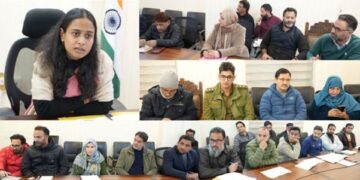
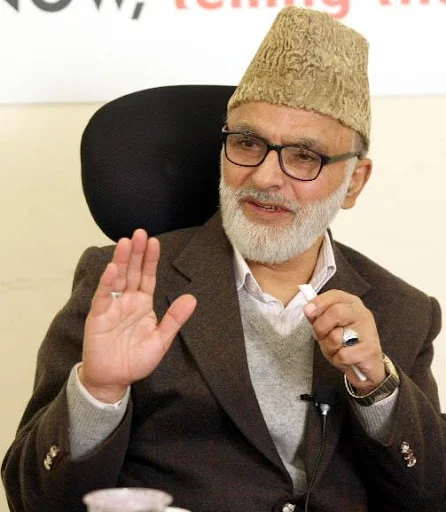
New Delhi | Nov, 27: Power Development Minister Ali Mohammad Sagar on Friday urged the Centre to sanction a dedicated financial package to modernize Jammu and Kashmir’s power sector, citing surging winter demand, acute supply deficits, and fragile Himalayan terrain.
Raising the demand at the State Ministers’ Conference on Power chaired by Union Power Minister Manohar Lal, Sagar submitted a comprehensive memorandum seeking a mix of grants, concessional loans, and viability gap funding. He emphasized that extreme weather—including heavy snowfall, avalanches, landslides, and flash floods—routinely batters grid infrastructure across scattered mountain habitations just as local hydropower generation dips in winter.
With restricted winter peak demand projected to hit 3,450 MW in 2026–27—up from 3,362 MW last winter—Jammu and Kashmir faces an estimated supply shortfall of 600 MW to 1,300 MW. To avert blackouts, Sagar requested additional unallocated central power, the continuation or enhancement of an extra 329 MW allocation from December 2026 to February 2027, and power banking arrangements with neighboring states like Punjab and Uttar Pradesh.
Highlighting recent fiscal and operational gains, the Minister noted that combined revenue realization for JPDCL and KPDCL jumped nearly 73 per cent—from ₹3,060 crore in 2021–22 to ₹5,290 crore in 2025–26. Simultaneously, Aggregate Technical and Commercial (AT&C) losses dropped sharply from 49.82 per cent to 27.13 per cent in JPDCL, and from 65.61 per cent to 33 per cent in KPDCL, aided by the installation of 12.25 lakh smart meters out of 14.07 lakh sanctioned under the Revamped Distribution Sector Scheme.
To sustain this momentum, Sagar sought central funds to replace overloaded transformers, upgrade 33/11 kV networks, lay underground cabling in vulnerable zones, and establish dedicated enforcement wings to curb power theft. He also pitched a specialized Himalayan Power Infrastructure Resilience Programme, requesting 25 additional Emergency Restoration System units—15 for Jammu and 10 for Kashmir—to complement the seven already procured for Jammu.
Outlining long-term energy security, Sagar noted that J&K has harnessed only 3,540 MW of its 14,635 MW hydropower potential. Backed by the upcoming Jammu and Kashmir Hydro Power Policy 2026 and ongoing projects like Pakal Dul, Kiru, Kwar, and Ratle (3,563.5 MW combined), the government aims to scale installed capacity to nearly 10,976 MW by 2035. He further proposed developing 250 MW/1,000 MWh of Battery Energy Storage Systems over three years, scaling up to 1,000 MW/4,000 MWh by 2031, alongside expanding JKPTCL’s 12,875 MVA transmission network with modern digital substations.
Calling reliable electricity vital for tourism, horticulture, cold chains, and industry, Sagar advocated for smart-grid cybersecurity, two dedicated power training colleges in Jammu and Kashmir, and a Centre–UT joint working group to ensure time-bound execution of the proposed modernization package.