
• Hails J&K’s reform momentum
• Calls for going beyond national benchmarks to act as model for other regions
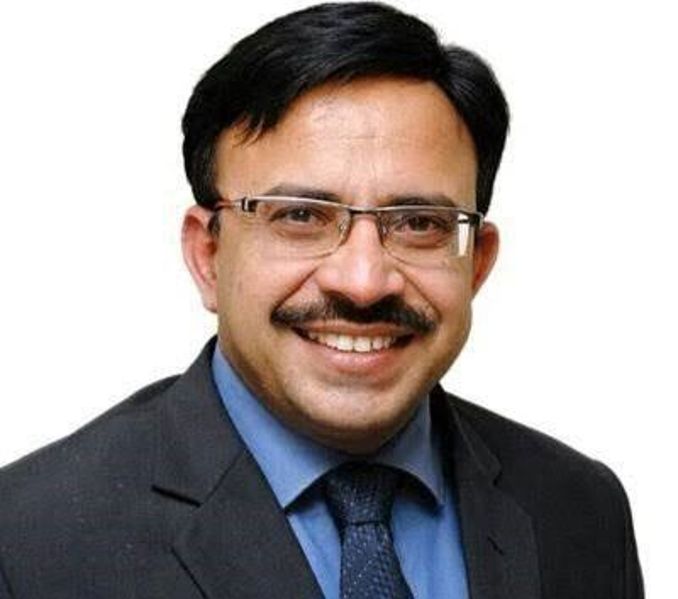
Jammu |Nov, 18: Special Secretary, Cabinet Secretariat, Government of India, K. K. Pathak, who heads the Centre’s Task Force on Deregulation and Compliance Reduction, today appreciated the pace, commitment and vigour with which the UT has pursued the reform agenda under Deregulation 1.0 and 2.0, observing that several of its initiatives have the potential to serve as best practices for other States and Union Territories.
Pathak made these observations while co-chairing a review meeting with Chief Secretary, Dr. Sajjan Singh Yadav, to assess the implementation status of identified Priority Areas (PAs), their impact on the ground and the extent to which the intended benefits of regulatory simplification were reaching businesses, institutions, stakeholders and the general public.
Appreciating the progress, Pathak observed that J&K had made considerable headway in advancing the reform agenda and encouraged the UT administration to sustain the momentum and aspire to go beyond the nationally prescribed framework and benchmarks for liberalisation and deregulation. He emphasised that the objective should not merely be to fulfil the prescribed reform parameters but to institutionalise a more progressive, facilitative and business-friendly regulatory environment.
Advocating a calibrated and risk-based approach to regulation, he stressed the need to categorise sectors and activities into low-, medium- and high-risk categories. While low-risk activities should largely be governed through self-certification, medium-risk sectors could adopt third-party certification mechanisms, with regulatory oversight and mandatory compliance requirements retained for high-risk activities wherever essential. Such an approach, he observed, would help eliminate unnecessary inspections and procedural hurdles without compromising public safety, quality standards or legitimate regulatory safeguards.
He also called for undertaking a systematic comparative assessment of the compliance burden on applicants before and after the introduction of deregulation measures in each Priority Area. Such an exercise, he emphasised, would help quantify the actual reduction in compliances, time, costs and procedural requirements, thereby establishing the tangible outcomes of the reform initiatives.
The Chief Secretary, while underscoring the importance of translating policy reforms into visible public benefits, directed all concerned departments to organise stakeholder dissemination workshops and extensive Information, Education and Communication (IEC) campaigns to familiarise businesses, institutions, professionals and other stakeholders with the changes introduced under each Priority Area.
He stressed that these outreach initiatives should clearly articulate the specific simplifications, procedural relaxations and benefits arising from the reforms so that intended beneficiaries are fully informed and able to avail themselves of the improved regulatory framework.
Dr. Yadav further emphasised that the ultimate test of deregulation lies in its actual impact on the ground and not merely in the issuance of notifications, amendments or government orders. He enjoined upon all departments to ensure that the benefits envisaged under each reform reach the intended stakeholders and the public in letter and spirit, with a clear focus on implementation, accessibility and measurable outcomes rather than compliance on paper alone.
During the detailed review, the Commissioner Secretary, I&C, Vikramjit Singh apprised the Special Secretary of the progress achieved across various sectors, highlighting the UT’s efforts towards simplifying regulatory frameworks, removing redundant compliances, facilitating businesses and institutions, and creating a more enabling environment for economic activity and public service delivery.
The Commissioner Secretary also highlighted that under Deregulation 1.0, as many as 20 Priority Areas have been agreed as implemented, while two have been accepted as not applicable by the Deregulation Review Committee.
Under Deregulation 2.0, he apprised the meeting that 11 Priority Areas have been agreed as implemented, while nine implemented areas are awaiting acceptance by the Task Force/DR Cell. Eight other Priority Areas are under implementation, including five being addressed through the J&K Ease of Doing Business Act, 2026.
The review also took stock of several significant sectoral interventions under Deregulation 2.0. These include removal of dual licensing requirements for businesses, easing licensing procedures under the Legal Metrology Act, empowering industrial development authorities as nodal agencies for approvals within industrial clusters, facilitating MSMEs through self-declaration and simplified approval mechanisms, and rationalising regulatory requirements for private educational institutions.
The amendments to the J&K School Education Rules, 2010, were also highlighted as an important step towards easing infrastructure and certification requirements for private schools. Similarly, the J&K Ease of Doing Business Act, 2026, has provided a legislative framework for addressing several Priority Areas relating to land use, industrial clusters, higher education institutions and professional registrations.
The meeting also reviewed reforms relating to rationalisation of fire safety norms, promotion of quality and affordable tourist accommodation through the Homestay Policy, and streamlining of healthcare-related licensing requirements.
Concluding the review, the Chief Secretary reiterated the UT Government’s commitment to carrying forward the reform process with greater institutional coordination, continuous monitoring and outcome-oriented implementation, ensuring that deregulation becomes a meaningful instrument of ease, efficiency and opportunity for citizens, entrepreneurs and institutions across Jammu & Kashmir.