152 delegates from 20 districts deliberate on psychological wellbeing
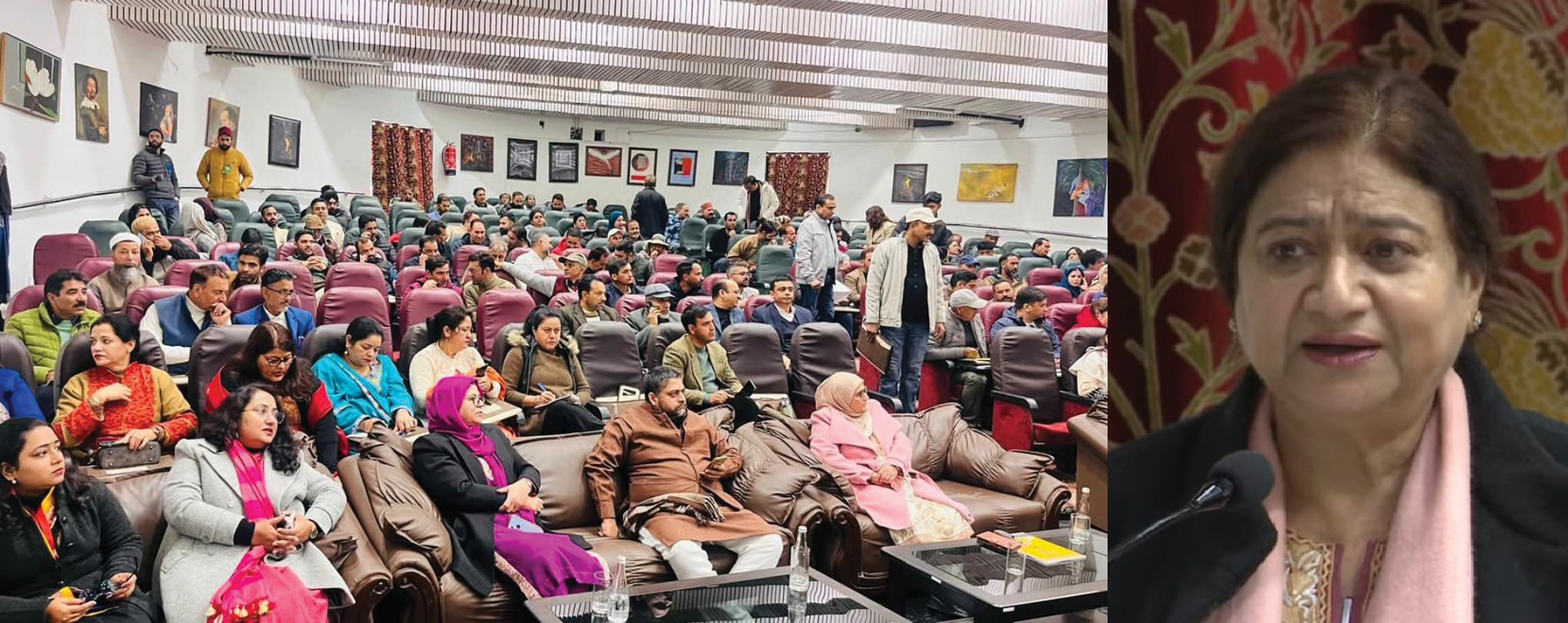
Srinagar, November 15: The Department of Education, University of Kashmir (KU), in collaboration with the Manodarpan Cell, Department of Educational Psychology and Foundations of Education (DEPFE), National Council of Educational Research and Training (NCERT), Ministry of Education, Government of India, organised a two-day State Consultative Meet on ‘Mental Health and Well-Being in Schools in Jammu and Kashmir’ at the Main Campus.
Held under the Government of India’s Manodarpan initiative, the meet aimed to adapt national psychosocial support guidelines to the school education system in Jammu & Kashmir, strengthen mechanisms for early identification of emotional and psychological concerns, and build the capacity of master trainers, school counsellors, special educators and educational administrators.
The meet brought together 152 nominated delegates from all 20 districts of Jammu & Kashmir, including 77 participants from the Kashmir Division and 75 from the Jammu Division.
Speaking at the inaugural session, Vice-Chancellor KU, Prof. Nilofer Khan said, “Educational reform under the NEP 2020 cannot be complete without giving due attention to the emotional well-being and psychological resilience of learners.” She emphasised the need for schools to provide supportive environment where students can seek help without stigma.
Registrar KU, Prof. Naseer Iqbal noted that mental health and well-being are important aspects of the educational experience and called for coordinated efforts among schools, counsellors and education administrators to address students’ psychosocial needs.
Prof. Vinod Kumar Shanwal, Incharge, Manodarpan Cell, NCERT, outlined the objectives of the initiative and explained the importance of equipping school personnel with the knowledge and skills to respond to students’ emotional and psychological concerns.
Earlier, Head, Department of Education KU, Prof. Aamina Parveen, in her welcome address, highlighted the need to translate national guidelines into practical school-level interventions suited to the educational context of the region.
The Kashmir Division delegation included Nodal Officer Mr. Shakeel Ahmad Bhat and senior academic officers from the HPEGC Branch of SCERT Kashmir Division, along with principals, headmasters, deputy chief education officers, district cultural coordinators, resource persons, counsellors and special education teachers nominated by the Chief Education Officers of the ten Kashmir districts.
The Jammu Division delegation included Dr. Romesh Kumar, Head of Department, DIET Jammu and Nodal Officer, Directorate of School Education, Jammu, besides faculty members from DIETs, JKSCERT, JKBOSE and JK Samagra Shiksha. Principals, deputy chief education officers, senior lecturers, masters, general line teachers, clinical and school counsellors and special educators from the ten Jammu districts also participated.
The delegates were divided into three parallel working groups for technical sessions and group exercises over the two days. The sessions were facilitated by seven NCERT officials—Prof. Vinod Kumar Shanwal, Prof. Anil K. Kumar, Ms. Suchi Mathur, Dr. Trishala Bhaskar, Dr. Suprita Sinha, Mr. Shyam Lal Meena and Mr. Anuj—and 12 national experts and resource persons: Prof. Perveen Kumar, Dr. Anita Sharma, Prof. Jagdip Sonwane, Prof. Arvind Kumar Mishra, Prof. Kamlesh Singh, Dr. Ravinder Singh, Prof. Dinesh Chhabra, Prof. Munesh Kumar, Prof. Arun Kumar, Dr. Prem Singh Sikarwar, Prof. Anil Kumar and Prof. Yatan Pal Singh Balhara.
The technical deliberations covered psychological first aid in schools, examination stress, adolescent anxiety, peer pressure, socio-emotional learning, support for children with special needs, reducing stigma around seeking mental health support and establishing school-to-clinic referral pathways linked with national tele-counselling networks.
At the valedictory session, Dean Academic Affairs KU Prof. Shariefuddin Pirzada highlighted the role of educational institutions in recognising students’ emotional and psychological needs and ensuring that appropriate support systems are available in schools.
The working groups presented divisional and district-level action plans outlining local challenges, resource requirements and proposed school-based interventions. Certificates of participation were distributed among the delegates.