Says “World Bank Report Gives New Energy to Campaign as 50 Crore Escape Poverty”
Says “Yoga has become a gateway for the world to understand India”
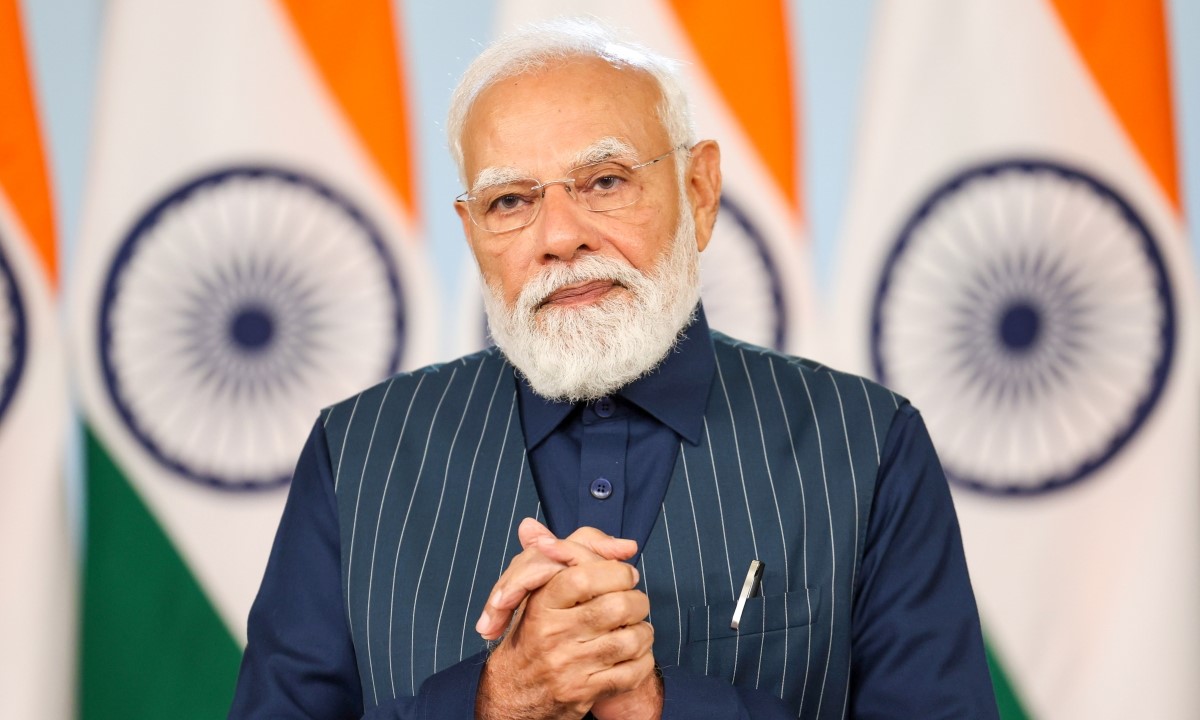
Bengaluru|Nov, 13 : Prime Minister Narendra Modi on Friday invoked a World Bank report claiming that nearly 50 crore Indians had moved out of extreme poverty over the past 12-13 years, projecting it as evidence of India’s development journey and a shift from poverty-alleviation slogans to tangible outcomes, while asserting that the country’s traditional knowledge, particularly yoga, was emerging as a gateway for the world to understand India.
Addressing the Golden Jubilee celebrations of Prashanti Kutiram and S-VYASA University here, Modi said the country’s development journey had created new opportunities for millions of families to focus on healthier lifestyles and their well-being.
“The World Bank’s latest report has given new energy to this campaign. It says that in the last 12-13 years, nearly 50 crore Indians have come out of extreme poverty. This is a very big figure,” he said.
Linking India’s development progress with its growing international influence, Modi said the country had been presenting its culture, identity and knowledge systems to the world with confidence over the past 12 years.
“Today, the world is increasingly getting connected with yoga. It appears that yoga has become a gateway for the world to understand India,” he said.
He said yoga had reached schools, institutions and workplaces across several countries, with international interest in the discipline also generating greater curiosity about India’s cultural heritage and traditional knowledge.
Citing Saudi Arabia as an example of its growing international acceptance, Modi said the country had recognised yoga as a sports activity and its Sports Ministry had entered into an agreement with India’s Ministry of AYUSH to promote it.
“In Saudi Arabia, yoga has been recognised as a sports activity. Its Sports Ministry has entered into an agreement with India’s Ministry of AYUSH to promote yoga,” he said.
The Prime Minister said he frequently encountered foreign leaders and members of their families who practised yoga during his international visits.
Recalling his interactions with foreign dignitaries, he said he often had to clarify that he was a yoga practitioner and not an expert.
“Whenever I travel abroad, during lunch or dinner, the foreign guests or heads of state sitting with me often ask questions about yoga. Many tell me that their wives visit India once a year to learn yoga or that their daughters have dedicated themselves to the practice,” he said.
He said the growing international interest in yoga was creating a new attraction towards India’s culture and traditional knowledge.
“When people across the world become familiar with yoga, their curiosity to know India also increases. A new attraction develops towards our culture and traditional knowledge. This opens a new pathway for greater engagement between India and the world,” he said.
Modi said several foreign nationals committed to promoting yoga had also been honoured with the Padma Shri, recognising their contribution to taking India’s traditional discipline to the world.
On Ayurveda, he said more than 150 Ayurveda training courses had received recognition in different countries and India had signed agreements with 28 countries to promote the traditional system of medicine.
He said the government had established a separate Ministry of AYUSH for the first time after Independence and encouraged research and patents related to Ayurveda.
Exports of AYUSH and herbal products had also increased, while the sector’s economy had grown significantly, he said.
Referring to turmeric, Modi said demand for the traditional Indian spice was increasing globally and the government had established the National Turmeric Board to strengthen production, quality and exports.
He also referred to the e-Ayush Visa facility introduced to facilitate foreign nationals travelling to India for treatment and the establishment of the World Health Organisation’s Global Traditional Medicine Centre in Jamnagar to promote research and international cooperation in traditional medicine.
The Prime Minister said yoga had also received recognition as a competitive sport in India, with opportunities for competitions being created through events such as Khelo India and the National Games.
He said India’s traditional knowledge systems needed to be strengthened through modern scientific research to ensure that their benefits reached humanity.
Highlighting the contribution of Prashanti Kutiram, Modi said the institution had evolved from a modest yoga centre into a major movement combining yoga education, scientific research and healthcare.
He said S-VYASA had emerged as an important institution in yoga education, scientific research and health services by integrating yoga with Ayurveda, naturopathy and modern medical science.
The institution had developed a holistic wellness ecosystem and its research on stress-related challenges and lifestyle diseases was serving people in India and abroad, he said.
Modi described yoga as an accessible and low-cost healthcare intervention that could help families adopt healthier lifestyles and prevent diseases.
“Yoga not only helps in getting relief from diseases, but also helps in preventing them. It is one of the biggest healthcare interventions with a zero-cost budget,” he said.
The Prime Minister also paid tributes to late RSS leader H V Seshadri on his birth centenary, recalling his philosophy of selfless service, humility and nation-building.
“Seshadri ji devoted his entire life to the mission of nation-building through the creation of individuals. He believed that if the country had to reach the pinnacle of success, it needed dedicated, capable and disciplined citizens,” he said.
Recalling his personal association with Seshadri, Modi said he had received his affection and guidance over the years and continued to cherish their interactions.
He said Seshadri believed that people should learn from a mother’s selfless commitment to caring for her child and extend the same spirit of service to society.
“If we give to society with both hands, society returns it to us through millions of hands,” Modi recalled Seshadri as saying.
He said he had experienced this philosophy in his own public life, adding that the blessings of the people while serving them remained one of his greatest assets.
The Prime Minister also urged S-VYASA to prepare a roadmap for the next 25 years, keeping the goal of Viksit Bharat in mind.
He asked the institution’s leadership to align its future activities with the country’s development vision and contribute to building a developed India.
“Think about how your next 25 years will be, keeping Viksit Bharat in mind, and dedicate yourselves to that mission,” he said.
Modi congratulated the institution on completing 50 years and commended its leadership, including president HR Nagendra and vice-president R Nagarathna, for carrying forward its mission.