Scientists call for climate-resilient farming, improved crop quality, reduced post-harvest losses
Shalimar|Oct, 28: Sher-e-Kashmir University of Agricultural Sciences and Technology of Kashmir (SKUAST-Kashmir), in collaboration with the Academy for Indian Horticulture (AIH), Bengaluru, on Tuesday inaugurated a three-day national conference on plant physiology, crop improvement and post-harvest management at its Shalimar campus.
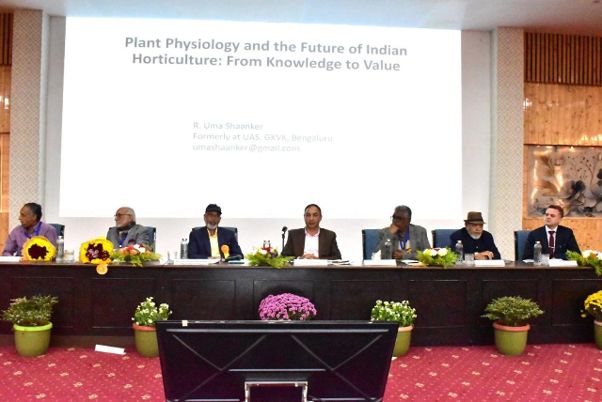
The conference, being held at the Nundreshi Convention Centre under the theme “Applications of Plant Physiology for Crop Improvement, Quality Enhancement and Post-Harvest Management in Horticulture”, brought together scientists, researchers, academicians and industry representatives to deliberate on emerging challenges in horticulture.
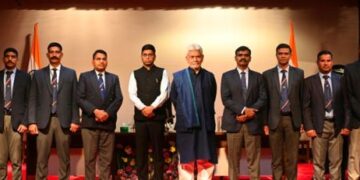
Vice-Chancellor Prof. Nazir Ahmad Ganai, who was the chief guest, stressed the need to strengthen scientific research to develop productive, resource-efficient and climate-resilient horticultural systems.
He called for science-based solutions to address climate change, improve crop quality and reduce post-harvest losses, emphasising that research outcomes must translate into practical benefits for farmers.
Ganai also highlighted the importance of collaboration between SKUAST-Kashmir and AIH in promoting scientific exchange, strengthening research partnerships and addressing challenges facing the horticulture sector.
The inaugural session was attended by AIH President Dr. Surender Kumar Tikoo, AIH Secretary Dr. N.K. Krishna Kumar, Prof. Nataraja Karaba, Dean of Postgraduate Studies at the University of Agricultural Sciences, Bengaluru, and Dr. R.G. Agarwal, Chairman Emeritus of DhanukaAgritech Limited.
Welcoming the delegates, Dr. Javeed Iqbal Ahmad Bhat, organising secretary and Professor and Head of the Division of Basic Sciences and Humanities, highlighted the importance of plant physiology in addressing climatic variability, environmental stress and post-harvest challenges.
Dr. Krishna Kumar emphasised the need for collaborative research and stronger partnerships among academic institutions, professional academies and industry to develop solutions for emerging horticultural challenges.
The keynote address was delivered by Prof. R. Uma Shaanker, an eminent plant scientist and former Head of the Department of Crop Physiology at the University of Agricultural Sciences, Bengaluru. He highlighted the relevance of plant physiological research in crop improvement and sustainable horticultural production.
A major highlight of the inaugural session was the presentation of the Academy for Indian Horticulture Lifetime Achievement Awards to Dr. Surender Kumar Tikoo and Dr. R.D. Rawal, former Principal Scientist and Head of the Division of Plant Pathology at ICAR–Indian Institute of Horticultural Research, Bengaluru, in recognition of their contributions to horticultural science.
Books, publications and the conference souvenir were also released during the inaugural session. Prof. Ashaq Hussain Pandit, Dean, Faculty of Horticulture, SKUAST-Kashmir, delivered the vote of thanks.
Scheduled from October 27 to 29, the conference features keynote lectures, invited talks, oral and poster presentations, and technical sessions on climate resilience, stress physiology, plant growth regulation, orchard productivity, precision agriculture, protected cultivation, plant breeding, biotechnology, genomics and post-harvest management.
The deliberations are aimed at strengthening scientific collaboration and identifying research-driven approaches to improve horticultural productivity, crop quality and sustainability.