
Over 60 breeders benefit from livestock feed, veterinary support and scientific guidance
Tangdhar : Sher-e-Kashmir University of Agricultural Sciences and Technology of Kashmir (SKUAST-K) on Saturday launched two community-based conservation and multiplication units for the indigenous Karnah sheep in Batlan village, with the goal of preserving this breed and enhancing livestock-based livelihoods.
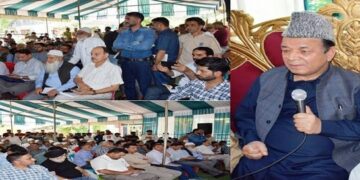
The initiative, executed by the Division of Animal Genetics and Breeding under the ICAR–NBAGR Network Project on Animal Genetic Resources, took place on October 22 and 23. Each unit consists of four ewes and one ram, totaling eight ewes and two rams. Additionally, the university provided 60 bags of feed, 100 packets of mineral mixture, and essential veterinary medicines to bolster animal health and productivity. The program benefited over 60 sheep breeders through awareness and field activities, complemented by 10 technical consultations addressing breeding, nutrition, flock management, and animal healthcare. Prof. Reyaz Ahmad Shah, Dean of the Faculty of Veterinary Sciences and Animal Husbandry, emphasized the significance of conserving indigenous livestock breeds for climate resilience and sustainable rural livelihoods. Prof. Syed Shahnaz Shafi highlighted the necessity for scientific breeding and systematic conservation of Karnah sheep, which are well-suited to the challenging agro-climatic conditions of the Kashmir Himalayas. Scientists involved in the program visited various villages to evaluate livestock management practices and understand breeders’ needs. Dr. Shahid Ahmad Shergojry provided guidance to farmers on genetic improvement, balanced nutrition, disease prevention, and scientific flock management. The initiative also included participation from local officials and breeders, including women beneficiaries, and aims to preserve the genetic identity of Karnah sheep while fostering community involvement and supporting livestock-dependent households in this remote border area.