India’s higher education system is expanding, but is it truly progressing? Universities are multiplying, degrees are becoming more accessible, and policies are being redesigned. Yet serious questions persist about teaching quality, research credibility, graduate employability and institutional accountability. Five years after the launch of the National Education Policy (NEP) 2020, India must confront an uncomfortable question: why does the promise of transformation remain so difficult to translate into consistent academic outcomes? The problem is not that India lacks educational vision. The problem is the distance between policy ambition and institutional reality.
A Policy Cannot Transform Classrooms By Itself: NEP 2020 introduced an ambitious vision of multidisciplinary education, flexibility, skill development, research and institutional autonomy. Its objectives are significant and deserve serious implementation. However, announcing reforms and achieving meaningful educational change are two different things. A policy document cannot automatically improve classroom teaching, strengthen research supervision or make graduates employment-ready. These outcomes require capable teachers, adequate funding, institutional leadership, effective regulation and a culture that values learning over paperwork.
Degrees Are Growing, But Are Skills Keeping Pace? One of the most pressing concerns is the disconnect between academic qualifications and practical competence. Employers frequently seek graduates who can communicate effectively, analyze problems, work collaboratively and adapt to technological change. Yet many students continue to experience education dominated by prescribed textbooks, examinations and theoretical knowledge. Practical exposure, internships, interdisciplinary learning and industry engagement remain uneven across institutions. A degree should represent demonstrated competence, not merely the completion of a prescribed course. Universities must regularly review curricula with employers, professional bodies, alumni and subject experts. Assessment should reward application, creativity and independent thinking rather than the ability to reproduce memorized information.
Research And PhD Education Need Serious Attention: India cannot become a global knowledge leader simply by increasing research enrolment or the number of doctoral degrees. Research must generate original knowledge, address meaningful problems and meet credible standards of academic integrity. Doctoral education therefore deserves particular scrutiny. Effective supervision requires subject expertise, research experience, regular mentoring and sufficient time for individual scholars. Where supervisors are overloaded, research infrastructure is inadequate or institutional processes priorities completion over quality, doctoral education risks becoming a procedural exercise. Research assessment should focus on originality, methodological soundness, societal relevance and contribution to knowledge—not merely publication counts. PhD scholars must be supported as emerging researchers, not treated as instruments for improving institutional statistics.
“NEP 2020 should not be dismissed because implementation remains uneven. Nor should its existence be treated as proof that India’s higher education challenges have been resolved. Both positions overlook the central issue: reform must produce demonstrable improvements in the educational experience. The real examination is not of NEP 2020 on paper. It is of India’s universities in practice. A nation cannot build a knowledge economy on certificates without competence, research without rigour and reforms without accountability. NEP 2020 has articulated a vision. The responsibility now is to turn that vision into a measurable academic reality.”
Teachers| The Most Neglected Pillar? Educational reform often concentrates on regulations, accreditation, digital platforms and institutional rankings. But the most important element of a university remains the teacher. Faculty vacancies, excessive administrative responsibilities, limited research support and inadequate opportunities for professional development can undermine teaching and mentoring. The extent of these problems varies across institutions, but they deserve systematic attention.
Private Universities And The Question Of Accountability: Private institutions have contributed to expanding educational opportunities, developing infrastructure and introducing new programmes. Many have made valuable academic contributions. Nevertheless, expansion must be accompanied by transparent and effective quality assurance. Students and families invest substantial financial resources in higher education. They deserve clear information about faculty qualifications, programme outcomes, fees, research facilities, placement performance and institutional accreditation. Regulation should protect academic standards without creating unnecessary bureaucratic barriers. Equally, institutional autonomy must not become an excuse for weak accountability. Universities must be evaluated on educational outcomes, not the appearance of their campuses, the number of programmes advertised or the size of their promotional campaigns.
The Employability Gap Cannot Be Ignored: A growing economy needs graduates who can contribute productively, innovate and create employment. Universities must therefore establish stronger connections with industry, public institutions, communities and emerging sectors. At the same time, employability must not become the sole purpose of education. Universities must also develop ethical judgment, civic responsibility, intellectual curiosity and the ability to think independently. The objective is not merely to produce job seekers. It is to develop competent professionals, responsible citizens and future innovators.
Where Must India Begin? India needs an implementation strategy that places educational outcomes at the centre of reform. First, institutions should publish measurable annual targets for learning outcomes, faculty development, research quality and graduate progression. Second, governments and regulators should address faculty shortages and unequal institutional capacity, particularly in resource-constrained colleges. Third, doctoral education must be strengthened through credible supervision, rigorous evaluation and adequate research support. Fourth, universities should establish meaningful industry partnerships while protecting academic independence. Fifth, accreditation and institutional reviews must examine actual learning and research outcomes rather than rely excessively on documentation. Finally, the Union and state governments must work collaboratively to implement reforms in ways that recognize differences in institutional resources and regional needs. Implementation should be accessed through transparent evidence, independent evaluation and continuous improvement—not through declarations of success alone.
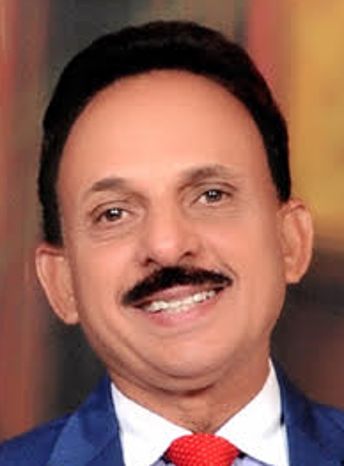
(The author is Principal, Guru Gobind Singh College of Management and Technology, Gidderbaha, Punjab. The views, opinions and conclusions expressed in this article are those of the author and aren’t necessarily in accord with the views of “Kashmir Horizon”)
[email protected]