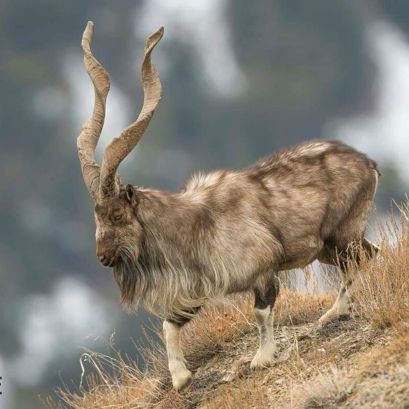
Kazinag records six more animals since 2023; high recruitment rate points to successful breeding
Srinagar|Oct, 10: The population of the near-threatened Kashmir markhor has recorded a slight increase in Jammu and Kashmir, with the latest survey estimating 227 individuals in 2026, up from 221 in 2023, according to a new conservation report.
The findings, published in an impact report jointly prepared by the Wildlife Trust of India (WTI) and the Jammu and Kashmir Department of Wildlife Protection, indicate a slowly growing population of the elusive mountain mammal in the Kazinag range of north Kashmir.
The Markhor Recovery Project, launched in 2005, aims to secure the long-term survival of the species, which inhabits mountainous regions of Central and South Asia. In Jammu and Kashmir, Kazinag National Park is among its key habitats.
The report recorded a recruitment rate of 69 kids per 100 adult females, indicating encouraging breeding and juvenile survival. Survey teams also documented 600 direct sightings during 2026 through repeated monitoring of 12 permanent trails across four seasons.
Of the total sightings, 131 were recorded in summer, 158 in autumn, 127 in winter and 184 in spring, reflecting the species’ presence across the year in the Kazinag range.
Despite the modest increase, the report stressed the need for sustained conservation measures to protect the population and its habitat. It said continued collaboration between WTI and the Wildlife Protection Department would remain essential to securing the species’ future in the Union Territory.
The report called for stronger protection and monitoring in key habitats, particularly Kazinag National Park and Hirpora Wildlife Sanctuary. It also identified reducing grazing pressure and mitigating threats arising from infrastructure development and human disturbance as priorities.
Recommending improvements in scientific monitoring, the report proposed the use of thermal drones, camera traps and radio collars to strengthen population estimates, improve data quality and support evidence-based conservation planning.
It also emphasised community participation, recommending expansion of the Markhor Watcher Network and the promotion of sustainable livelihood opportunities through ecotourism. Such initiatives, it said, could help local communities participate in conservation while supporting the protection of the species and its habitat.
The markhor, known for its distinctive spiral horns, was categorised as “Near Threatened” in 2014 and is listed on the International Union for Conservation of Nature’s Red List of Threatened Species. It has been included in Appendix I of the Convention on International Trade in Endangered Species of Wild Fauna and Flora since 1992, placing international trade in the species under strict controls.
Found on both sides of the Line of Control, the markhor is also the national animal of Pakistan. The United Nations General Assembly has designated May 24 as the International Day of the Markhor to promote awareness about the species and its conservation.