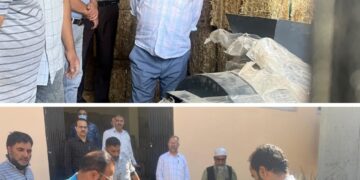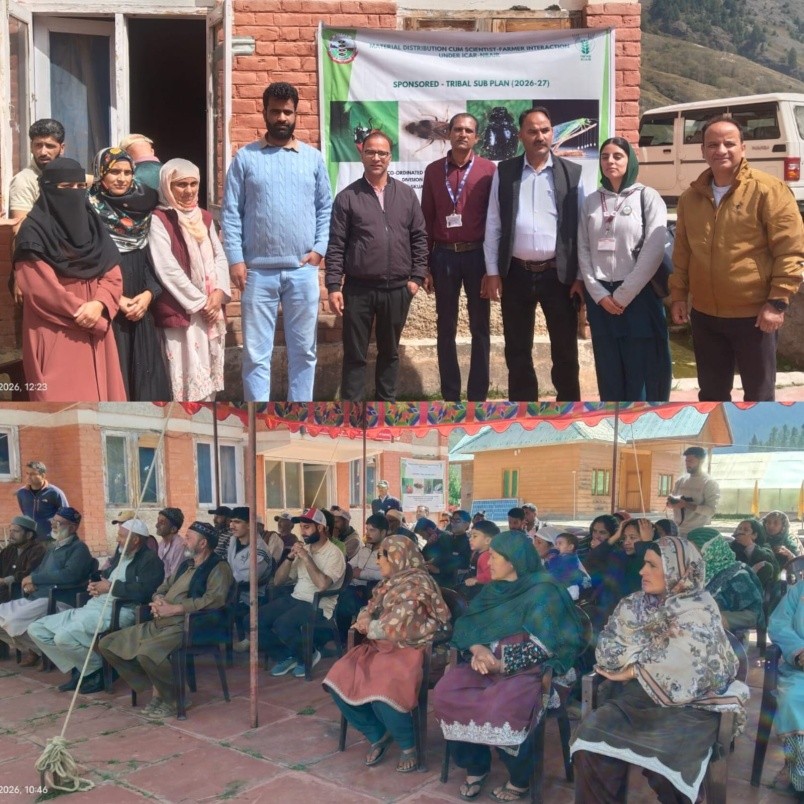
AICRP-Biological Control, in collaboration with KVK Bandipora-II, conducts TSP outreach on eco-friendly pest management
Gurez : An agricultural outreach programme aimed at promoting biological control and eco-friendly pest management among farmers in the remote border valley of Gurez was organised by AICRP-Biological Control, Division of Entomology, SKUAST-K, Shalimar, in collaboration with KVK Bandipora-II (Gurez) and with support from ICAR-National Bureau of Agricultural Insect Resources (ICAR-NBAIR), Bengaluru.
The TSP awareness programme brought scientists and agricultural experts closer to farmers and focused on practical, affordable and environmentally sustainable approaches to crop protection.
Around 80 farmers from across Gurez participated in the programme. Farmers in the region cultivate potato, maize, peas, rajmash, wheat and various vegetables under challenging agro-climatic conditions, making location-specific crop protection measures particularly important.
Dr Hilal Ahmad Malik, Head, KVK Bandipora-II (Gurez), stressed the importance of promoting affordable and locally suitable agricultural technologies. He called for strengthening interaction between farmers and scientists to address crop-related challenges specific to the valley.
Prof Sajad Mohi-ud-Din, Principal Investigator, AICRP-Biological Control, highlighted the role of biological control and integrated pest management in reducing excessive dependence on chemical pesticides while conserving beneficial organisms and supporting safer agricultural production.
Dr M. Sampath Kumar, Senior Scientist, ICAR-NBAIR, Bengaluru, shared technical inputs on biological control, biopesticides and other eco-friendly approaches for managing crop pests.
Dr MudasirGani Bhat, Co-Principal Investigator, AICRP-Biological Control, emphasised the importance of translating scientific recommendations into field-level practices and strengthening farmer-scientist linkages.
The technical sessions covered pest identification, field surveillance, preventive measures, biological control and need-based interventions for major crops cultivated in Gurez. During an interactive session, farmers discussed pest incidence, crop damage, identification of pests and practical management options suited to their local conditions.
As part of the TSP outreach, neem oil, insect traps, vermicompost and quality potato seed were distributed among participating farmers. The initiative was aimed at encouraging the adoption of eco-friendly pest management practices while promoting soil health and sustainable crop production.
The programme also highlighted the potential of low-input and ecological approaches to crop protection in strengthening agricultural resilience in remote areas. It reflected SKUAST-K’s efforts to extend scientific knowledge and practical technologies to farming communities beyond conventional agricultural centres, including villages in the strategically important Gurez region.
Participating farmers appreciated the initiative and expressed interest in adopting biological control measures for safer and sustainable management of insect pests.
The programme concluded with a vote of thanks. Dr MudasirGani Bhat acknowledged the contribution of farmers, scientists, technical staff and collaborating institutions, while Dr Jauhar Rafeeq also proposed a vote of thanks.