Jobs, Statehood, Reservation on Agenda
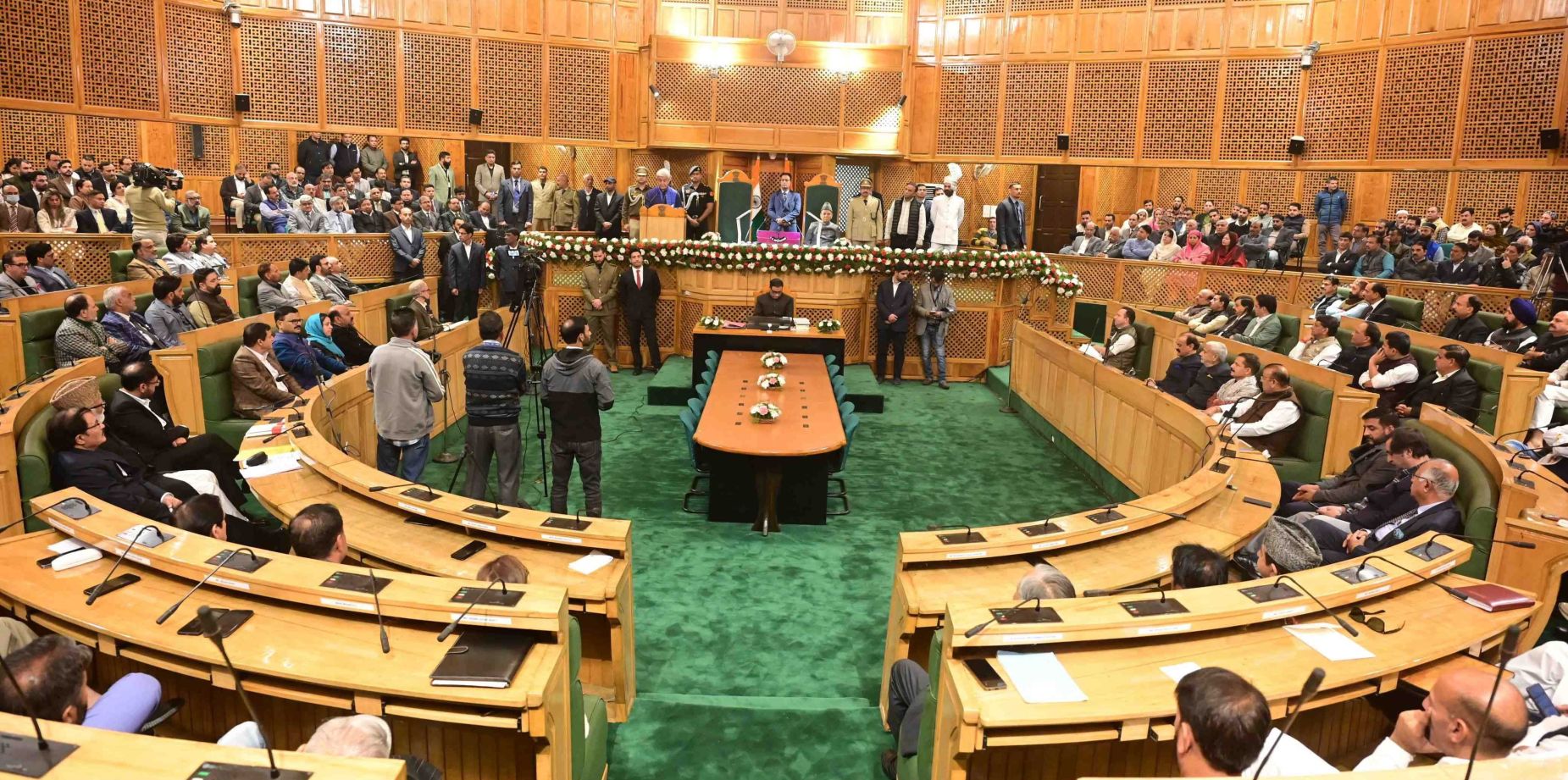
Srinagar| Sept, 19: The Jammu and Kashmir Legislative Assembly is set to reconvene in Srinagar on September 21 for its autumn session, bringing the elected House back to the centre of political and policy debate after weeks of activity outside the legislature. The sixth session of the Jammu and Kashmir Legislative Assembly will continue until September 30. Although the calendar spans 10 days, it will effectively have seven sitting days, with September 23 marked as a holiday for Maharaja Hari Singh’s birthday, September 26 designated as an off day and September 27 falling on Sunday. The session is expected to provide an important platform for the government and Opposition to debate issues ranging from employment and reservation to development, electricity, governance, public welfare and the demand for restoration of statehood. With 90 members represented in the House, including 41 National Conference MLAs, 29 BJP members, seven Independents, six Congress MLAs, four PDP members and representatives of the Peoples Conference, CPI(M) and Aam Aadmi Party, the Assembly reflects a diverse political composition. The return of the House is therefore significant not merely as a constitutional requirement but as an opportunity for elected representatives to place constituency-level concerns and wider policy questions before the government.
A House Prepared For Business: Lieutenant Governor Manoj Sinha has summoned the Assembly to meet from September 21 following the recommendation of the Council of Ministers. The formal convening has set the stage for a session in which the government will present its legislative and policy agenda while members are expected to raise matters concerning their constituencies and the wider public. The Assembly Secretariat has already undertaken extensive preparations to ensure that proceedings take place smoothly. Speaker Abdul Rahim Rather recently reviewed arrangements with senior officers from the General Administration Department, Law, Information Technology, security, traffic, health, hospitality and protocol, estates, Srinagar Municipal Corporation and other departments. The Speaker stressed the importance of advance planning, coordination and administrative preparedness, particularly because the session is relatively short but carries considerable legislative responsibility. The preparations cover virtually every aspect of the session, from security and traffic management to internet connectivity, sanitation, medical facilities, power and water supply and arrangements for media coverage. The Assembly Secretariat has also asked departments to ensure timely submission of replies to questions raised by legislators and to designate nodal officers for coordination with the House. This preparation assumes importance because the effectiveness of a legislative session depends not only on the debates inside the chamber but also on the administrative systems supporting the proceedings.
Digital Assembly Takes Centre Stage: One of the notable features of the upcoming session is the continued use of the National e-Vidhan Application, or NeVA. The legislative business for the autumn session is being processed and managed through the digital platform, which is designed to facilitate paperless functioning and streamline legislative work. The IT Department has been directed to ensure reliable internet connectivity and technical support throughout the proceedings. The move towards a hybrid digital system represents another stage in the modernisation of legislative functioning in Jammu and Kashmir. Through NeVA, members and departments can access legislative material, questions, bills and other House-related information through a common digital platform. For legislators, this can make access to information more efficient, while for the Assembly Secretariat it provides an integrated mechanism for managing legislative business.The digitalisation of the House also reflects the broader transition of public institutions towards technology-enabled governance.
Seven Sitting Days, Diverse Business: The provisional calendar provides a clear structure for the autumn session. The opening sitting on September 21 will begin with obituary references, followed by government business during the subsequent sitting days. September 24 has been earmarked for Private Members’ Bills, while September 25 will focus on Private Members’ Resolutions. Private Members’ Bills are scheduled again on September 28, followed by government business on September 29 and 30. The structure provides members with opportunities to raise both constituency-specific concerns and broader policy matters. The allocation of dedicated days for private members’ business is particularly significant because it allows individual legislators to bring legislative proposals and resolutions to the floor outside the government’s own legislative agenda.The government business days, meanwhile, will provide the administration an opportunity to explain its policies, introduce legislative proposals and respond to questions raised by members.
Issues Likely To Dominate Debate: The political focus of the session is expected to centre on several issues that have remained prominent in Jammu and Kashmir’s public discourse. Employment is likely to be among the major subjects. Unemployment and government recruitment remain important concerns for young people, and legislators are expected to seek information about recruitment, job creation and employment-related policies. The question of outsourcing is also expected to feature prominently, particularly in discussions surrounding government employment and service delivery. Reservation policy is another issue likely to generate substantial discussion. The subject has remained politically significant, with legislators from different parties expressing concerns and seeking clarity on the existing framework. The Assembly provides an institutional platform for these competing concerns to be debated on record. Development is another broad area likely to receive attention. MLAs are expected to raise constituency-specific requirements involving roads, public infrastructure, healthcare, education, water supply and other basic services. For legislators, the Assembly offers an opportunity to move individual constituency concerns into the formal policy process. For the government, the session provides an opportunity to present its development agenda and explain the implementation of ongoing schemes and projects. Power supply and electricity policy are also expected to figure prominently. With electricity remaining an important public issue across Jammu and Kashmir, legislators are likely to seek responses on supply, infrastructure, tariffs and the broader power situation.The debate could also connect with wider questions concerning the Union Territory’s economic development and household welfare.
Statehood Remains A Major Political Question: The demand for restoration of statehood is expected to remain among the most significant political themes during the session. The issue has continued to occupy an important place in Jammu and Kashmir’s political discourse since the reorganisation of the former state in 2019. The Assembly gives elected representatives a formal democratic platform to articulate their positions on the issue. The ruling National Conference has consistently made restoration of statehood an important political demand, while Opposition parties have their own positions and approaches on the matter. The coming session could therefore provide another opportunity for the House to debate the constitutional and political future of Jammu and Kashmir within the framework of the elected legislature.
Opposition Prepares For The Session: The BJP, as the principal Opposition party in the Assembly, has indicated that it will raise issues concerning the public. BJP MLA Vikram Randhawa said the party was prepared to raise unemployment, development, public grievances and questions of government accountability. “The BJP is fully prepared for the Assembly session,” Randhawa said, adding that the government would have to respond to issues concerning the people through the House. The Opposition’s role is expected to focus on questioning the government, seeking explanations on policy implementation and placing alternative viewpoints before the legislature. The presence of 29 BJP members gives the party a substantial strength on the Opposition benches, while the Leader of Opposition is Sunil Kumar Sharma, according to the official Assembly portal. Other Opposition and non-ruling parties are also expected to use the session to raise issues. Recent preparations have included an all-party and Business Advisory Committee meeting chaired by Speaker Rather, with participation from representatives of the BJP, National Conference, Congress, CPI(M), Peoples Conference, PDP and an Independent member. The meeting was aimed at ensuring that legislators receive adequate opportunities to raise constituency-specific and public-interest matters.