• Inaugurates first IFFJK at SKICC
• 130+ films from over 30 countries to be showcased during four-day festival
• Highlights single-window clearance, incentives and J&K Film Policy
• Urges filmmakers to explore region’s culture, people and untold stories
• Says Kashmir’s long association with cinema
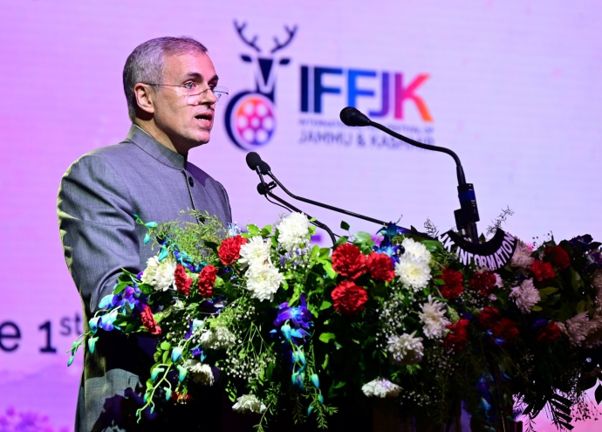
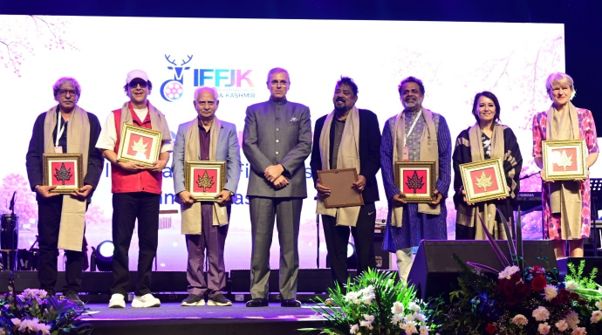 Srinagar| September, 7: Chief Minister Omar Abdullah on Monday inaugurated the first International Film Festival of Jammu & Kashmir (IFFJK) at the Sher-i-Kashmir International Convention Centre (SKICC), describing the event as a new chapter in Jammu and Kashmir’s longstanding relationship with cinema.
The four-day festival, being held from September 7 to 10, brings together filmmakers, artists, delegates and cinema enthusiasts from across the world. More than 130 films from over 30 countries are being showcased during the festival.
CM Omar said the festival was not merely a celebration of cinema but an effort to position Jammu and Kashmir as a vibrant destination for filmmakers, storytellers and creative talent from India and abroad.
“Today, as we launch this festival, bringing together filmmakers from over 30 countries and showcasing over 130 extraordinary films, we are not just opening a cinema event. We are opening a new chapter in the longstanding romance between Jammu & Kashmir and the silver screen,” he said.
Welcoming filmmakers and delegates, the Chief Minister said Kashmir was a place where stories were “not merely hosted but born”. He described the region as “the world’s most breathtaking natural canvas” and said the festival was an assertion that J&K was ready to welcome the global creative community.
“We are declaring to the world that Kashmir is not just a location on a call sheet; it is a creative sanctuary, a home for global storytellers, and a voice that is ready to speak to the world,” he said.
The Chief Minister recalled Jammu and Kashmir’s deep imprint on Indian cinema, referring to films including Junglee, Kashmir Ki Kali, Aradhana and Bobby, which helped place Gulmarg, Dal Lake and other locations in the visual imagination of generations of Indians.
He recalled Shammi Kapoor’s iconic “Yahoo!” sequence in Junglee, filmed on the snow-covered slopes of Gulmarg, as well as Sharmila Tagore’s imagery against Dal Lake in Kashmir Ki Kali and the youthful romance of Rishi Kapoor and Dimple Kapadia in Bobby, including the iconic Bobby Hut in Gulmarg.
Omar Abdullah particularly acknowledged legendary filmmaker Yash Chopra for creating a distinct cinematic language around Kashmir through films such as Silsila, Kabhi Kabhie and Jab Tak Hai Jaan.
“Directors like Yash Chopra did not just film here—they built a visual language around this land,” he said.
He also referred to more recent films including Mission Kashmir, Haider, Rockstar, Highway and BajrangiBhaijaan, saying filmmakers such as Vidhu Vinod Chopra, Vishal Bhardwaj, Imtiaz Ali and Kabir Khan had presented different dimensions of the region.
Chief Minister said Jammu and Kashmir’s appeal to cinema extended beyond its landscapes, stressing that its real strength lay in its culture and people.
“Cinema is more than landscapes; cinema is culture. And the true beauty of Jammu and Kashmir lies in its soul—its cultural ethos, built on Kashmiriyat, warmth, hospitality, and a rich artistic tradition,” he said.
He highlighted the region’s music, crafts and oral traditions, including the Santoor, Rabab, Sufiyana Kalam and Rouff. He also pointed to walnut wood carving, carpet weaving, Kahwa and the saffron fields of Pampore as elements of J&K’s cultural identity.
Addressing filmmakers, CM Omar urged them to look beyond scenic locations and explore the region’s people and traditions.
“When you bring your cameras to Jammu and Kashmir, do not just film our mountains. Seek out our stories. Talk to our artisans, listen to our musicians, walk through our old city lanes, and let the living, breathing culture of this land infuse your narratives,” he said.
Omar said nostalgia alone could not create a sustainable film industry and highlighted the government’s efforts to build a modern ecosystem capable of supporting productions from shooting to post-production.
Under the Jammu & Kashmir Film Policy, he said, the government had introduced a single-window clearance mechanism to simplify permissions for film shoots.
Through a dedicated online portal, filmmakers can seek location approvals, security coordination and other necessary permissions through a streamlined system involving designated nodal officers.
He said the policy also provides financial incentives and production subsidies, linked to shooting days and local expenditure, for both independent filmmakers and larger productions.
The government, he said, was also encouraging greater participation of local artists, technicians and crew members and promoting the cultural heritage of Jammu and Kashmir through film productions.
“We are building a robust local workforce of cinematographers, line producers, sound engineers, and actors so that you can arrive with a script and find everything else right here,” Omar said.
He further outlined plans to invest in post-production facilities, equipment banks, film studios and film education institutions across J&K with the aim of developing a complete, end-to-end film production ecosystem.
Chief Minister said cinema should be viewed not merely as entertainment but as an industry capable of generating employment, nurturing young talent and building bridges between cultures.
Calling the inaugural festival a “declaration of intent”, he said it would provide young people in Jammu and Kashmir an opportunity to interact with filmmakers and creative professionals from across the world.
He urged young attendees to make use of the festival’s masterclasses, panel discussions and interactions with visiting filmmakers to explore opportunities in writing, direction, acting and other creative fields.
“This festival belongs to them as much as it belongs to our distinguished international guests,” he said.
CM also urged participating filmmakers and delegates to take the experience of Jammu and Kashmir back with them and communicate that the region was ready to host film crews.
“Carry a piece of J&K back in your hearts. Tell your fellow filmmakers that Kashmir is open, safe, vibrant, and eager to welcome your crews,” he said.
The Chief Minister encouraged local youth to use the festival to discover new possibilities and tell their own stories, saying their voices could now reach a wider global audience.
He concluded by describing cinema as a universal language that transcends borders and connects people through shared human experiences before formally declaring the first International Film Festival of Jammu & Kashmir open.
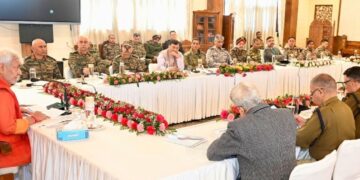
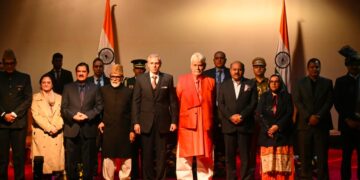
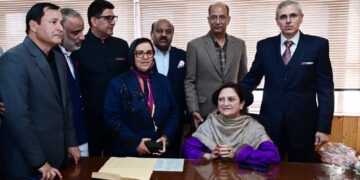
Union Minister of State in the Prime Minister’s Office Dr Jitendra Singh, several Governors and Lieutenant Governors, members of the Council of Ministers, former J&K Chief Minister Dr Farooq Abdullah, Members of the J&K Legislative Assembly, filmmakers, eminent artists, jury members and other distinguished guests attended the inaugural ceremony.