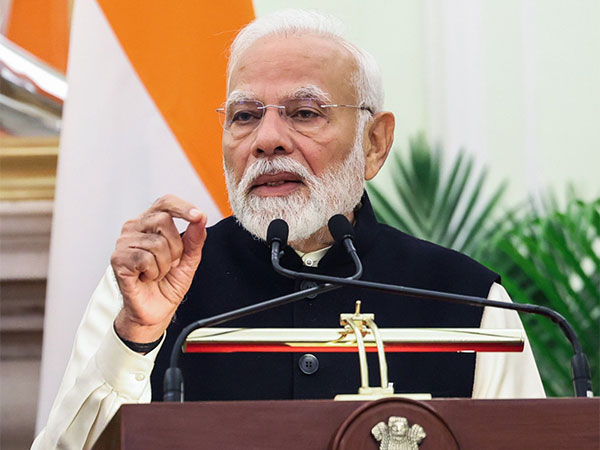
New Delhi, Sep 6 : Prime Minister Narendra Modi on Sunday issued a strong message to Pakistan, saying that if it indulges in any “mischief”, India’s armed forces have the freedom and capability to enter enemy territory and respond.
Addressing the centenary celebrations of Delhi University’s Shri Ram College of Commerce (SRCC), Modi said those who had attempted to spread terror in India in the past had been silenced and asserted that the country was now stronger than ever to face any challenge.
“Today, there is an atmosphere of peace from Jammu and Kashmir to the Northeast, while Naxalism has also been largely eliminated,” the prime minister said.
Modi said India had witnessed a major transformation in the areas of internal security and the economy over the past decade.
He said there was a time when the country was grappling with corruption, terrorism and inflation, but India had now emerged as a more secure and stronger nation economically and socially.
Despite wars across the world, the ongoing conflict in West Asia and disruptions to global trade, India’s economy is growing at a rate of 7.8 per cent, Modi said.
He said economic growth was also creating employment opportunities and reflected the country’s strong economic potential.
Referring to India’s earlier inclusion among the so-called “Fragile Five” economies, Modi said the same country was now being viewed globally as one of the major fast-growing economies.
“Those responsible for taking India to the Fragile Five are unable to digest the country’s current economic growth figures,” he said.
The prime minister said India had faced several major challenges in recent years, including the COVID-19 pandemic, conflicts in West Asia and disruptions in global trade.
“Every time, some people predicted that India would not be able to overcome these difficulties, but the country faced every crisis,” he said, adding that India’s capabilities had repeatedly defeated those who wished to see the country fail.
Recalling his 2013 visit to SRCC, Modi said he had then presented students with a vision for India’s future at a time when there was a sense of pessimism about the country’s prospects.
Using the example of a half-filled glass, he said while some people saw it as half empty, he saw it as completely full.
Modi said today’s youth were dreaming big and aspiring to launch startups, become entrepreneurs, innovate and introduce new technologies in agriculture.
The aspirations of young people, he said, were shaped by the environment around them, and India had created an ecosystem where the youth could work towards turning their dreams into reality.
Taking a dig at those with a negative outlook, Modi said such people opposed every new initiative and repeatedly asked, “What is the need for this?”
Citing the “Make in India” initiative, he said several people had questioned its prospects when it was launched, but its brand value was now visible across the world.
India, he said, had once imported mobile phones in large quantities, whereas mobile phones manufactured in the country were now being exported to different parts of the world. Mobile phone exports have crossed Rs 2.5 lakh crore, according to Modi.
He also said India would establish its own space station in the coming years and the world would witness the historic occasion.
India, he added, would one day host the Olympic Games in a manner that would leave the world amazed.
Modi said these were not merely dreams or political statements, but national commitments for which work was already under way.
The prime minister also highlighted India’s growing self-reliance in the defence sector.
He said that while the armed forces earlier depended heavily on imported defence equipment, the government was now working with the armed forces and domestic industry to promote defence production and strengthen self-reliance..