Experts call for closer monitoring of glaciers, high-altitude lakes and unstable slopes across J&K
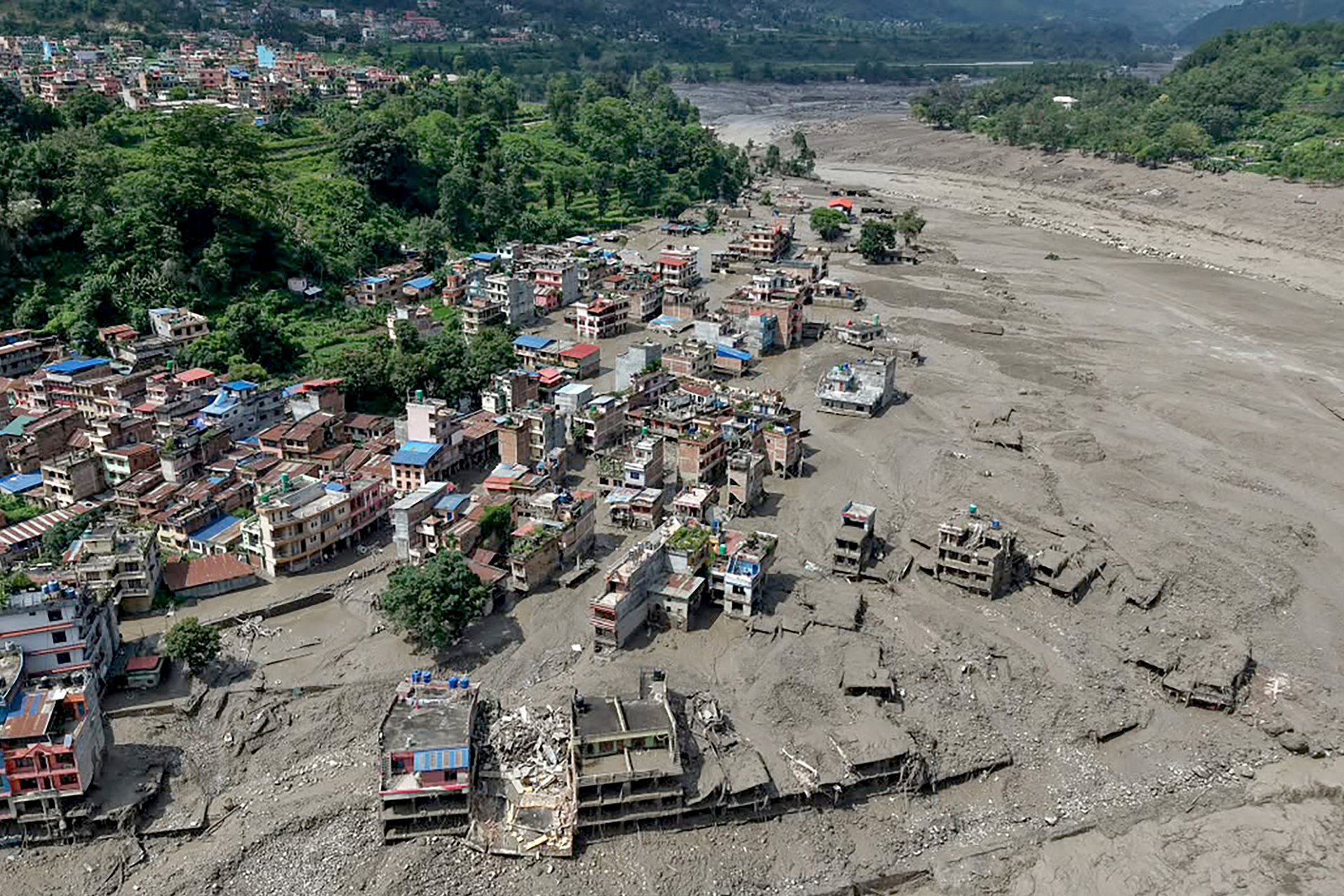
Srinagar: The massive flood disaster in Nepal has renewed concerns over Jammu and Kashmir’s vulnerability to flash floods, landslides and other mountain hazards amid changing weather and climatic conditions in the Himalayas.
The disaster has highlighted how an event in a high-altitude catchment can trigger a chain of hazards, including landslides, debris flows and sudden flooding downstream.
Experts said Jammu and Kashmir has several similar geographical features, including glaciers, high-altitude lakes, steep slopes, narrow valleys and major rivers, making stronger monitoring and early-warning systems essential.
Prof Shakil A. Romshoo, a noted Himalayan researcher and former Professor of Earth Sciences at the University of Kashmir, said the changing cryosphere has important implications for water resources and mountain hazards in the region.
Research led by Romshoo has documented significant glacier changes across the Kashmir Himalaya and the wider Jammu, Kashmir and Ladakh Himalaya. One study found that glaciers across nine benchmark sites in the Kashmir Himalaya had shrunk by about 17 per cent between 1980 and 2013.
Prof. Romshoo’s research has also highlighted the link between glacier change, rising temperatures and changes in streamflow, underlining the need for continued monitoring of the region’s cryosphere.
The concern, experts said, is not simply glacier retreat but the interaction between different mountain hazards.
A landslide or rockfall can enter a glacial lake or river and suddenly increase the volume and force of water moving downstream. Intense rainfall can further weaken slopes and increase the amount of mud, rocks and debris carried by floodwaters.
Such flows can move rapidly through narrow valleys, threatening settlements, roads, bridges, hydropower projects and tourist infrastructure.
Dr Shariq Ahmad, Assistant Professor at the University of Jammu, whose academic background includes geological research, said scientific assessment of vulnerable mountain environments needs to be strengthened as the Himalayas undergo rapid environmental changes.
He cautioned that glacier retreat alone does not mean that a flash flood is imminent. However, changes in glaciers, snow cover, frozen ground, slopes and high-altitude lakes can alter the physical conditions under which hazards develop, he added.
Jammu and Kashmir has witnessed several deadly mountain disasters in the past.
The 2010 cloudburst in Leh generated destructive debris flows and caused extensive loss of life and infrastructure. In July 2021, a cloudburst at Honzar in Kishtwar triggered a flash flood that killed seven people and left several others missing.
The 2014 Kashmir floods also demonstrated the region’s vulnerability to extreme rainfall and rapidly rising water levels, although the mechanism was different. Scientists said these incidents underline the need to monitor entire high-altitude catchments rather than concentrating only on conventional river flooding.
Dr Tahir Hameed, scientist at ICAR says Glaciers, glacial lakes, moraine dams, rock glaciers and areas affected by permafrost need regular assessment. There is need of greater use of satellite imagery, automatic weather stations, river-level sensors, lake monitoring systems and field surveys in vulnerable catchments.
“Early-warning systems, they said, must also be connected directly to communities living downstream. The issue assumes greater significance because several tourist destinations and pilgrimage routes in Jammu and Kashmir are located in narrow mountain valleys,” he added.
Dr Tahir said that disaster-management authorities need to identify vulnerable locations, prepare evacuation routes and establish safe zones in advance. Mobile alerts, sirens, local communication networks and regular emergency drills could provide residents and visitors with crucial time to move to safer locations, he added.
Meanwhile experts said geological and disaster-risk assessments should therefore form an integral part of infrastructure planning in fragile Himalayan areas.
The Nepal disaster has once again shown how a hazard originating in a remote mountain area can quickly become a major emergency downstream. For Jammu and Kashmir, experts said the priority should be improved monitoring, better risk mapping and faster warning systems rather than waiting for a major disaster to expose existing gaps.