Srinagar: Jammu& Kashmir is set to witness a major transformation in its power landscape, with the Government charting a comprehensive, time-bound roadmap to raise its operational hydropower generation capacity to 10,969.65 MW by December 2035, more than three times the present installed capacity of 3,540.15 MW.
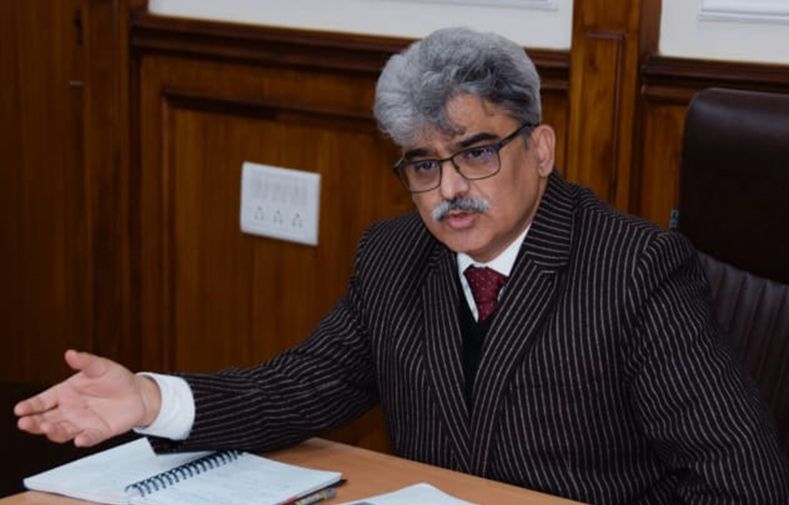
The ambitious roadmap, aimed at strengthening energy security, reducing dependence on external power and creating the foundation for long-term economic growth, was reviewed in detail during a high-level meeting chaired by Chief Secretary, Atal Dulloo, Friday.
The meeting besides ACS Power was attended by Commissioner Secretary, Law; Secretary, Revenue; MD, JKPCL; concerned Deputy Commissioners; Heads of Power Projects and Representatives from NHPC along with senior officers from the Power Development Department.
The meeting focused on the physical and financial progress of major hydropower projects under execution, their construction and commissioning schedules, as well as the milestones required to ensure timely addition of generation capacity over the coming decade.
Addressing the meeting Chief Secretary emphasized the importance of inter-departmental coordination, effective project monitoring, and prompt resolution of challenges to enhance the execution pace and realize Jammu and Kashmir’s substantial hydropower potential. The Additional Chief Secretary of the Power Development Department, Ashwani Kumar, noted that Jammu and Kashmir has a hydropower potential of 14,635 MW, with approximately 24.21 percent currently harnessed. The Chenab Basin holds the largest share of this potential, followed by the Jhelum and Ravi Basins. A phased capacity-addition strategy has been implemented to systematically exploit this potential, aiming for greater energy self-reliance and eventual surplus. Managing Director of Jammu & Kashmir Power Corporation Limited, Rahul Yadav, outlined a roadmap for capacity additions, targeting 1,636 MW by the end of 2026 through various hydroelectric projects, which would increase the cumulative installed capacity to 5,176.15 MW by December 2027. Significant capacity increases are also planned for 2028 and beyond, with projections indicating a total generation capacity of 10,969.65 MW by December 2035. The Chief Secretary called for rigorous monitoring of ongoing projects, which are currently showing promising progress, including the PakalDul HEP and Kiru HEP, both nearing completion milestones. The anticipated expansion of hydropower capacity is expected to significantly impact Jammu and Kashmir’s development, providing a robust energy foundation for various sectors, including industry and tourism. This decade-long initiative aims to transition Jammu and Kashmir from a power-deficient economy to a more energy-secure and self-sufficient region, positioning hydropower as a crucial element in its economic growth strategy.
Srinagar airport lifts operational restrictions ahead of winter schedule

• Late-evening flights expected to improve connectivity from October 25 Srinagar|Oct, 19: Srinagar International Airport has withdrawn restrictions limiting its...
Read moreDetails