India’s competitive examination system is facing a serious credibility crisis. Millions of young Indians spend years preparing for examinations that determine admission to universities, entry into government services, professional careers and, in many cases, the direction of their entire lives. Yet repeated controversies involving paper leaks, cancellations, irregularities, technical failures, defective answer keys, delayed results, questionable evaluation and administrative confusion have created growing frustration among students. When an examination system becomes unpredictable, the damage goes far beyond one examination—it weakens confidence in the entire education and recruitment system.
Competitive examinations are supposed to provide a level playing field. Every candidate should have an equal opportunity to demonstrate knowledge, ability and merit. Unfortunately, when question papers are leaked, examinations are cancelled, centres malfunction, results are delayed or evaluation errors occur, genuine candidates become the biggest victims. A student may spend two or three years preparing for a single examination, sacrificing employment opportunities, social life and significant financial resources. If that effort is disrupted because of administrative failure, a simple apology cannot compensate for the lost time and opportunity.
The most dangerous consequence is the erosion of trust. Students must believe that hard work, preparation and merit will ultimately be rewarded. If they begin to believe that administrative decisions, technical failures, paper leaks, manipulation or sheer luck can determine their future, the fundamental purpose of competitive examinations is undermined. Trust is not a cosmetic issue. It is the foundation of a credible examination system.
India’s examination authorities therefore need to understand that students are not merely candidates or application numbers. They are young people carrying enormous dreams and family expectations. For many families, competitive examinations represent a pathway towards social mobility and economic security. A defective examination can therefore have consequences for an entire household.
However, the crisis is not limited to paper leaks. Technical failures are increasingly becoming another source of student anxiety. Online applications, computer-based examinations, biometric authentication, digital evaluation and automated result processing can make examinations more efficient, but technology itself is not a guarantee of fairness. Server failures, software problems, biometric mismatches, power interruptions or inadequate infrastructure can affect candidates unfairly. Every technology-driven examination must therefore have reliable backup systems and clear contingency plans.
Communication is another major weakness. Students deserve timely and accurate information regarding examination dates, centres, answer keys, results, objections, re-examinations and corrective action. Contradictory notices, unexplained delays and silence from authorities create confusion and encourage rumors. In the digital age, examination authorities cannot expect students to remain patient indefinitely while information is unavailable. Transparency and timely communication must become institutional responsibilities.
Accountability is equally important. When thousands or millions of candidates are affected by an examination failure, responsibility cannot simply disappear into bureaucratic procedures. Authorities must identify the cause, establish responsibility and implement corrective measures. Accountability does not mean arbitrary punishment; it means ensuring that negligence has consequences and that the same failure is not repeated.
“Paper leaks and examination malpractice are particularly damaging. A leaked question paper immediately destroys the principle of equal opportunity. Honest candidates who prepared for months or years are placed at a disadvantage, while those benefiting from malpractice may gain an unfair advantage. Such incidents also create suspicion about the integrity of the entire examination process. Strong cyber security, secure question-paper transportation, restricted access, surveillance, background verification and rapid investigation must become essential components of examination management. India’s competitive examination crisis is ultimately a crisis of trust. Rebuilding that trust must become an urgent national priority. India now stands at a crossroads. It can continue with repeated damage control after every examination controversy, or it can fundamentally reform the competitive examination system. The country does not merely need more examinations; it needs credible examinations. Students deserve an examination system they can trust. Parents deserve assurance that their children’s efforts will be judged fairly. And India deserves a merit-based system in which competence, preparation and honesty—not administrative failure or malpractice—determines success.”
The examination ecosystem also requires greater professionalism. Conducting a national or large-scale competitive examination is an extremely complex operation involving question-setting, moderation, cyber security, logistics, examination-centre management, invigilation, evaluation, technology and grievance redressed. Such responsibilities require specialized expertise and strong institutional capacity. Examination bodies must have adequate resources, professional staff and operational autonomy, while remaining subject to strict public accountability.
Another urgent requirement is an effective grievance-redressed mechanism. If a candidate believes that an answer key is incorrect, marks have been wrongly calculated, examination conditions were unfair or the process was compromised, there must be a transparent and time-bound procedure for raising objections. Complaints should not disappear into administrative files. Students deserve a clear response, a defined timeline and, where appropriate, an independent review.
India must also reconsider its excessive dependence on high-stakes examinations. A single examination should not become the sole determinant of a young person’s future. The country needs broader pathways based on academic performance, practical skills, internships, research, innovation, professional competence and work experience. A modern economy needs diverse forms of talent, not merely candidates who perform well under one examination format.
The crisis in competitive examinations is therefore part of a larger crisis in India’s education and employment ecosystem. Young people are already facing intense competition for limited opportunities. When examination systems themselves become unreliable, their frustration increases dramatically. This can produce anxiety, distrust and a growing perception that institutions do not respect their hard work.
India’s ambition to become a developed and knowledge-based economy cannot be separated from the credibility of its institutions. Competitive examinations are among the most visible institutions affecting young citizens. If merit-based selection is to remain credible, examination systems must be transparent, secure, efficient and accountable.
The government and examination authorities should urgently establish stronger quality-assurance mechanisms, independent audits, cyber security protocols, secure logistics, transparent evaluation procedures, strict result timelines and effective grievance systems. Major examination failures should be reviewed through independent investigations, and lessons learned should be publicly communicated. Most importantly, policymakers must remember that behind every examination registration is a human being with aspirations, family expectations and years of hard work. An examination failure is not simply an administrative inconvenience. It can cost a student another year of preparation, additional financial expenditure and delayed career progression.
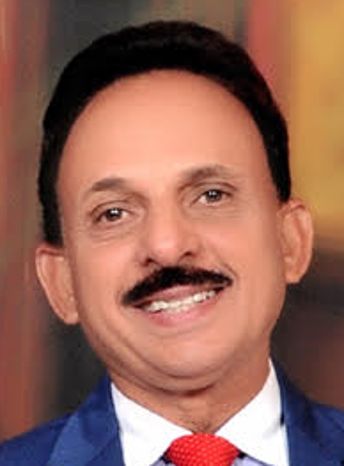
(The author is Principal, Guru Gobind Singh College of Management and Technology, Gidderbaha, Punjab. The views, opinions and conclusions expressed in this article are those of the author and aren’t necessarily in accord with the views of “Kashmir Horizon”)