India’s higher education system has expanded enormously over the past few decades. More universities, colleges, programmes and students have created wider access to education. Yet behind this impressive expansion lies a troubling question: Is India producing enough skilled, employable and innovative graduates—or simply producing more degree holders? The challenge facing Indian higher education today is no longer merely about access. It is about quality, employability, skills, innovation and relevance. A degree that does not equip a young person to participate effectively in the modern economy risks becoming little more than a certificate.
A university degree was once widely regarded as a guarantee of knowledge, competence and social mobility. Today, that assumption is increasingly questionable. India is producing a large and growing pool of graduates, but the expansion of qualifications has not automatically created a corresponding expansion in quality employment. The fundamental problem is a mismatch between degrees and capabilities. Students may complete undergraduate, postgraduate and even doctoral programmes, yet many remain inadequately prepared for practical workplace requirements. Employers increasingly demand digital competence, communication skills, analytical thinking, teamwork, creativity, problem-solving and adaptability. Traditional academic credentials alone cannot guarantee these capabilities.
The question universities must therefore ask is simple: What can a graduate actually do after completing the programme? Higher education must move from qualification-based education to capability-based education. The objective should not simply be to produce graduates who can pass examinations. It should be to produce graduates who can analyze problems, use technology, communicate effectively, innovate and create value.
The employability gap has become one of the most serious challenges confronting Indian higher education. The economy is changing rapidly, but many curricula and teaching methods remain slow to respond. A student may spend three or four years studying theoretical concepts without receiving sufficient exposure to real-world problems. Internships may be superficial, industry interaction limited and practical projects insufficient. This creates a dangerous situation in which students leave universities with degrees but without the confidence and competence required by employers.
Artificial intelligence is making this transformation even more urgent. AI can rapidly retrieve information, generate text, analyze data and perform many routine cognitive tasks. Consequently, memorization-based education is becoming less valuable. The future belongs to graduates who can think critically, use AI intelligently, verify information, solve complex problems and make responsible decisions. Indian universities cannot prepare students for the future by teaching only the requirements of yesterday.
AI literacy should become part of mainstream higher education. Students in commerce, management, economics, engineering, science, humanities and social sciences all need exposure to emerging technologies relevant to their disciplines. The university of the future must teach students not merely how to use technology, but how to work alongside technology while preserving human judgment, creativity and ethics.
Another major weakness is the continuing gap between universities and industry. Industry should not interact with universities only when recruiting students. Companies should participate in curriculum development, internships, apprenticeships, live projects, faculty development and applied research. Similarly, universities must understand that industry requirements are changing continuously. A strong higher education ecosystem should create a clear pathway from classroom learning to skills, internships, industry exposure, innovation and employment.
India’s higher education system stands at a critical crossroads. Continuing to expand degrees without simultaneously improving skills, employability and research quality will deepen the crisis. But if universities embrace innovation, practical learning, AI readiness, industry collaboration and measurable outcomes, higher education can become one of India’s greatest engines of economic development. India does not need a bigger degree factory. It needs a stronger knowledge economy. The time has come to move from degrees to skills, from classrooms to capabilities, from publications to impact, and from certificates to innovation. That is the real reform Indian higher education urgently needs.
India also needs to rethink its research culture. The country needs more high-quality research, but simply increasing the number of papers, dissertations and PhDs is not enough. Research should address real problems and generate measurable intellectual, economic or social value. Universities should encourage research in areas such as artificial intelligence, financial technology, climate change, agriculture, healthcare, manufacturing, entrepreneurship, banking, rural development and employment.
A PhD should demonstrate genuine originality and the capacity to create new knowledge or solve a meaningful problem. The objective should be research impact, not merely the production of another dissertation. India needs researchers who can move from paper to prototype, laboratory to market and knowledge to solution.
The rapid expansion of private universities has increased opportunities for students, but it has also created serious questions about quality assurance, faculty development, research standards and employability. Private institutions can become powerful engines of innovation because they may have greater flexibility to introduce new programmes and industry partnerships. But flexibility must never become an excuse for compromising academic quality.
Students and parents invest significant amounts of money in higher education. They deserve qualified teachers, updated curricula, meaningful practical exposure, credible research opportunities and transparent employment outcomes. Higher education cannot be treated merely as an enrolment business.
Indian higher education must also move beyond conventional indicators such as enrolment, buildings, programmes and degrees awarded. These indicators are important, but they do not tell the complete story. Universities should measure graduate employability, learning outcomes, industry engagement, research quality, innovation, entrepreneurship, student satisfaction, international collaboration and social impact. Producing thousands of graduates is not necessarily an achievement if a substantial proportion leave university without adequate skills. Quality must become more important than quantity.
India urgently needs a higher education transformation based on skills, innovation, employability and research impact. Universities should regularly redesign curricula according to technological and economic changes. Internships and apprenticeships should become meaningful components of education. Industry experts should participate in teaching and curriculum development. Students should receive opportunities to work on real-world projects.
Faculty development must also receive greater attention. Teachers cannot prepare students for an AI-driven economy if they themselves are not adequately exposed to new technologies and modern teaching methods. Assessment systems must change as well. Excessive dependence on memory-based examinations should give way to project work, problem-solving, presentations, research assignments and practical demonstrations.
India does not need fewer educated people. It needs better-educated people. The country’s demographic advantage can become a tremendous economic asset only if young people possess the capabilities required by a rapidly changing economy. The future university must therefore produce more than graduates. It must produce professionals, entrepreneurs, researchers, innovators and problem-solvers. The central question for Indian higher education is no longer how many degrees are being produced. The more important question is how many capable human beings are being produced.
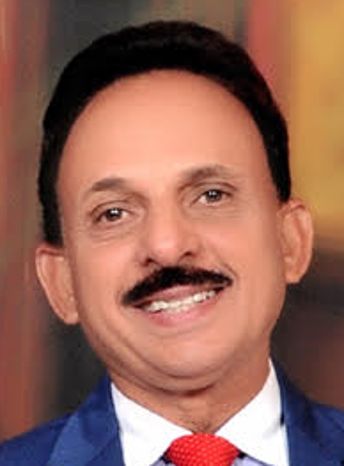
(The author is Principal, Guru Gobind Singh College of Management and Technology, Gidderbaha, Punjab. The views, opinions and conclusions expressed in this article are those of the author and aren’t necessarily in accord with the views of “Kashmir Horizon”)