A New Dawn For Year Round Kashmir Connectivity
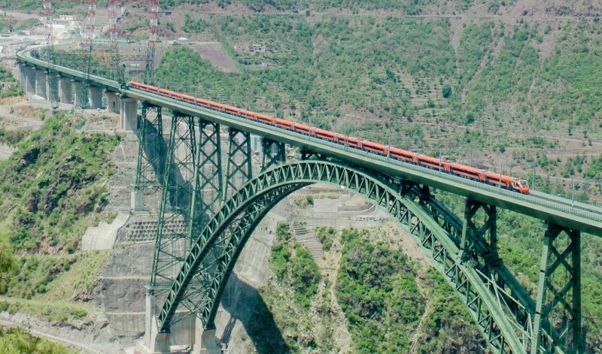 Srinagar: Jammu and Kashmir’s railway network is entering a new phase with the commissioning of the 272-km Udhampur-Srinagar-Baramulla Rail Link (USBRL), opening the Kashmir Valley to an all-weather rail connection with the rest of the country while creating new opportunities for farmers, traders, manufacturers and small and medium enterprises. The scale of the railway expansion emerging from the latest details shared by Union Railway Minister Ashwini Vaishnaw points to a network that is no longer being viewed merely as a passenger transport system. With dedicated cargo infrastructure, station redevelopment, electrification, modern signalling, new train services and surveys for major future railway lines, the Railways is positioning connectivity as an important driver of J&K’s wider economic transformation. The USBRL, one of the most challenging railway projects undertaken in India after Independence, has connected the Kashmir Valley with the national railway network. The project passes through Udhampur, Reasi, Ramban, Srinagar, Anantnag, Pulwama, Budgam and Baramulla districts. The most immediate change for passengers is the sharp reduction in travel time between Katra and Srinagar, which has come down to about three hours following commissioning of the project.
From connectivity To Commerce: For Kashmir’s agricultural economy, the railway link could prove particularly significant. Apple growers and traders have traditionally depended heavily on road transport to move produce to markets outside J&K. The availability of an all-weather railway corridor provides another logistics option and could help businesses reach wider markets while improving the movement of inputs and finished goods. The same network is expected to support handicraft and artisan-based businesses, including those dealing in pashmina, carpets and other traditional products. The Railway Ministry has specifically highlighted the socio-economic contribution of USBRL, saying its integration with the national railway network is supporting small and medium enterprises by improving access to raw materials and larger markets. This changes the role of railway connectivity from simply moving people to moving economic value. The development assumes greater importance for a region where agriculture, horticulture, tourism, handicrafts and small businesses form critical pillars of the local economy. The project has also delivered substantial supporting infrastructure. Around 215 km of roads have been constructed as part of the project, including roads associated with tunnels and bridges, providing connectivity benefits to local populations in difficult terrain.
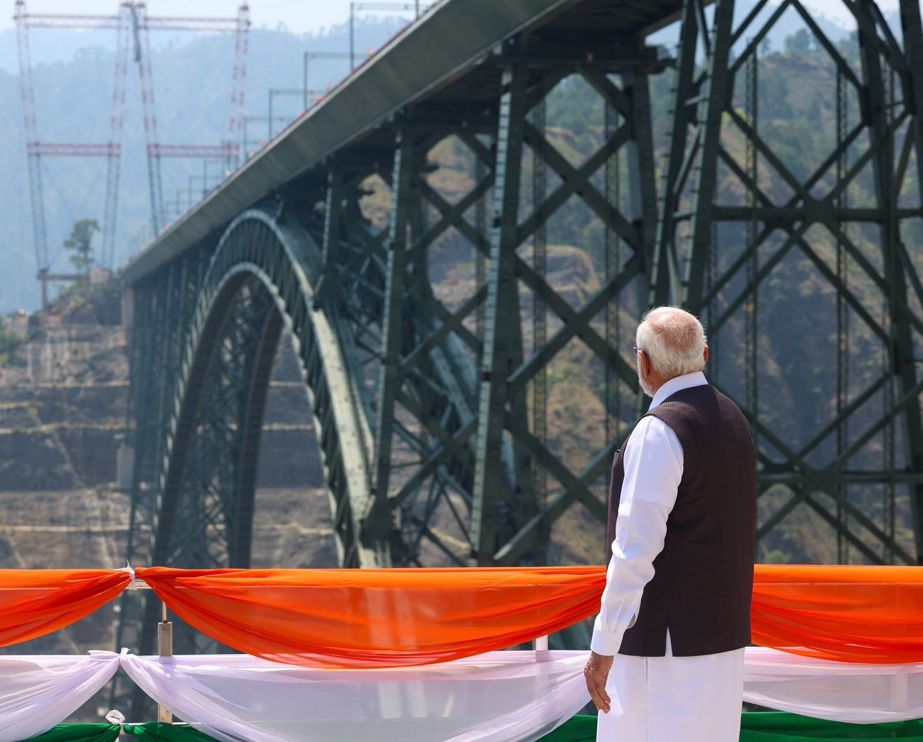
Engineering Feat Powering Kashmir’s Rail Connectivity: The USBRL is also a landmark engineering achievement. Built through the young and geologically challenging Himalayan terrain, the project involved the construction of numerous tunnels and bridges to overcome some of the most difficult natural obstacles faced by railway engineers. Its most iconic structure is the Chenab Railway Bridge in Reasi district—the world’s highest railway bridge over a river. The 1,315-metre-long bridge has an arch span of 467 metres and rises 359 metres above the riverbed. The project also features India’s first cable-stayed railway bridge across the Anji Khad. The 473-metre-long asymmetrical bridge has a 193-metre-high single pylon in an inverted-Y configuration. The entire USBRL has been electrified using an overhead conductor system in tunnels and open stretches. The electrification and modern railway infrastructure are expected to improve operational reliability while supporting faster and more efficient train movement. For Kashmir, where weather-related disruptions have historically affected surface connectivity, the all-weather character of the railway link adds another layer of resilience.
Cargo Terminals Bring Industry Into The Rail Network: The next major shift is visible in freight infrastructure. The Railways has commissioned a Gati Shakti Multi-Modal Cargo Terminal (GCT) in Samba district, while in-principle approvals have been granted for three more terminals in Jammu and Kashmir—in Kathua, Anantnag and Jammu. The GCT policy is designed to encourage private investment in cargo terminals by linking railway infrastructure with industrial and logistics demand. Across India, 142 GCTs have been commissioned with an estimated freight-handling capacity of 224 million tonnes per annum. Together, these terminals have mobilised approximately ₹10,000 crore in private investment, while freight handled through them during 2025-26 stood at 146 million tonnes. For J&K, the proposed terminals in Kathua, Anantnag and Jammu could become important nodes in the movement of agricultural produce, industrial material and finished products. The addition of cargo infrastructure in Anantnag is particularly significant for south Kashmir’s horticulture and commercial activity, while Jammu and Kathua are strategically positioned for broader industrial and logistics connectivity. The larger objective is to reduce logistics barriers and integrate local producers with national supply chains.
Jammu-Poonch Rail Dream Moves To Survey Stage : The expansion is not stopping with USBRL. The Railway Ministry has sanctioned Final Location Surveys for several major projects, including the proposed 190-km Jammu/Reasi-Poonch new railway line. Field surveys have already begun for preparation of the Detailed Project Report. Another important proposal is the 78-km additional railway line between Jammu and Shri Mata Vaishno Devi Katra, for which the Final Location Survey has been sanctioned. A third major initiative is the 216-km third line between Jalandhar Cantt and Jammu Tawi, for which the Detailed Project Report has been prepared. The proposed Jammu/Reasi-Poonch line carries particular strategic and developmental significance for the border region. However, the Railway Ministry has clarified that after preparation of the DPR, projects require consultations with stakeholders and approvals, including appraisal by NITI Aayog and the Ministry of Finance. Consequently, exact timelines cannot yet be fixed. Even at the survey stage, however, the proposed alignment indicates a widening railway footprint towards areas that have historically remained dependent on road connectivity.
Stations Being Transformed Into Modern Gateways: The railway expansion is being matched by a major station redevelopment programme. Under the Amrit Bharat Station Scheme, four stations in Jammu and Kashmir—Budgam, Jammu Tawi, Martyr Captain Tushar Mahajan and Shri Mata Vaishno Devi Katra—have been identified for redevelopment. The scheme seeks to transform railway stations into modern transport hubs with improved passenger facilities, better access, parking, waiting areas, foot overbridges, lifts, escalators, ramps, platform shelters, passenger information systems and facilities for persons with disabilities. The scheme also provides for kiosks for local products under the ‘One Station One Product’ initiative, potentially giving artisans and local entrepreneurs another platform to showcase and sell regional products. At Budgam, improvement of the circulating area, parking and approach road has already been completed. Work is underway on a 12-metre-wide foot overbridge, station building improvements and a new waiting and executive lounge with booking counters. At Jammu Tawi, the second-entry station building, circulating area, parking, new platforms, platform shelters, electrical sub-station and entrance ramp have been completed, while work on the old station building, foot overbridges and air concourse is underway. At Martyr Captain Tushar Mahajan station, improvements to the station building, parking, approach road, toilets, waiting rooms, entrance porch and signage have been completed, while platform shelter, platform surface improvement and a six-metre-wide foot overbridge are under execution. Shri Mata Vaishno Devi Katra station is currently at the master-planning stage.
₹7,944 Cr Allocation For Northern Railway: The investment behind station development is also substantial. Jammu and Kashmir falls under Northern Railway for the purpose of railway administration. Under Plan Head-53, covering customer amenities, ₹7,944 crore has been allocated to the zone for the last five financial years and the current financial year. Of this, ₹5,622 crore had been spent up to June 2026. The Railways has also pointed to the complexity of station redevelopment, particularly because most projects involve brownfield locations where trains continue to operate during construction. Shifting water and sewage lines, optical fibre cables, gas pipelines, power and signalling infrastructure, along with obtaining statutory clearances and ensuring passenger movement, are among the factors affecting the pace of work.
A Railway Network Becoming An Economic Backbone: The emerging picture is therefore much larger than the commissioning of a single railway project. USBRL has physically linked Kashmir with the national railway network, but the next phase is about converting that connectivity into economic opportunity. Cargo terminals, station redevelopment, new railway surveys, electrification, safety systems and expanded train services are collectively building the foundations of a more integrated transport economy. For farmers, the promise lies in improved access to national markets. For artisans and handicraft producers, it means a wider customer base. For small and medium enterprises, it means improved access to raw materials and logistics. For tourism, it means faster and more reliable access to Kashmir. For passengers, it means a major reduction in travel time and stronger all-weather connectivity. The proposed Jammu/Reasi-Poonch line could further extend the railway network towards the border region, while additional lines and third-line proposals seek to prepare the system for future demand.