- Says “Honesty, transparency, knowledge and sensitivity are pillars of democratic leadership”
- Youth must turn demographic dividend into leadership dividend, build inclusive growth roadmaps
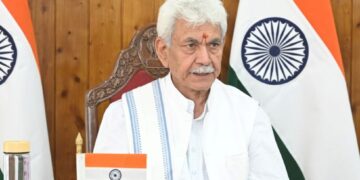
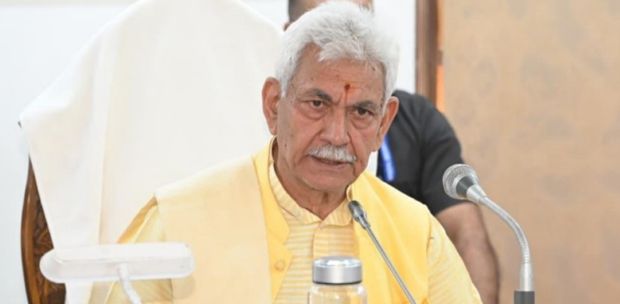
Srinagar : Lieutenant Governor Manoj Sinha on Saturday called upon young leaders to make ethics, public service and accountability the foundation of their professional and public lives, saying the strength of democracy depends not only on institutions but also on leaders committed to honesty, humility and public service.
The Lieutenant Governor was addressing the convocation of the 9th batch and induction ceremony of the 10th batch of the Indian Institute of Democratic Leadership (IIDL), Mumbai, an initiative of RambhauMhalgiPrabodhini.
Congratulating the graduating students and welcoming the new batch, Sinha described the occasion as the convergence of two journeys—one reaching completion and another beginning with new energy and aspirations. He expressed confidence that IIDL would continue to equip young leaders with constitutional values, discipline and wisdom.
“Leadership means understanding people, creating new paths for them, and serving them with humility and honesty,” the Lieutenant Governor said.
Highlighting the contribution of RambhauMhalgiPrabodhini since its establishment in 1982, Sinha said the institution has played an important role in leadership training and capacity building. He noted that more than 60,000 parliamentarians, legislators, panchayat representatives, entrepreneurs and youth have been trained by the institution.
He said the establishment of IIDL has further strengthened efforts to prepare young leaders capable of contributing to democratic institutions, governance and nation-building.
The Lieutenant Governor outlined four essential principles of democratic leadership—honesty and transparency as the foundation of trust, knowledge and wisdom as the compass for decision-making, sensitivity to maintain balance in democracy, and public service as the highest duty of leadership.
“The strength of democracy lies in Constitutional values, institutions and in those leaders who are committed to the values of honesty, humility, and public service,” he said.
Sinha cautioned that institutions cannot remain strong without ethical leadership.
“Without ethical leadership, even the finest institutions weaken over time, whereas honest and accountable leadership can turn even ordinary institutions into powerful engines of change and nation-building,” he said.
He also identified seven major challenges that India must address to achieve sustained national progress. These include maintaining long-term economic growth, eliminating terrorism, separatism and divisive forces, strengthening transparent and technology-driven governance, creating merit-based opportunities in politics, promoting national integration, achieving global leadership in emerging technologies such as artificial intelligence and semiconductors, and building a world-class education system based on quality, research, innovation and skills.
The Lieutenant Governor said overcoming these challenges would require collective commitment, particularly from the country’s youth.
With more than 65 per cent of India’s population below the age of 35, Sinha said the country’s demographic strength must be converted into a leadership dividend.
“It is youth’s responsibility to transform this demographic dividend into a leadership dividend by building teams, empowering others, and creating roadmaps for inclusive growth,” he said.
Sinha cited the transformation in Jammu Kashmir since 2020 as an example of leadership based on public service and good governance. He referred to the completion of more than 30,000 projects through public participation, strengthening of Panchayati Raj institutions and expansion of digital governance as examples of how transparency and accountability can drive change.
Drawing upon India’s civilisational traditions, the Lieutenant Governor stressed the importance of collective resolve, unity and noble intentions in building a prosperous and harmonious society. He urged young leaders to align their decisions and actions with public welfare and recalled India’s civilisational legacy as the “Mother of Democracy”.
He also appreciated the faculty members and mentors at IIDL for preparing young leaders through discussions on governance, public policy and the practical challenges of public life.
The Lieutenant Governor advised the graduating students to measure success not by position or status but by the positive difference they make in people’s lives.
“In your professional life, make ethics your character, public service your duty, responsibility your identity, and excellence your style of work,” he said, urging the youth to ensure that the benefits of development reach the last person in the queue.
Sinha called upon the young leaders to balance tradition with modernity and progress with sensitivity while addressing emerging challenges such as rapid urbanisation, climate change and rising public aspirations.
He said India’s young generation is more educated, connected and ambitious than previous generations and possesses the ideas and capabilities required to address complex challenges.
The Lieutenant Governor emphasised that democratic leadership must be rooted in dialogue, consensus and inclusion. He urged young leaders to rise above caste, religion and regional boundaries and treat public welfare as their highest responsibility.
“Every decision you make, every word you speak, and every action you take will either strengthen our democracy or weaken it,” Sinha said, calling for leadership driven by innovation, empowered by technology, strengthened by transparency, guided by sensitivity and focused on effective implementation.
He said such leadership would strengthen good governance, deepen public trust in democratic institutions and contribute to India’s journey towards Viksit Bharat.