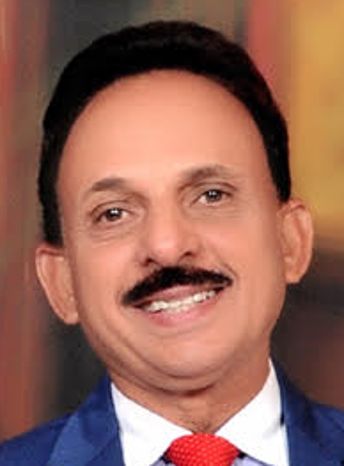
Prof R.K. Uppal
India proudly celebrates becoming one of the world’s largest education hubs. Every year, millions of students graduate from schools, colleges, and universities with the hope of building successful careers. Yet, a painful question refuses to go away: If our education system is so successful, why are so many educated young people struggling to find meaningful employment?
The uncomfortable truth is that India is producing more degree holders than job-ready professionals. Employers repeatedly complain that a significant proportion of graduates lack practical skills, communication abilities, problem-solving capacity, digital competence, and industry exposure. This widening gap between education and employment has become one of India’s biggest development challenges.
The problem is not the lack of educational institutions. India has thousands of colleges and universities, but quantity cannot substitute for quality. Too many classrooms continue to rely on outdated syllabi, rote learning, and examination-oriented teaching. Students spend years memorizing textbooks only to discover that the workplace demands creativity, adaptability, teamwork, critical thinking, and technological competence—skills that are often neglected during their education.
The world has entered the era of Artificial Intelligence, automation, robotics, biotechnology, and the digital economy. Industries are transforming at unprecedented speed, yet many educational institutions continue teaching subjects and methods designed for a different century. This mismatch has serious consequences. Graduates leave campuses with degrees that employers often consider insufficient without additional training.
Education must no longer be judged by the number of admissions, examination pass percentages, or degrees awarded. The true measure of success is whether graduates can secure meaningful employment, create enterprises, innovate, and contribute to national development. A degree that does not enhance employability represents an incomplete educational outcome.
India urgently needs a shift from degree-centric education to skill-centric education. Every academic programme should integrate internships, apprenticeships, live industry projects, entrepreneurship training, digital technologies, communication skills, financial literacy, and problem-solving exercises. Students should graduate with both academic knowledge and workplace competence.
Equally important is strengthening collaboration between academia and industry. Employers should help design curricula, mentor students, provide internships, and participate in faculty development. Educational institutions cannot prepare students for tomorrow’s economy while remaining disconnected from the industries they are expected to serve.
“India possesses one of the world’s youngest populations. This demographic advantage can become the nation’s greatest strength—or its greatest missed opportunity. The choice depends on the decisions made today. India’s education system does not need another cosmetic makeover. It needs bold, structural surgery that places skills, innovation, employability, and excellence at the heart of learning. Only then will education become the true engine of economic growth, social progress, and the vision of a Viksit Bharat.”
Teachers are central to this transformation. Faculty members need continuous training in emerging technologies, innovative teaching methods, and interdisciplinary learning. An education system cannot produce globally competitive graduates unless it empowers educators to remain globally competitive themselves.
The examination system also demands urgent reform. Success should not depend solely on memory-based written tests. Students should be evaluated through research projects, innovation challenges, case studies, presentations, teamwork, and practical applications. Such assessments encourage creativity, analytical thinking, and confidence—qualities that employers increasingly value.
Entrepreneurship must become a mainstream component of higher education. India cannot depend exclusively on government or corporate jobs to absorb its growing workforce. Universities should nurture innovators and entrepreneurs capable of creating employment opportunities for others. Incubation centers, startup mentoring, and innovation laboratories should become essential features of every higher education institution.
Educational reform must also ensure that students from rural and economically disadvantaged backgrounds receive equal opportunities to develop modern skills. Access to quality teachers, digital infrastructure, laboratories, and career guidance should not depend upon geography or financial circumstances. Inclusive excellence must become a national priority.
India’s aspiration to become a developed nation cannot be fulfilled with an education system that remains disconnected from economic realities. A developed economy requires a highly skilled workforce, globally competitive researchers, innovative entrepreneurs, and adaptable professionals. None of these can emerge from an education system that prioritizes examinations over excellence and certificates over competence.
The time has come to acknowledge a difficult reality: minor policy adjustments are no longer enough. Changing terminology, introducing isolated initiatives, or revising regulations cannot solve structural problems that have accumulated over decades. What India needs is comprehensive educational transformation driven by accountability, quality, innovation, and employability.Our young people do not need more promises—they need opportunities. They do not need more certificates—they need marketable skills. They do not need education that ends with graduation—they need education that prepares them for lifelong success.
(The author is Principal, Guru Gobind Singh College of Management and Technology, Gidderbaha, Punjab. The views, opinions and conclusions expressed in this article are those of the author and aren’t necessarily in accord with the views of “Kashmir Horizon”)